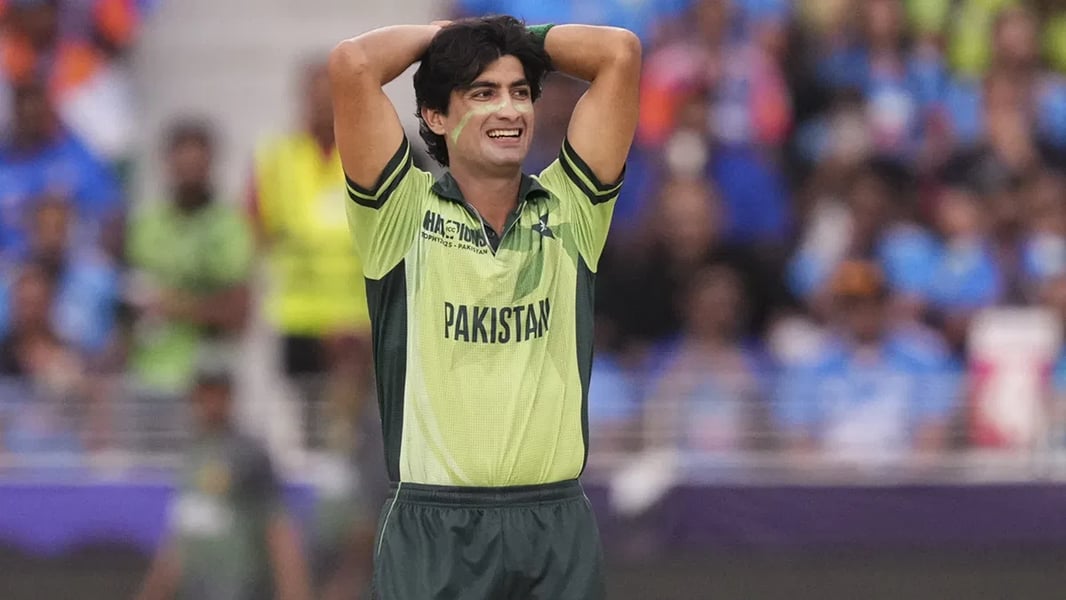

In a decision that has sent shockwaves through Pakistan cricket and ignited a broader debate about the intersection of sports, politics, and digital expression, the Pakistan Cricket Board (PCB) has imposed a record fine of 20 million Pakistani rupees on fast bowler Naseem Shah following a controversial social media post during the opening days of the 2026 Pakistan Super League.
The penalty, widely reported as the largest financial sanction ever levied on a Pakistani cricketer, comes after a now-deleted post from Shah’s official account appeared to criticize Punjab Chief Minister Maryam Nawaz, who attended the tournament’s opening ceremony under tight security and significant political attention. fined 20 million Pakistani rupees for breaching multiple clauses of his central contract, according to official reporting.
The case has quickly evolved from a disciplinary matter into a defining moment for cricket governance in Pakistan, raising pressing questions about player autonomy, institutional authority, and the risks of public commentary in a politically sensitive environment.
A Tweet That Sparked a National Controversy
The controversy began during the opening match of the 2026 Pakistan Super League, the country’s premier T20 tournament, played under unusual conditions and heightened scrutiny.
Amid this backdrop, Maryam Nawaz’s presence at the stadium drew considerable attention. While political figures attending sporting events is not unprecedented, the optics of her arrival quickly became a subject of discussion.
It was in this charged environment that Naseem Shah posted a remark on X that would trigger a storm. The post, later deleted but widely circulated, appeared to mock the situation, sarcastically referring to her as a “queen.” sarcastically referring to her as a “queen” quickly drew attention and scrutiny.
The phrasing struck a nerve across media and political circles, amplifying tensions between sport and public life. The incident rapidly escalated, as the remark sparked backlash across media and political circles and fueled nationwide debate.
PCB Moves Swiftly With Disciplinary Action
The Pakistan Cricket Board responded swiftly, issuing a show-cause notice and launching disciplinary proceedings under its central contract framework.
After reviewing the case, the PCB imposed what has been described as the largest financial penalty in Pakistan cricket history, reinforcing its strict stance on player conduct.
The fine, equivalent to roughly eight months of Shah’s earnings, underscored the seriousness of the breach and signaled a zero-tolerance approach to political commentary by players.
Apology, Fallout, and Institutional Response
During disciplinary proceedings, Shah issued an unconditional apology and took steps to contain the fallout. The PCB confirmed that he had violated contractual obligations and internal policies governing player behavior.
Further details revealed that the controversy stemmed from a post criticizing a politician’s presence at the opening game, adding specificity to the nature of the breach and the board’s concerns over public messaging.
In a decisive move, Shah also parted ways with his social media adviser, who has since been barred from working with any centrally contracted players.
The Rising Stakes of Digital Conduct
The incident highlights a broader transformation in modern sport, where digital platforms have amplified both visibility and risk for athletes.
Cricket boards around the world are increasingly enforcing strict communication guidelines, reflecting the reality that a single post can trigger global headlines and institutional consequences.
In Pakistan, this trend is particularly pronounced, as cricket operates within a politically sensitive environment where public statements can carry significant implications.
A League Under Pressure
The controversy also comes at a time when the Pakistan Super League itself is navigating structural and operational challenges. The league is facing scrutiny not only for on-field performances but also for governance, discipline, and public perception.
Similar patterns are visible across global cricket ecosystems, where leagues are under pressure to maintain credibility and control narratives amid rising scrutiny. A comparable situation unfolded recently in global sports governance debates surrounding crisis management in major tournaments.
Reactions and Broader Debate
Reaction to the PCB’s decision has been divided. While some observers have defended the board’s strict enforcement of rules, others have questioned whether the scale of the punishment was excessive.
The incident has reignited debate about the role of athletes in public discourse and whether strict neutrality is realistic in the age of social media.
A Defining Moment
For Naseem Shah, the episode represents a critical juncture in his career. Widely regarded as one of Pakistan’s most promising fast bowlers, he now faces the challenge of rebuilding his public image while maintaining performance on the field.
The broader implications extend beyond one player. The case has set a precedent for how cricket boards may handle similar incidents in the future, particularly as digital platforms continue to blur the boundaries between personal expression and professional responsibility.
What began as a fleeting social media post has evolved into a landmark moment in Pakistan cricket. A deleted remark has resulted in a record fine, a public apology, and a renewed debate about governance, discipline, and freedom of expression.
For the PCB, the message is unequivocal: discipline and neutrality are non-negotiable. For players, the lesson is equally clear, in the modern era, every word carries weight, and even a momentary lapse can come at a significant cost.