
Washington — The White House has unveiled a sweeping federal budget that dramatically expands military spending to an unprecedented level while cutting deeply into domestic programs, igniting one of the most controversial fiscal debates in recent US history.
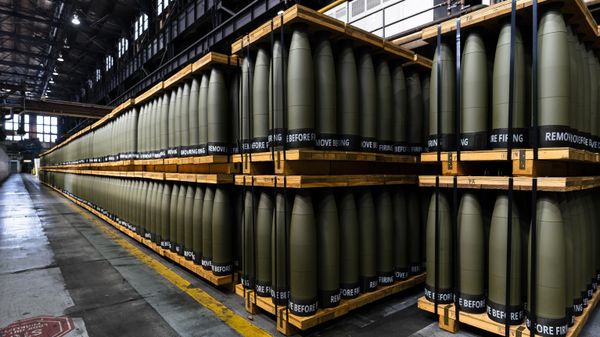
At the center of the proposal is a record $1.5 trillion defense budget, the largest ever requested, reflecting what officials describe as a necessary response to escalating global tensions and the ongoing Iran conflict. The plan represents roughly a 44 percent surge in military spending, according to multiple reports, marking one of the sharpest increases in modern US history.
The proposal outlines a massive expansion of Pentagon funding, including investments in advanced weapons, shipbuilding and missile defense systems. The administration argues that such measures are essential to maintain military dominance, particularly as the cost of the Iran war continues to rise and reshape fiscal priorities.
Yet the same budget pairs this military expansion with a 10 percent cut to non-defense spending, targeting a wide range of domestic programs. These reductions include cuts to healthcare, housing and education, alongside significant rollbacks in environmental protections and scientific research funding.
This stark contrast, unprecedented military growth alongside domestic austerity, has become the defining fault line of the proposal.
A system built around war
The timing of the budget is closely tied to the escalating US military involvement in the Middle East. The Iran conflict, which continues to expand in both scale and cost, has reshaped Washington’s fiscal priorities.
The United States has already expanded its military involvement in various global conflicts, reinforcing concerns that war is becoming a central organizing principle of national policy.
The new proposal accelerates that trajectory. It allocates billions toward shipbuilding, missile systems and a controversial space-based defense initiative often referred to as the “Golden Dome.” These investments are designed to strengthen long-term military capabilities, but they also deepen the country’s reliance on defense-driven economic growth.
Critics argue that such policies are sustained by a vast network of defense contractors and political influence, raising questions about how deeply entrenched the military-industrial complex has become in shaping US policy.
Domestic cuts reshape American life
While the Pentagon stands to gain unprecedented funding, the domestic consequences are extensive. The administration’s proposal calls for roughly $73 billion in cuts to civilian programs, affecting nearly every major sector of public life.
Among the most significant impacts are reductions to healthcare programs and public health research, alongside cuts to housing assistance that supports low-income communities. Education funding also faces reductions, raising concerns about long-term economic and social consequences.
The budget also includes deep cuts to environmental and scientific programs, including major reductions to agencies responsible for climate research and regulation. NASA, despite recent high-profile missions, is among the agencies facing significant funding decreases.
Manufacturing threats and global pressure
Supporters of the proposal argue that rising global tensions justify increased military spending. But critics counter that the threat environment is often amplified to legitimize such expansions.
Some international voices have accused Washington of using perceived threats to justify America’s own defense spending spree, pointing to recurring narratives around strategic rivals.
At the same time, the US has been at the forefront of calls for increased defense spending across allied nations, contributing to a broader global militarization trend.
A global pattern of militarization
The US budget proposal reflects a wider shift in global politics, where military spending is rising rapidly amid growing geopolitical tensions.
In some countries, there is increasing resistance to this trend, particularly where populations face pressure to raise defense spending at the cost of social welfare.
The US, however, appears to be accelerating in the opposite direction, embracing a model in which military expansion takes precedence over domestic stability.
Debt, deficits and long-term risks
Beyond its immediate political implications, the budget raises serious concerns about fiscal sustainability. The United States is already grappling with rising deficits and a national debt exceeding $39 trillion, while analysts warn that expanding military spending at this scale could deepen long-term financial risks.
Critics argue that this approach shifts resources toward sectors that do not directly improve the daily lives of citizens, raising fundamental questions about national priorities.
A defining moment for US policy
Ultimately, the White House budget is more than a fiscal document. It is a reflection of how the United States defines its role in the world and its responsibilities at home.
By committing $1.5 trillion to defense while cutting back on healthcare, housing and education, the government is making a clear and controversial choice. It is choosing to expand its military reach even as it reduces its investment in its own population.
As Congress prepares to debate the proposal, the stakes are unusually high. The outcome will not only determine funding levels but also signal the future direction of US policy, whether it continues down a path of militarization or rebalances toward domestic priorities.
Related Posts