

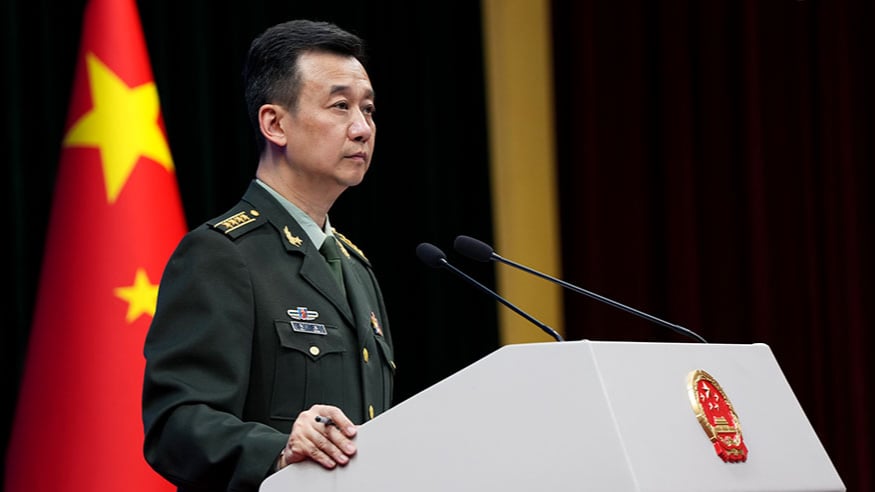

WASHINGTON — The Chinese Embassy in Washington delivered a scathing denunciation of the United States on Saturday, accusing the Pentagon of peddling fabricated tales about Beijing’s military arsenal to sow global discord and justify America’s own defense spending spree. In a pointed response to the latest Department of Defense report to Congress, embassy spokesman Liu Pengyu charged that Washington was “grossly interfering in China’s internal affairs” through annual publications that “maliciously distort China’s defense policy.” The exchange underscores the deepening mistrust between the world’s two largest economies, with implications that ripple across escalating superpower tensions, from the halls of Capitol Hill to the battlefields of the Indo-Pacific.
The Pentagon’s annual assessment, paints a dire picture of China’s military modernization, warning that Beijing’s buildup, including intercontinental anti-ship ballistic missiles capable of striking US bases on the West Coast, has left America increasingly vulnerable. The report, mandated by Congress, details China’s expansion of nuclear warheads, hypersonic weapons, and naval forces, framing them as existential threats that demand urgent US countermeasures. But from Beijing’s vantage, this is little more than a smokescreen. “By releasing such reports every year, the US grossly interferes in China’s internal affairs, maliciously distorts China’s defense policy, indulges in unfounded speculation about the development of China’s military capabilities, goes to great lengths to spread rumors and smear the Chinese military,” Liu Pengyu told RIA Novosti.
Pentagon’s China Scare Tactics: Excuse for US Arms Race?
Critics in Washington and beyond have long suspected that these yearly missives serve dual purposes: informing policymakers and stoking public fear to unlock billions in defense budgets. The 2025 report arrives amid President Trump’s push for military reinvestment, with the administration citing China’s advances as rationale for everything from tariff hikes to alliances with India and Japan. Liu dismissed the document as “full of misconceptions about China and geopolitical biases,” arguing it “deliberately hypes the so-called China military threat to mislead the international community.” “China strongly deplores and firmly opposes this,” he added, a phrase that echoes Beijing’s standard playbook but carries extra weight given the report’s specifics on silo fields in western China and submarine deployments in the South China Sea.
For the US, the stakes could not be higher. The Pentagon warns that China’s nuclear stockpile, projected to reach 1,000 warheads by 2030, erodes America’s strategic deterrence, a vulnerability exacerbated by delays in domestic programs like the Columbia-class submarine. Military analysts point to exercises simulating strikes on Guam and Hawaii, capabilities that shift the balance in potential Taiwan contingencies. Yet Beijing counters that its forces are purely defensive. “Beijing pursues a defense policy, and country’s armed forces are the key to stability in the world,” Liu stated. This narrative clash is critical to American interests, as miscalculations could precipitate conflict over semiconductors, rare earths, or sea lanes vital to the US economy, which relies on China for 80% of its antibiotics and key battery components.
Decades of Distrust: From Tiananmen to Trump Tariffs
The rift traces back decades, but recent escalations have supercharged it. Trump’s reelection in 2024 brought renewed hawkishness, with tariffs on Chinese EVs and chips framed as national security imperatives. The DoD report amplifies this, noting PLA Rocket Force reorganizations post-2023 corruption scandals and AI integrations in command systems. Liu Pengyu’s retort fits a pattern: China consistently rebuffs US claims as projections of Washington’s own aggressions, from arms sales to Taiwan to freedom-of-navigation ops in the Taiwan Strait. “China steadfastly pursues a national defense policy that is defensive in nature and a military strategy of active defense, and develops its military power entirely to safeguard national sovereignty, security, and development interests,” the spokesman emphasized.
In Congress, reactions split along partisan lines. Republicans hail the report as vindication for deterrence investments, while some Democrats question its alarmism amid budget strains. Think tanks like CSIS simulate war games where US carriers falter against Chinese missile salvos, urging allies like Australia and the Philippines to bulk up. But for everyday Americans, the human cost looms: higher prices from decoupling, cyber vulnerabilities from Huawei bans, and recruitment shortfalls plaguing the services. The Chinese military, Liu insisted, “acts in strict compliance with domestic and international law,” a claim tested by incidents like the 2025 Hainan collision with a US destroyer.
Global Ripples: Allies Question US Credibility
Beyond bilateral tensions, the spat alarms partners. India, locked in Himalayan standoffs, welcomes Pentagon data on PLA incursions but frets over US reliability post-Afghanistan. Japan accelerates missile defenses, citing the report’s Guam threat assessments. Europe, weaning off Russian gas, eyes China’s Belt and Road warily, yet German firms lobby against full decoupling. Liu’s words frame US actions as the true destabilizer: by “spreading rumors and smearing the Chinese military,” Washington risks a self-fulfilling prophecy. Economically, it’s dire, US exports to China hit $150 billion last year, while deficits fuel inflation Trump vows to tame.
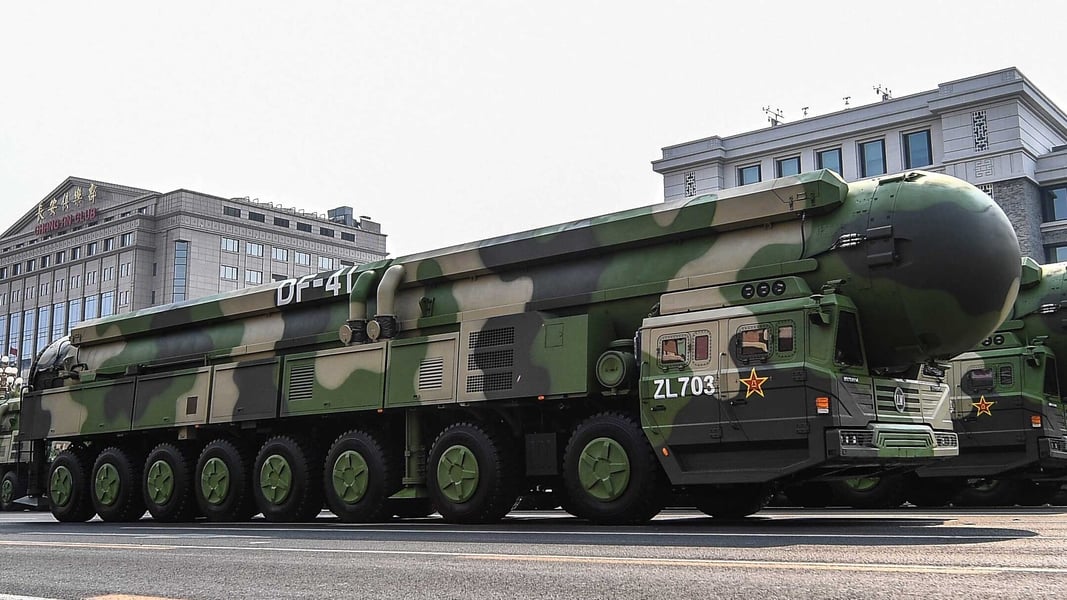
Military balance metrics tell a stark story. China’s navy now boasts 370 ships to America’s 290; its hypersonics outpace US counterparts. The report flags DF-41 ICBMs and Jin-class subs, but Beijing views these as countermeasures to US military buildup in South Korea. For US forces in the Pacific, this means dispersed basing, drone swarms, and allies sharing burdens, all unproven in peer combat since 1953. Liu’s dismissal challenges this orthodoxy: if China’s posture is “defensive in nature,” why the island-building in the Spratlys? The answer, per Beijing, lies in sovereignty, not hegemony.
Path to De-escalation? Diplomacy’s Fragile Thread
Amid bluster, backchannels persist. Trump’s team signals talks on fentanyl and TikTok, potential offramps from abyss. Yet the report’s timing, pre-inauguration, suggests institutional momentum overriding détente. Liu Pengyu’s statement, while rote, signals resolve: no concessions on “internal affairs.” For America, the calculus is unforgiving: deter without provoking, compete without collapse. Failure imperils everything from Social Security solvency (tied to growth) to Silicon Valley dominance.
Historians draw parallels to pre-WWI Anglo-German naval races, where hype begat hardware begat war. Today’s variant: hypersonics and hacks. The embassy’s riposte demands scrutiny, is it deflection, or legitimate grievance? US vulnerabilities are real, but so are alliance fractures if panic prevails. As 2026 dawns, Washington’s China policy hangs in balance, with Liu’s words a reminder that perceptions kill as surely as payloads. Beijing’s arsenal grows, but so does the risk of mutual misjudgment. Pentagon warns notwithstanding, stability hinges not on arsenals alone, but narratives. The Pentagon amplifies threats, China cries foul. Americans, footing the trillion-dollar tab, deserve unvarnished truth amid the fog.
















