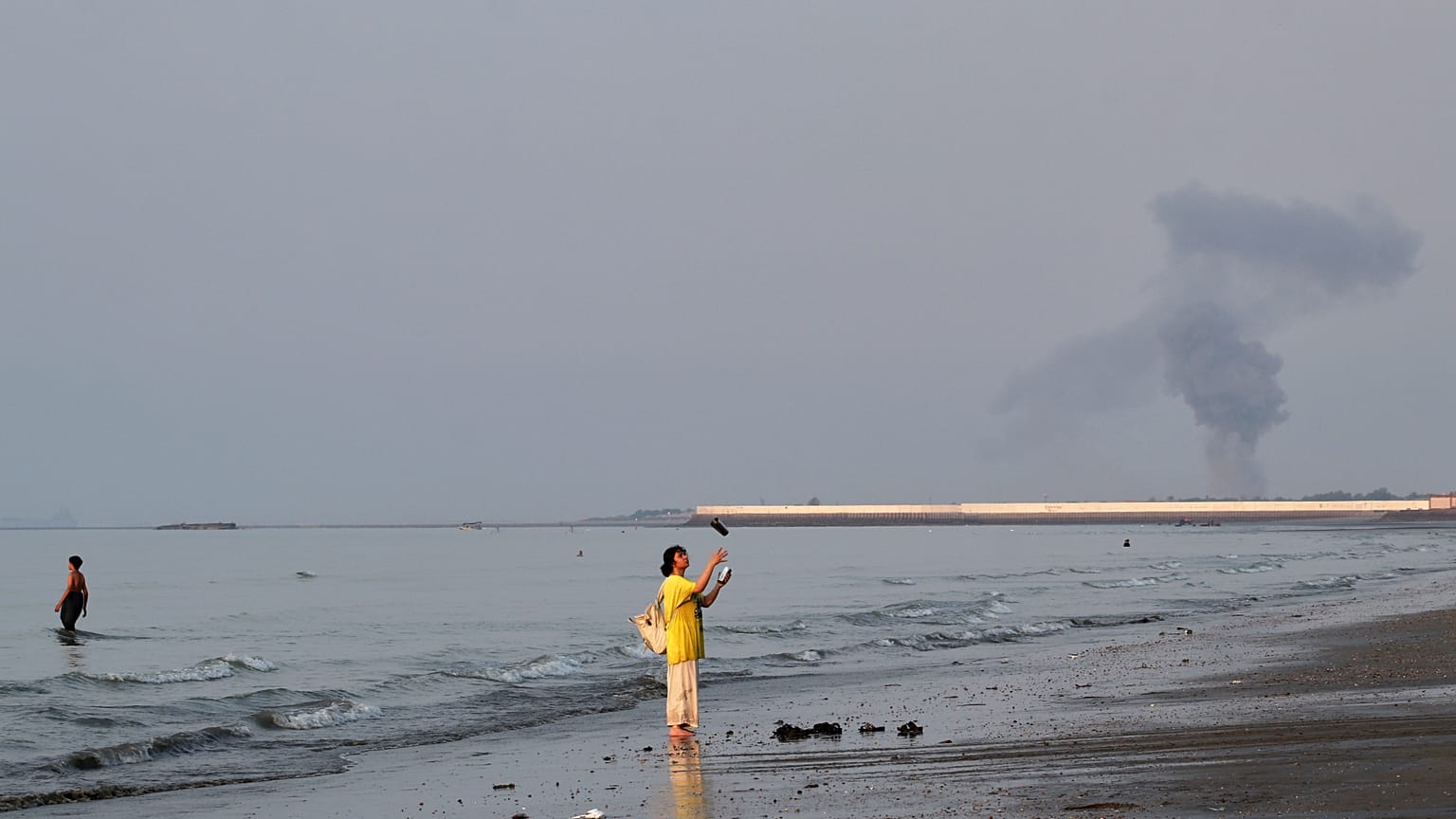

TEHRAN — Six tankers became the focus of competing claims Saturday in the Strait of Hormuz: four stopped by what Iran’s Revolutionary Guards said was a combination of missiles and drones, and two others that the Guards claimed detonated mines while attempting to transit a corridor south of the strait. The United States military dismissed the mine claims outright.
The IRGC said the four vessels were “rogue tankers” that attempted to transit the Strait of Hormuz without authorization. A combination of missiles and drones was used to halt them, Reuters reported, citing Iranian state television. In a separate statement, the Guards said two oil tankers had “exploded and caught fire” after entering what the IRGC described as a minefield south of the strait. “An hour ago, two oil tankers, which were trying to pass through the minefield south of the Strait of Hormuz by deceptive American intelligence agencies, exploded and caught fire,” IRNA quoted the Guards as saying. The statement attributed the mine placement itself to US intelligence operations.
US Central Command rejected the account. “Like most IRGC claims, this is false,” CENTCOM said, providing no further detail. No independent ship-tracking confirmation of the mine explosions was immediately available. The identities, flags, and cargoes of all six tankers were not publicly disclosed.
The incidents are part of a sustained Iranian effort to enforce a closure of the Strait of Hormuz, through which roughly 20 percent of globally traded oil passes daily. At least nine ships have come under attack since July 6, according to data cited by Al Jazeera. Transit traffic through the strait fell to six vessels in the past 24 hours, a fraction of the 35 or more that historically transited on a normal day.
Maritime risk assessors have moved to worst-case scenario framing. Industry executives cited by CNBC said tanker operators now face an unprecedented combination of missile and drone threats from IRGC naval forces, compounded by the disputed possibility of mines in the southern approaches. No major commercial insurer has publicly confirmed the presence of mines in the area. The IRGC’s attribution of mine placement to US intelligence agencies has not been independently corroborated.
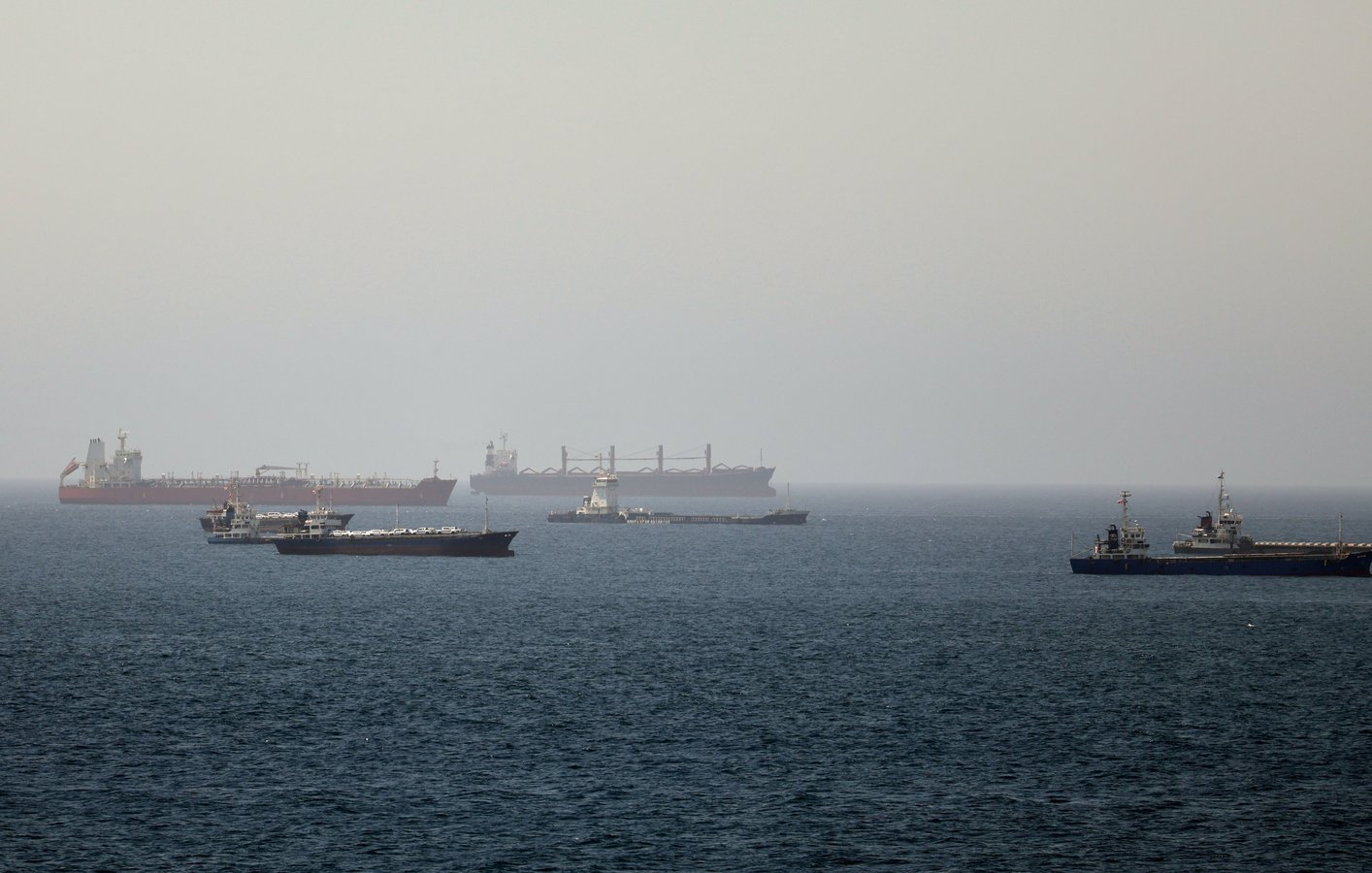
The IRGC has described vessels not operating under its permission system as “rogue” throughout the Hormuz blockade. Whether that designation carries any legal weight is disputed: the United Nations Convention on the Law of the Sea guarantees the right of innocent passage through international straits, a right Iran has not formally suspended under any recognized legal mechanism.
Earlier Saturday, US airstrikes struck at least five bridges and a tunnel in Iran’s Hormozgan Province, killing at least eight people and narrowing the overland routes supplying Bandar Abbas. The IRGC simultaneously launched drones and missiles at US military positions in Jordan, Kuwait, and Qatar. Saturday’s tanker interdictions add a naval dimension to an exchange that has spread across air, land, and sea.
The IRGC added in its mine statement that “the Strait of Hormuz remains closed to navigation because of the extreme danger created by US actions,” framing the closure as a response to US strikes rather than an act of unilateral interdiction. Neither Iran nor the United States has publicly addressed how the blockade affects the civilian populations of countries whose oil and goods move through the strait.
Iraq last week announced $60 billion in energy and pipeline deals with Chevron specifically designed to route exports around the Strait of Hormuz. That infrastructure remains years from completion. For now, the strait carries the weight of roughly a fifth of the world’s oil supply, and on Saturday, only six vessels were willing to test it.