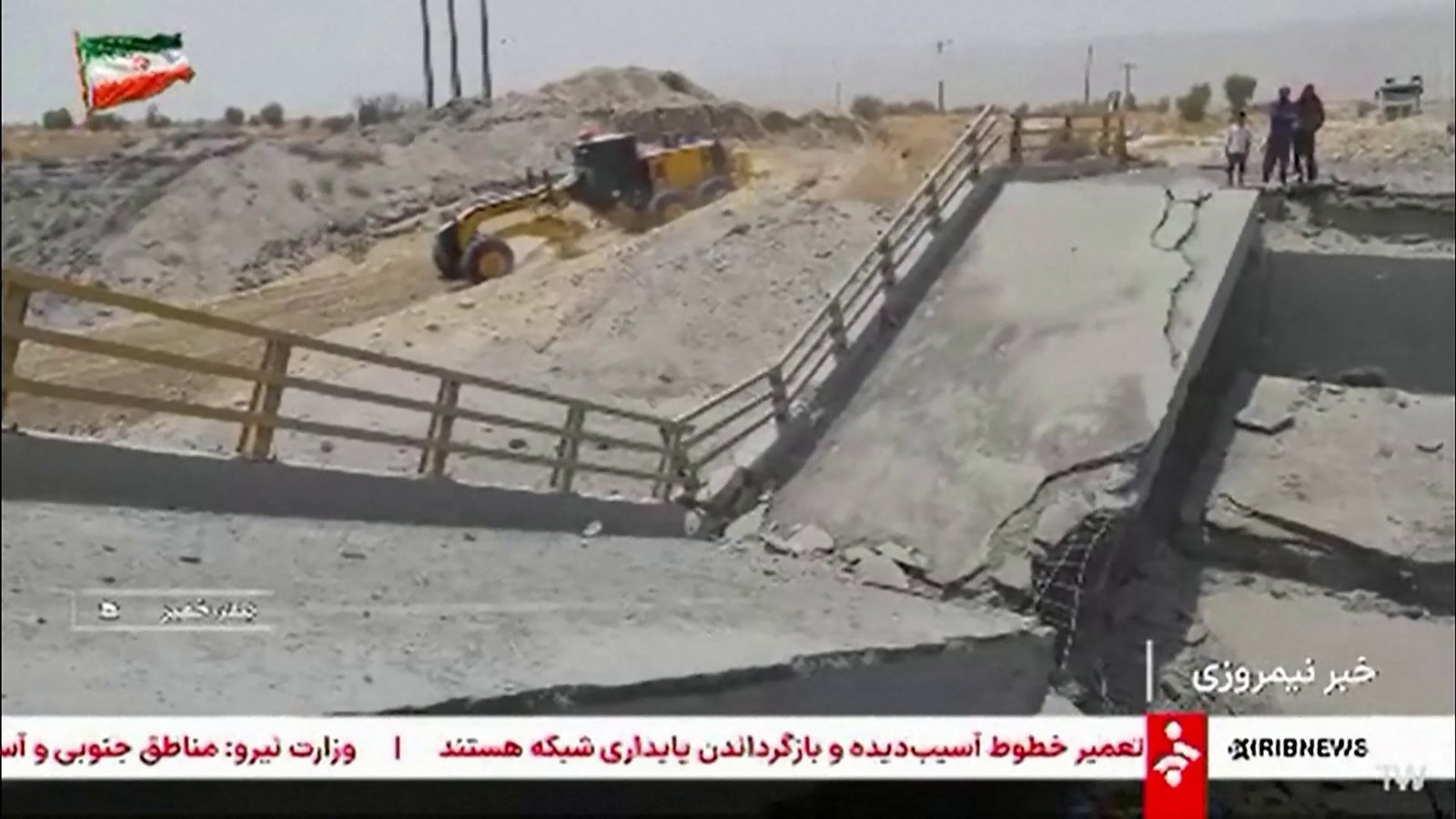

JASK, Iran – Twenty villages and roughly 10,000 people in southern Iran were cut off from drinking water Saturday after American airstrikes destroyed the core infrastructure of the Bunji desalination plant overnight. The pumping station and power transformer were “completely destroyed,” according to Hamzeh Pour, chief executive of the Hormozgan Water and Wastewater Company. It was an attack that appeared to supply the specific pretext Iran’s government had been preparing to announce.
Iran’s Deputy Foreign Minister, Kazem Gharibabadi, announced Saturday that Tehran was suspending all its commitments under the Islamabad memorandum of understanding. “The US has violated and suspended all its commitments within the framework of the Islamabad MoU,” Gharibabadi said, adding that Iran had “likewise suspended all our own commitments” and would no longer observe the agreement’s constraints. The statement converted what had been a deteriorating ceasefire into a war being fought without any governing diplomatic framework.
The Islamabad MoU, signed in mid-June following Gulf-mediated diplomacy, was intended to halt hostilities and create a pathway toward nuclear negotiations. President Trump declared the agreement “over” at the NATO summit ten days ago. Iran’s parliament speaker Mohammad Bagher Ghalibaf had already declared the deal void last Tuesday, calling the conflict an existential war against American aggression. Gharibabadi’s Saturday statement was different in kind: a formal diplomatic notice that Iran’s executive branch no longer considered itself bound by an agreement both sides had been violating for days.
Iran retaliated with a coordinated series of strikes. Islamic Revolutionary Guard Corps forces hit civilian power and water infrastructure in Kuwait, struck the Sheikh Isa Air Base in Bahrain, targeted the American military base in Azraq, Jordan, and attacked the United States fuel pier at Kuwait’s al-Ahmadi port. Iran’s Health Ministry said at least 50 people have been killed and more than 500 injured in US strikes since July 6, Al Jazeera reported.
The targeting of the Jask plant introduces a threshold not clearly crossed in earlier phases of the conflict. US strikes had concentrated on military logistics corridors, port infrastructure, IRGC command facilities, and the bridges connecting Bandar Abbas to the Iranian interior. The Bunji plant serves communities in Hormozgan Province where groundwater is limited and desalinated seawater represents the primary water supply for settlements disconnected from larger municipal networks. Destroying it in the height of summer cut off 10,000 people from drinking water without any US Central Command statement addressing civilians in the strike zone.
The escalation to water infrastructure was already underway. Iranian missiles had struck Kuwait’s own desalination complex the day before, damaging multiple electricity generation units and sparking a fire at a facility supplying nearly 90 percent of the country’s drinking water. The Gulf’s 56 major desalination plants have long been identified as critical vulnerabilities; earlier in the conflict, a CIA analysis described each installation as “extremely vulnerable to sabotage or military action.” The Jask strike confirms that both sides are now prepared to target water infrastructure directly.
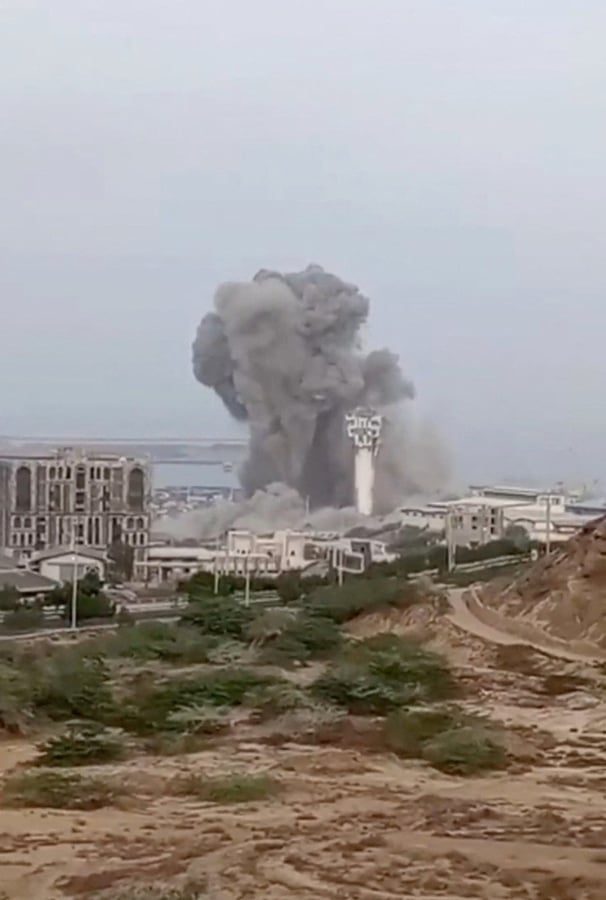
Jask carries strategic significance beyond its desalination plant. The town lies 170 kilometers east of Bandar Abbas along the Makran coast, adjacent to the Gulf of Oman, and has been the site of expanding Iranian naval facilities over the past decade. Iran’s navy maintains installations along this stretch as part of a deterrence posture designed to project reach into the Arabian Sea. Whether the Bunji plant was struck as infrastructure supporting that naval corridor or as a mechanism for applying pressure on local civilian populations remains unstated in any public US military communication.
What Gharibabadi’s suspension announcement means in practice is complicated by what had already collapsed. The MoU’s operative provisions had been ignored by both parties since Trump’s NATO declaration. The formal suspension may serve a legal function more than a military one, releasing Iranian negotiators from obligations the executive branch no longer wished to observe and providing a basis for resuming activities the agreement had constrained – including, potentially, the Strait of Hormuz transit regime the MoU had nominally defined.
Gulf states hosting American military infrastructure are absorbing strikes without altering their strategic posture. Kuwait has been struck by Iranian attacks three times in recent days. Bahrain hosts the US Navy’s Fifth Fleet command. Jordan has been required to intercept Iranian missiles crossing its airspace. None of the three has signaled reconsideration of American military presence on its soil, and none commented publicly on the Jask strike or Gharibabadi’s announcement Saturday.
Whether back-channel communication between Washington and Tehran survived Saturday’s formal suspension is not publicly known. Gulf mediators who brokered the June agreement have not confirmed contact with either capital since its collapse. The diplomatic question the MoU’s suspension leaves open is whether a third party remains willing to construct a new framework – and whether the civilian casualties and infrastructure damage accumulated since July 6 have already made any such arrangement harder to sell than the one that no longer exists.