

WASHINGTON – Katherine Clark had accepted more than $1.4 million from the American Israel Public Affairs Committee over the years. Last week, her donor portal went dark.
Clark, the House Minority Whip and one of the most senior Democrats in Congress, was among 15 AIPAC-endorsed lawmakers who found their fundraising access suspended after voting in favor of an amendment that would have stripped $3.3 billion in annual military aid to Israel. The July 15 vote – which failed 314-104 but drew 103 Democratic yes votes – cracked open a fault line that AIPAC spent decades and hundreds of millions of dollars trying to prevent.
“I will be voting yes, not because I agree with the entirety of the amendment, or the GOP’s cynical motivations for its consideration, but because I believe we must change course,” Clark wrote before the vote. She framed her position not as a break with Israel but as a rejection of unconditional support for a government whose military conduct in Gaza she said no longer aligned with American law, interests, or values. “We should not provide a blank check for military aid to any country that does not comply with U.S. law, interests, and values,” she added.
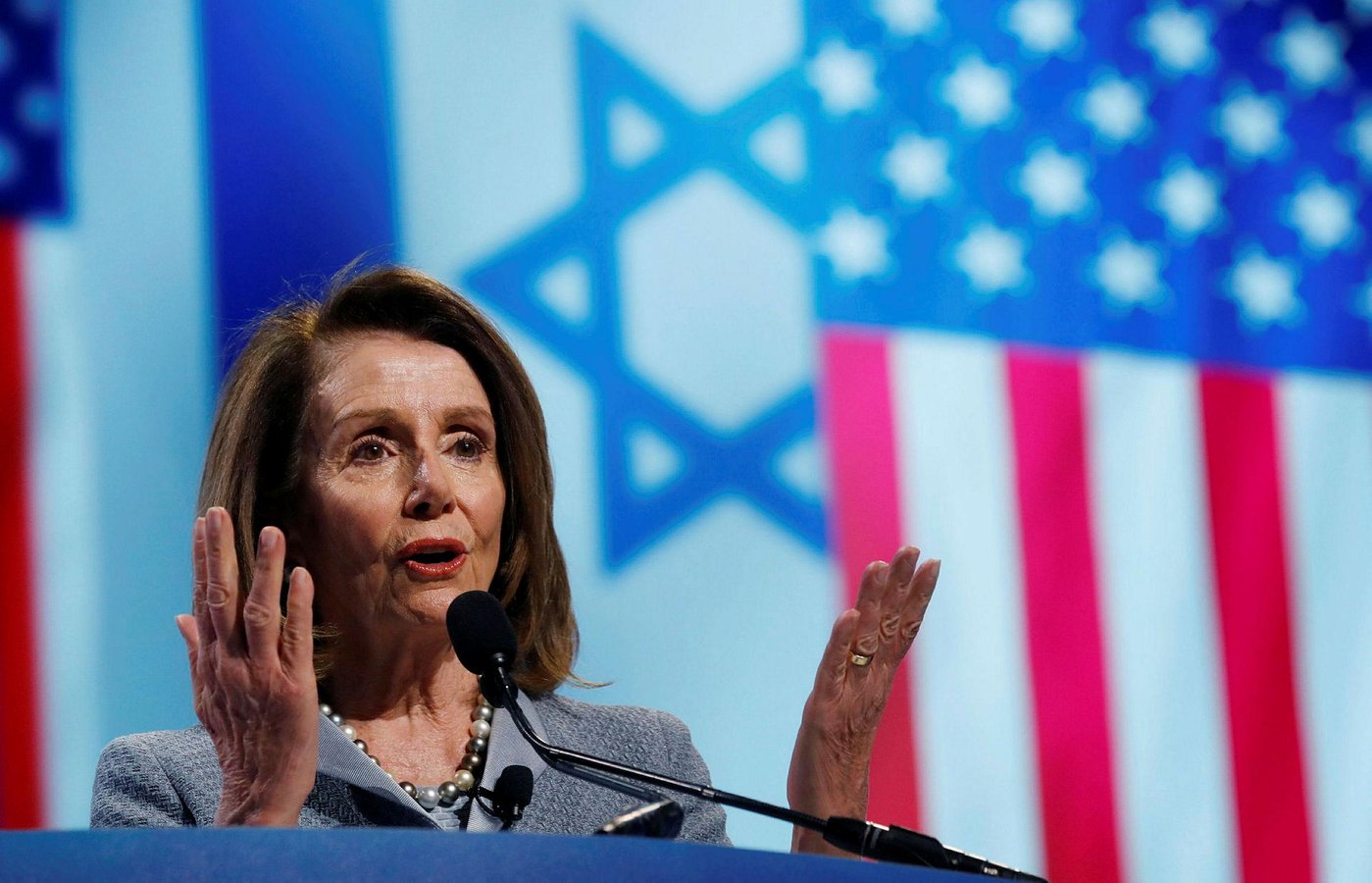
The amendment was introduced by Rep. Thomas Massie of Kentucky – a libertarian-leaning Republican known for his isolationist instincts – and proposed cutting the $3.3 billion in annual foreign military financing to Israel. Tucked into a broader defense appropriations bill, it drew support from a politically unlikely coalition: progressive Democrats, hardline conservatives, and moderates who decided the moment required a different kind of vote. Among those voting yes was former Speaker Nancy Pelosi.
Pelosi’s vote carried symbolic weight even as she acknowledged its limits. She said she backed the amendment “for the message that it sends,” despite calling it “ill-conceived.” The contradiction exposed where the Democratic caucus now sits – pulled between longstanding pro-Israel constituencies, rising grassroots pressure to hold Israel accountable for the mass killings in Gaza, and a party leadership unwilling to whip members into line. House Minority Leader Hakeem Jeffries declined to count against the measure, calling it “overly broad” while acknowledging the need for a “major reset” in the American-Israeli relationship.
AIPAC’s response came quickly. According to an AIPAC press release, the organization said it was “deeply appreciative of the 314 Republicans and Democrats who voted to reject” the measure and “disappointed by the 103 Democrats who voted with Massie to weaken America.” The group confirmed it had closed donor access portals for 15 of the 18 AIPAC-endorsed Democrats who voted yes, leaving three of the 18 without explanation for why their access was spared.
The 18 AIPAC-endorsed lawmakers who voted yes included Gabe Amo, Jake Auchincloss, Julia Brownley, Laura Friedman, Maggie Goodlander, Josh Harder, Steven Horsford, Glenn Ivey, Julie Johnson, Bill Keating, Seth Magaziner, Richard Neal, Joe Neguse, Brittany Pettersen, Pat Ryan, and Adam Smith – alongside Clark and Pelosi. AIPAC has spent roughly $11 million supporting House Democrats since 2022, a figure that reflects the breadth of the organization’s investment in maintaining Democratic alignment on Israel.
Whether the portal closures amount to a warning shot or the opening move in a broader reckoning is unclear. AIPAC has not committed to restoring access, nor has it indicated which of the 15 might face primary challenges in 2026. The group has spent more than $100 million in congressional primaries since 2022, including well-documented efforts to unseat progressive Democratic incumbents who broke with its agenda.
The vote arrived as public opinion on the conflict has shifted in ways that complicate AIPAC’s calculus. A Gallup survey found that 41 percent of Americans said their sympathies lay more with Palestinians, against 36 percent who favored Israelis – a gap that widens sharply among Democratic voters, 65 percent of whom express more sympathy with Palestinians. Clark’s office pointed to that polling, and to the growing number of constituents pressing for accountability over American weapons used in Gaza, as context for her decision.
The Massie amendment was attached to an appropriations bill that also contained bans on funding for the United Nations Relief and Works Agency, the International Criminal Court, the International Court of Justice, and the United Nations Human Rights Council. As the Jerusalem Post reported, the combined package reflected the kind of cross-cutting legislative maneuver that has complicated efforts to build a coherent narrative around the vote. The broader congressional push to block Israel’s accountability before international courts has intensified this session, drawing sharp opposition from progressive members in both chambers.
The debate over Israel aid has been intensifying since the conflict in Gaza escalated in October 2023, but the Massie vote marked the first time a significant Democratic bloc used an on-the-record roll call to express support for conditionality. Earlier legislative efforts to restrict aid – championed by Senator Bernie Sanders and progressive House members – attracted far smaller coalitions and failed to clear procedural hurdles.
Clark and her allies have framed their position not as opposition to Israel but as a demand that military assistance carry enforceable conditions tied to compliance with American law. The Leahy Law, which bars military aid to foreign security forces credibly implicated in gross violations of human rights, has been cited by aid-restriction advocates as a legal basis for conditionality. Whether the administration will formally invoke it in the Israeli context remains an open question that the Massie vote has pushed further into public debate.
What the vote has exposed, most plainly, is that AIPAC’s influence over Democratic members is no longer guaranteed by donation history alone. The organization built its model on the premise that funding, combined with the threat of primary challenges, could hold the caucus in line on votes touching Israel. That model has not collapsed – 314 members voted no, including a large Democratic bloc. But the defections were visible enough that AIPAC felt compelled to respond publicly, and notable enough that members across the caucus are watching to see what, if anything, comes next for the 15 who find themselves locked out.