
The modern obsession with intelligence has long been wrapped in a comforting lie: that cognitive ability is largely predetermined, a genetic endowment distributed unequally at birth. That narrative is now collapsing under the weight of new scientific scrutiny. Emerging research from Virginia Tech, alongside a broader wave of neuroscience findings, is delivering a far more unsettling conclusion—your brain is not fixed, and its decline is not inevitable. It is, instead, a direct reflection of how you live.
This is not motivational rhetoric. It is the hard edge of contemporary neuroscience.
At the center of this shift is a growing body of work suggesting that cognitive performance—memory, attention, emotional regulation—is deeply entangled with behavior. Movement, environment, and daily habits are not peripheral influences. They are the architecture of the mind itself, shaping human cognition, decision-making, and emotional regulation.
The Death of the “Fixed Intelligence” Myth
For decades, intelligence was treated as static, measurable, and largely immutable. IQ tests reinforced it. Education systems codified it. But neuroscience has been steadily dismantling this premise through one concept: neuroplasticity.
This is not a marginal finding. It is a structural redefinition of human potential.
The implication is stark: if the brain can change, then stagnation is not destiny—it is neglect.
Nature, Movement, and the Rewiring of the Brain
Virginia Tech’s latest public-facing research underscores a deceptively simple intervention—spending time in nature. But beneath that simplicity lies a sophisticated neurological response.
Exposure to natural environments appears to recalibrate cognitive systems. Attention improves. Stress markers decline. Neural efficiency increases. The effect is not psychological alone; it is biological.
This aligns with a broader scientific realization: the brain evolved in motion, not in stillness. Sedentary lifestyles are not just physically damaging—they are neurologically corrosive.
Movement triggers a cascade of neural benefits. Blood flow increases. Neurotransmitters stabilize. Brain-derived neurotrophic factor (BDNF), often described as “fertilizer for the brain,” is released, promoting the growth of new neurons.
In effect, motion is not exercise—it is maintenance.
The Behavioral Blueprint of Cognitive Power
If there is a single unifying principle emerging from current research, it is this: the brain is a behavioral organ.
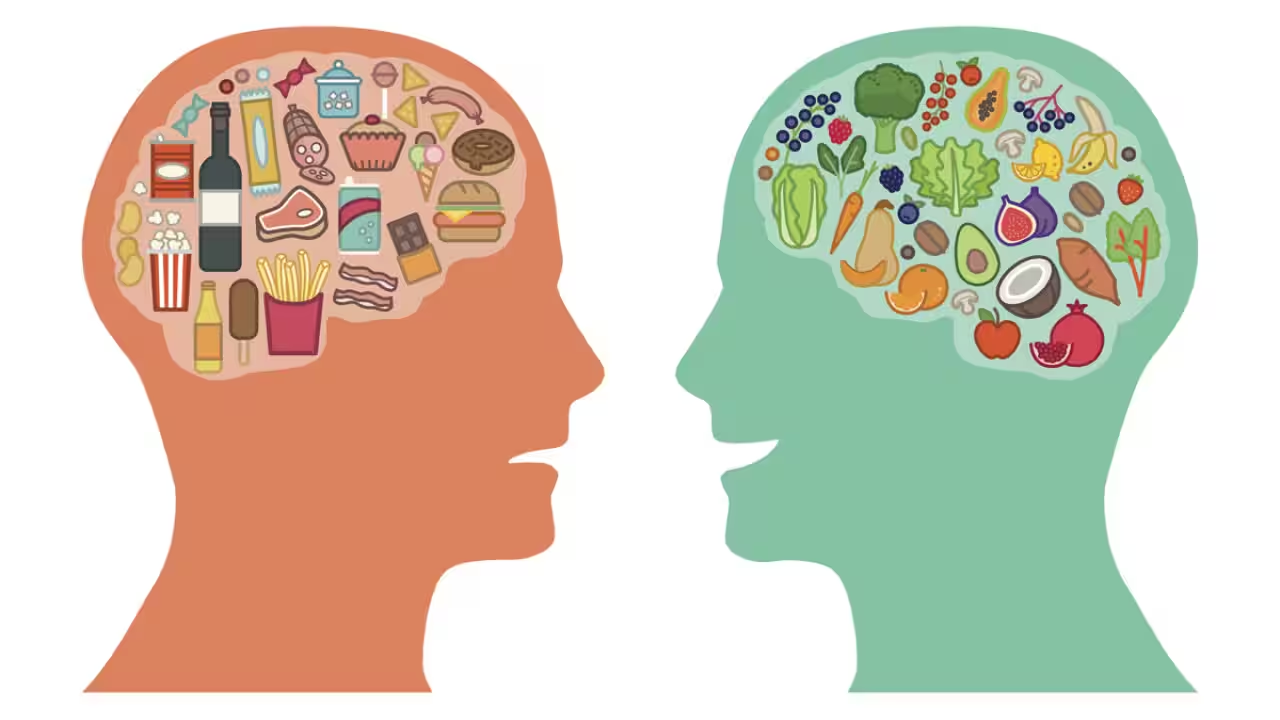
Every decision—what you eat, how you sleep, whether you engage socially—feeds into a continuous feedback loop that shapes neural function. This aligns closely with growing awareness around preventive health and lifestyle patterns.
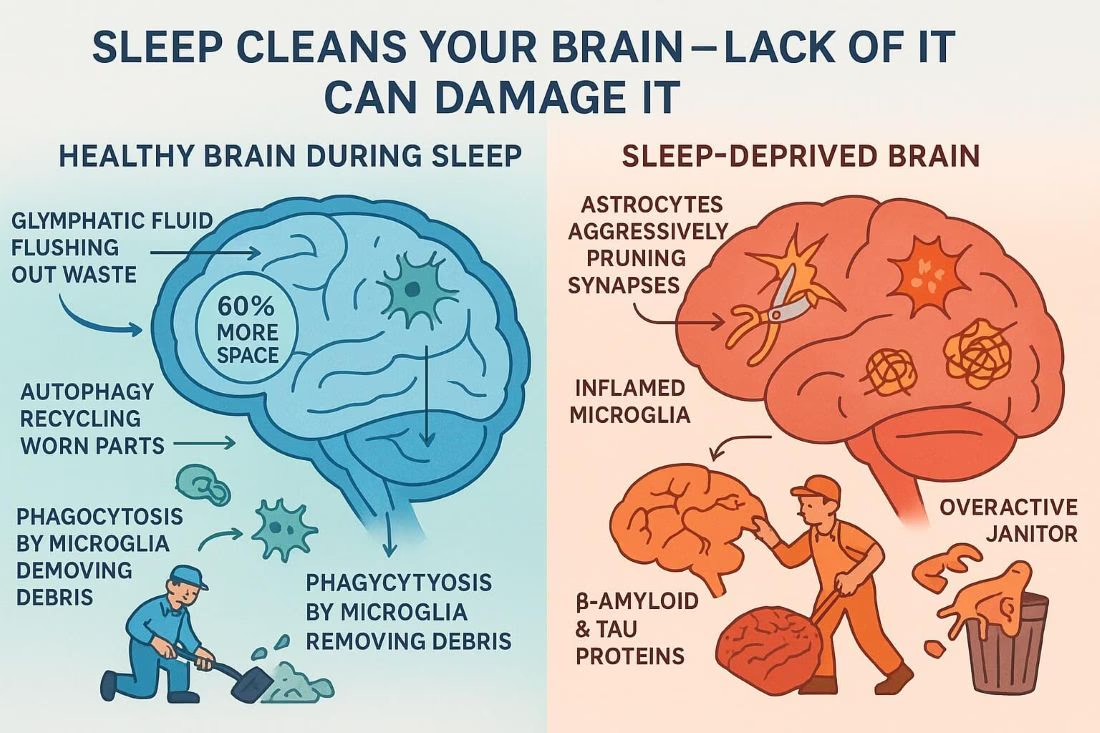
Nutrition, for instance, is no longer viewed as peripheral to cognition. The brain consumes a disproportionate share of the body’s energy, and dietary quality directly influences its performance. Sleep, once considered passive, is now understood as an active neurological process during which the brain clears toxic proteins linked to neurodegenerative diseases, reinforcing the importance of sleep quality and neural recovery.
Stress, perhaps the most insidious factor, operates like a slow poison. Chronic exposure to elevated cortisol levels has been shown to damage critical brain regions, including the hippocampus, which governs memory and learning. The rise of stress, hormonal imbalance, and modern lifestyle disorders underscores this growing crisis.
The Illusion of the Miracle Drug
Pharmaceutical innovation has long promised a shortcut to cognitive enhancement—a pill to sharpen memory, a therapy to halt decline. But the current scientific consensus is increasingly skeptical.
There is mounting evidence that lifestyle interventions can maintain or even enhance cognitive fitness more effectively than many pharmacological approaches.
This represents a shift from what researchers call “de novo innovation” to “synthetic innovation,” applying existing knowledge in more effective ways.
Social Isolation: The Silent Cognitive Killer
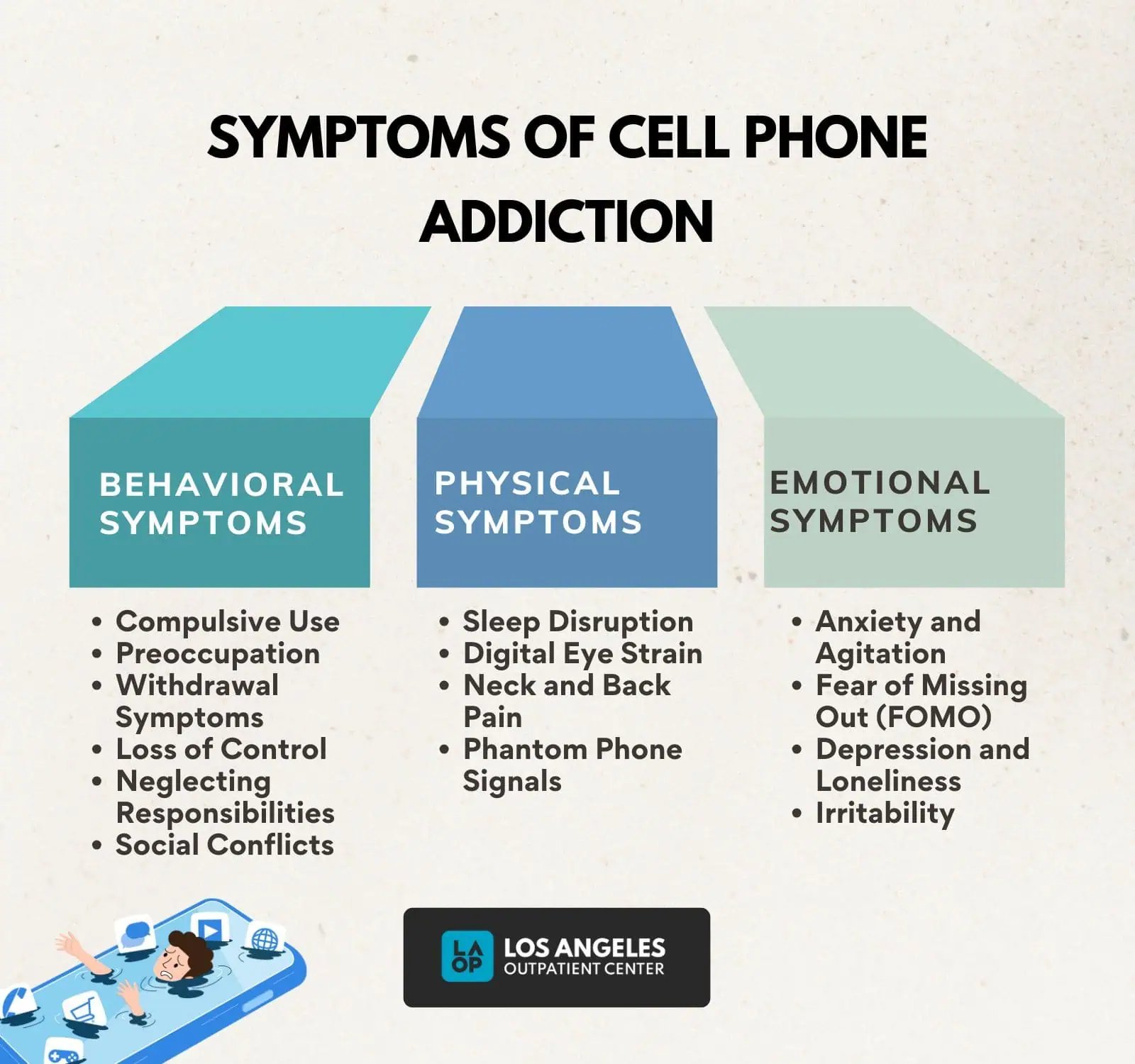
One of the more striking findings emerging from recent research is the impact of social connection on brain health. Humans are neurologically wired for interaction, and isolation disrupts that wiring.
Cognitive Decline Is Not Inevitable—But It Is Predictable
The most radical implication of current neuroscience is not that decline can be prevented entirely, but that it can be predicted—and influenced. Scientific literature on cognitive decline continues to reveal how lifestyle accelerates or slows degeneration.
Conversely, individuals who actively engage their minds demonstrate stronger cognitive resilience over time.
The Commercialization of Brain Health
As awareness of brain health grows, so too does the market built around it. Supplements, apps, neuro-enhancement programs—all promise optimization. Many deliver little.
The danger is not just inefficacy. It is distraction.
The Brutal Bottom Line
Strip away the jargon, the studies, the institutional framing, and the message becomes almost uncomfortably simple: your brain is not failing you. You are failing your brain.
The science does not offer absolution. It offers agency.
And with agency comes responsibility.
Related Posts