
In the cold vacuum beyond Earth’s orbit, where silence reigns and time stretches thin, four astronauts aboard NASA’s Orion spacecraft witnessed something both fleeting and profound: the Moon being struck—six times—by meteorites in real time.
It was not a simulation. Not archival data. Not a distant telescope feed.
It was raw cosmic violence unfolding before human eyes.
During the historic Artemis II mission, NASA astronauts orbiting thousands of kilometers above the lunar surface reported a series of brief, luminous flashes—white and blue-white bursts that flickered and vanished in less than a second. These were not anomalies. They were impacts. As astronauts witnessed six meteorite impacts on the Moon, the reality of deep-space exposure became unmistakably clear.
The timing was everything.
The astronauts were observing a rare solar eclipse from lunar orbit, a phenomenon that plunged the Moon’s far side into near-total darkness. That darkness—usually a limitation—became a scientific advantage. Against this shadowed canvas, even the faintest flashes stood out with stark clarity.
Under normal conditions, such impacts occur constantly, invisibly. The Moon, lacking an atmosphere, is perpetually exposed to a barrage of micrometeoroids and larger debris. But rarely—almost never—are these collisions witnessed directly by humans in situ.
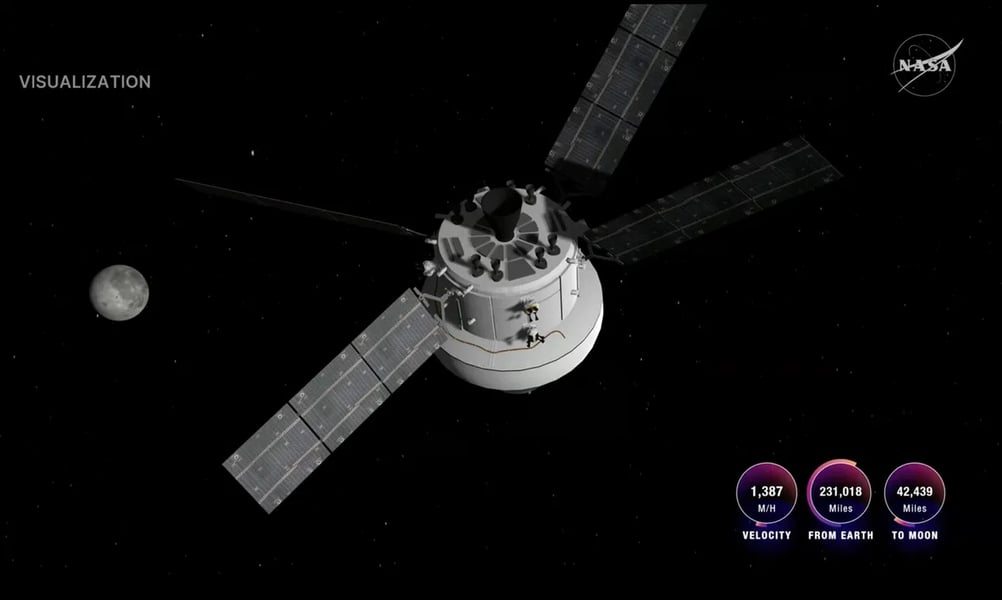
A spectacle born of darkness, the Artemis II crew—positioned thousands of kilometers above the lunar surface—initially struggled to comprehend what they were seeing. The flashes were too brief for onboard cameras to capture, too subtle for instrumentation to log in real time. But trained human perception proved decisive.
NASA later confirmed their interpretation: six separate meteorite impacts, each producing a momentary flash as kinetic energy converted instantly into heat and light upon collision.
The fact that cameras failed to record the events is telling. The universe does not wait for human technology to catch up.
What the astronauts witnessed was not rare in occurrence, but rare in perception.
The Moon, long romanticized as humanity’s next frontier, revealed a harsher truth. It is not a sanctuary. It is a target.
Unlike Earth, the Moon has no atmosphere to burn up incoming debris. Every particle, from dust-sized grains to larger meteorites, strikes the surface at extreme velocities. The result is a constant, invisible bombardment—one that reshapes the lunar landscape and poses a direct threat to future human missions.
Even as Artemis II breaks Apollo record in historic moon mission, pushing humanity farther than ever before, it simultaneously exposes the fragile margin of safety in deep space.
NASA engineers are already responding. Multilayered protective suits, reinforced habitats, and subsurface shelters are being designed to mitigate these risks. Lava tubes and craters—once geological curiosities—are now being evaluated as potential refuges.
Artemis II is, by every metric, a defining mission. Launched in April 2026, it carried astronauts farther from Earth than any humans in history, a milestone reinforced by reports that Artemis II crew traveled farther than any humans in history.
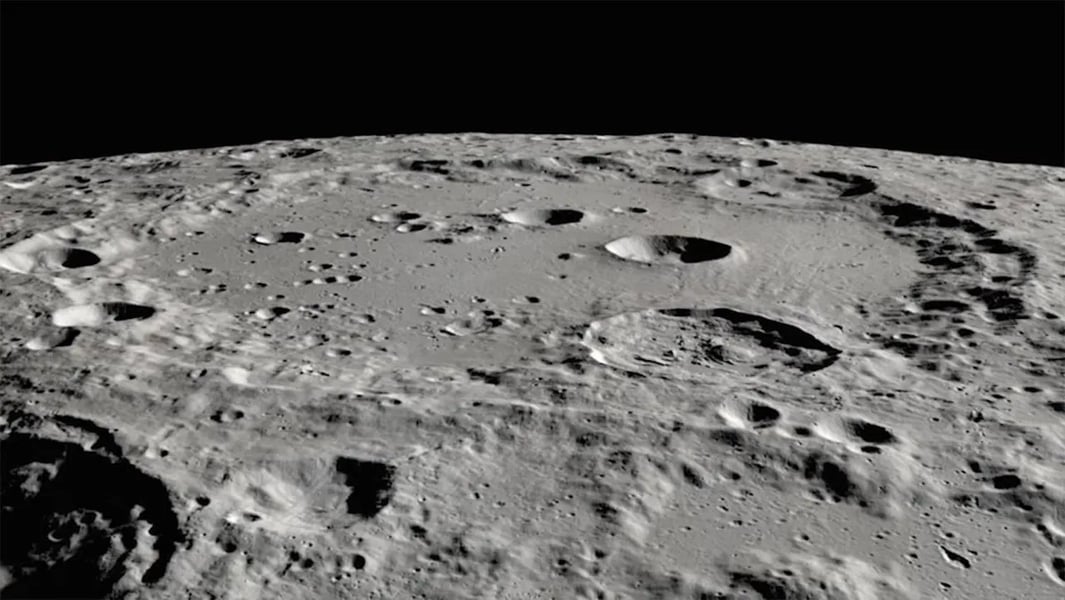
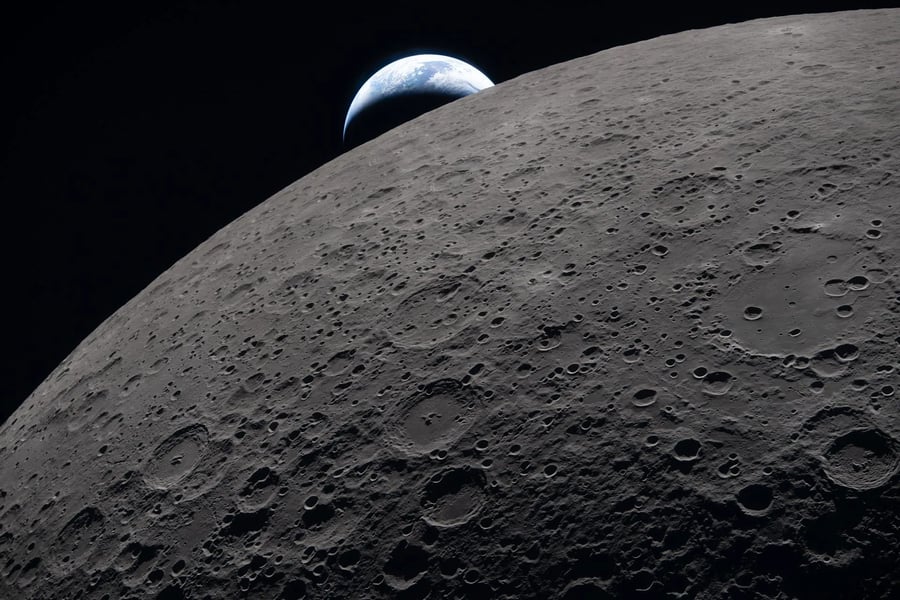
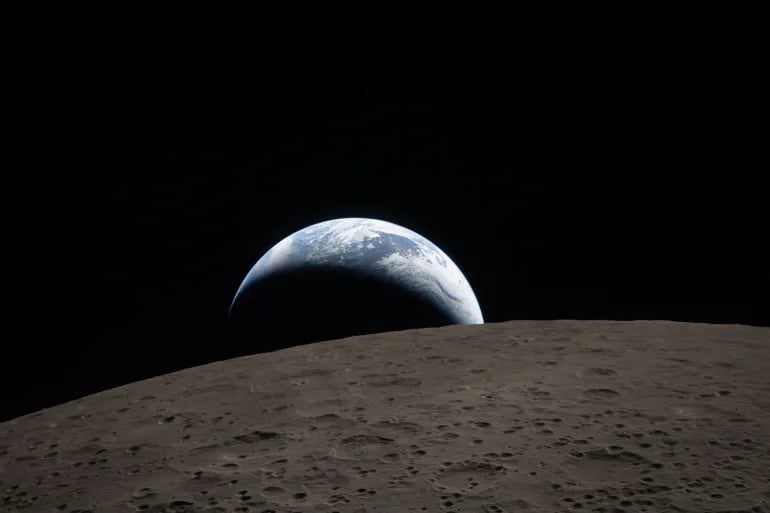
Images transmitted back to Earth, as NASA released images from Artemis II’s historic lunar flyby, reveal a stark, cratered world set against the void, with Earth suspended as a distant crescent.
For the astronauts, the experience was not merely technical. It was psychological. The profound cognitive shift—known as the overview effect experienced by astronauts in deep space—reshapes perception, identity, and humanity’s place in the cosmos.
Yet amid that grandeur, it was the flashes that endured. Brief. Violent. Unforgiving.
When meteorites strike the Moon, the absence of atmosphere ensures there is no deceleration. Objects collide at velocities reaching tens of kilometers per second. The resulting energy release manifests as intense flashes and micro-crater formation.
These events are typically detected only through specialized telescopes. Artemis II changed that paradigm. It placed human observers directly in the environment, enabling real-time observation of a process that has shaped the Moon for billions of years.
For NASA, the implications are immediate and sobering. Future missions—Artemis III and beyond—aim to establish a sustained human presence on the lunar surface. That ambition now faces renewed scrutiny.
Micrometeoroid impacts are not theoretical risks. They are constants.
This reality echoes earlier concerns, as NASA delays manned Moon missions under Artemis program, highlighting safety, engineering, and mission-readiness challenges.
A lunar base could face thousands of micro-impacts annually. Even with advanced shielding, vulnerabilities persist. Artemis II did not introduce new dangers—it illuminated them.
The Moon is no longer being approached as an open frontier. It is being treated as a hostile environment requiring defensive architecture.
At a broader level, this mission unfolds against the backdrop of a global race to explore the Moon intensifies, with multiple nations positioning lunar exploration as both a scientific and strategic priority.
Artemis II, therefore, is not just exploration. It is assertion.
In the grand arc of space exploration, the six flashes may seem insignificant. But their meaning is profound. They are reminders that space is not passive. It is active, dynamic, and often violent.
They underscore a fundamental truth: the Moon is not waiting for humanity. It is evolving, continuously shaped by forces beyond human control.
And yet, the trajectory remains unchanged.
As NASA pushes deeper into space, this mission stands alongside the latest space exploration updates shaping humanity’s future beyond Earth.
The Artemis program is moving forward—with Artemis III aiming for a lunar landing and Artemis IV envisioning sustained presence.
Beyond that lies Mars.
But the lessons of Artemis II will persist. The flashes observed in the darkness are not anomalies. They are signals.
Warnings.
And perhaps, guidance.
Humanity is returning to the Moon. Not as visitors, but as builders.
This time, however, the illusion of safety is gone.
What remains is clarity.