
In an industry built on reinvention, the most urgent transformation remains stubbornly out of reach.
Fashion, long celebrated for its ability to anticipate and shape culture, is now confronting a reckoning that cannot be solved with seasonal collections or aesthetic shifts. Beneath the spectacle of runway shows and celebrity endorsements lies a system that activists, policymakers and even insiders increasingly describe as resistant to meaningful change.
Despite years of pledges and sustainability campaigns, the global fashion industry continues to lag behind on its environmental and ethical commitments. Reports show that emissions are still rising, supply chains remain opaque, and labor abuses persist in manufacturing hubs across the world.
At the same time, the stakes have never been higher. Fashion accounts for roughly 10 percent of global carbon emissions and is one of the largest consumers of water, placing it at the center of the climate crisis.
Yet, a growing coalition of activists believes the industry’s inertia is not due to lack of awareness, but rather a lack of pressure powerful enough to force systemic reform.
The fast-fashion sector is entering one of its most disruptive cycles, with mounting scrutiny over environmental costs and labor practices intensifying pressure on brands worldwide.
A New Era of Fashion Activism
In recent years, fashion activism has evolved from fringe protest to coordinated, strategic intervention. What once consisted primarily of boycotts and awareness campaigns has transformed into a sophisticated ecosystem of advocacy that targets brands from multiple angles at once.
Organizations are now blending public spectacle with policy engagement, corporate lobbying and investigative journalism. The goal is not merely to shame companies, but to alter the economic and regulatory structures that sustain them.
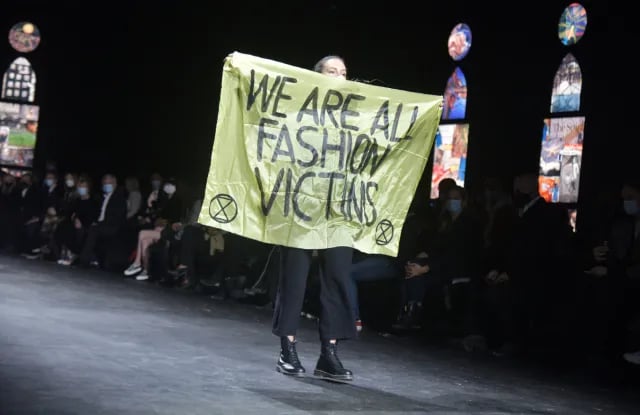
Groups have staged elaborate public stunts designed to capture attention in an oversaturated media landscape. One campaign created a satirical retail experience to highlight corporate inaction on renewable energy, blurring the line between performance art and protest, as activists are pushing the industry toward a future that prioritizes accountability.
Others have turned to film and long-form storytelling, exposing the environmental and ethical costs embedded in everyday garments. These narratives aim to shift consumer perception, transforming clothing from a symbol of personal expression into a lens on global inequality.
Pressure From Within
Perhaps the most significant shift is the rise of insider activism.
Organizations that once operated solely as external critics are now engaging directly with corporate governance structures. By acquiring shares in major companies, advocacy groups gain access to boardrooms, where they can push for policy changes and greater accountability.
This dual strategy, combining public pressure with internal influence, has proven difficult for brands to ignore. Companies that might once have dismissed protests as reputational noise now face tangible risks to their operations, from investor scrutiny to regulatory intervention.
Animal rights campaigns, for example, have successfully pressured brands to abandon certain materials by coupling undercover investigations with shareholder activism. The result is a feedback loop in which public outrage amplifies internal demands for reform.
Yet even these victories are often partial. Critics argue that many brands adopt selective changes that address the most visible issues while leaving deeper structural problems intact, particularly among fast fashion giants facing accusations of greenwashing.
The Limits of Corporate Promises
The past decade has seen a surge in sustainability commitments from fashion companies, ranging from carbon neutrality pledges to circular production models. But the gap between ambition and execution remains wide.
In one case, one high-profile brand set out to become “climate positive”, aiming to remove more carbon from the atmosphere than it emitted, yet progress has remained uneven.
Such efforts highlight both the potential and the limitations of voluntary corporate action. While incremental improvements are possible, systemic transformation often proves elusive without external enforcement.
Industry analysts point to structural barriers that complicate progress. Fashion supply chains are vast and fragmented, spanning multiple countries with differing regulations, labor standards and environmental conditions.
A System Built for Speed
At the heart of the problem lies a paradox: the very features that made fashion globally dominant, speed, scale and accessibility, are now the ones that hinder its transformation.
Fast fashion has compressed production timelines to a matter of weeks, enabling brands to respond instantly to trends. But this acceleration has come at a cost. Massive volumes of clothing are produced each year, much of which ends up in landfills.
Even solutions like circular production models face scrutiny over their real-world impact and scalability.
The Rise of Systemic Thinking
Recognizing these complexities, some advocacy groups have shifted their focus away from individual brands and toward systemic change.
Instead of targeting specific companies, they emphasize transparency, education and policy reform. By equipping consumers with information and engaging lawmakers, these organizations aim to reshape the broader framework in which fashion operates.
This approach reflects a growing consensus that isolated actions are insufficient. Without coordinated efforts across governments, corporations and civil society, progress risks being fragmented and reversible.
The collapse of the Rana Plaza factory in 2013 remains a defining moment in this movement, exposing the human cost of opaque supply chains and galvanizing calls for industry-wide accountability.
Consumers at a Crossroads
Amid these shifts, consumers are increasingly being positioned not just as buyers, but as participants in the push for change.
Data suggests that demand for sustainable fashion is rising, driven by growing awareness and regulatory pressure.
Yet consumer behavior remains inconsistent. While surveys show rising concern about environmental and ethical issues, purchasing decisions often continue to prioritize price and convenience.
This tension underscores a central dilemma: can an industry built on consumption be reformed through consumption alone?
Activists argue that stronger regulations and corporate accountability are essential, echoing calls for stronger regulations and corporate accountability across the sector.
An Industry at a Turning Point
For all its challenges, the fashion industry is not static. Signs of transformation are emerging, from investments in circular production models to experiments with new materials and business models.
At the same time, emerging designers are reimagining what fashion can be, placing sustainability and ethics at the core of their work.
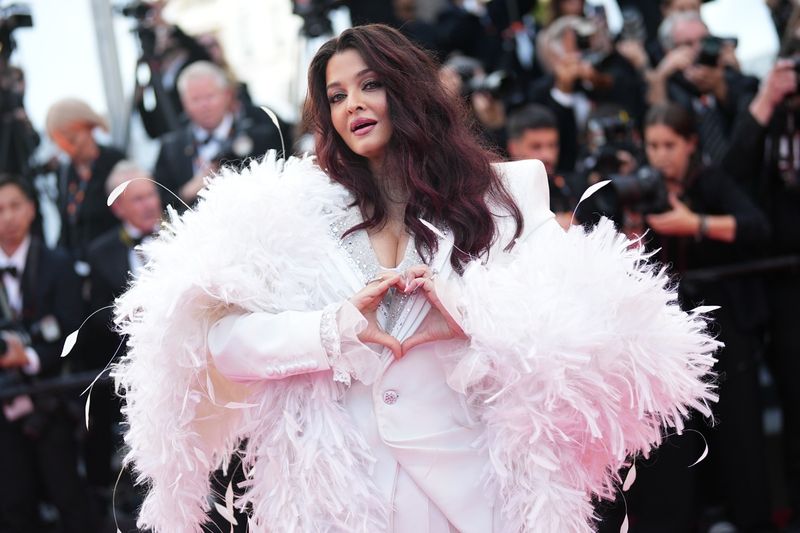
The cultural dimension of fashion remains equally powerful, evident in moments like global fashion, where spectacle, celebrity, and cultural symbolism collide.
Meanwhile, recognition as a potential lever for the next generation of talent continues to shape the industry’s future, highlighted by achievements such as recognition as a potential lever for the next generation of talent.
Even legacy brands are under pressure, with two titans, Chanel and Zara, find themselves at pivotal crossroads in an evolving market.
The Road Ahead
The question is no longer whether fashion must change, but how, and how quickly.
Activists, armed with new strategies and broader alliances, are pushing the industry toward a future that prioritizes accountability over aesthetics. Their efforts suggest that transformation is possible, but only through sustained pressure and collective action.
The crisis reflects a broader shift in sustainable fashion debates, where activists argue systemic reform is the only path forward.
For an industry defined by its ability to reinvent itself, the challenge now is to prove that reinvention can extend beyond style, and into substance.