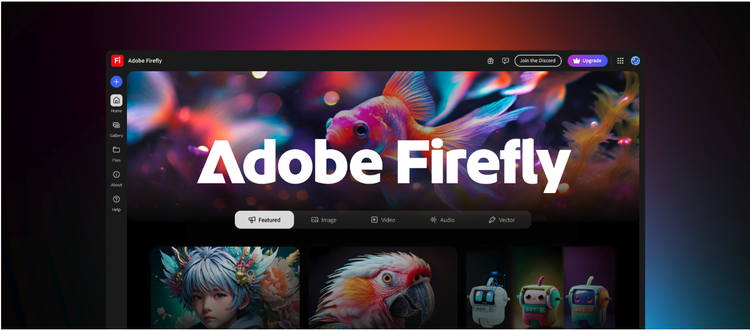

Adobe has taken a decisive step into the rapidly evolving world of artificial intelligence, unveiling its Firefly AI Assistant — a system designed to fundamentally change how creative work is done by turning complex software into a conversational experience.
Announced this week, the assistant transforms Adobe’s Creative Cloud ecosystem into a unified workspace where users can describe what they want and let the software execute the process. The move signals a broader shift across the tech industry toward AI systems that prioritize outcomes over manual workflows.
For decades, Adobe’s tools — including Photoshop, Premiere Pro, and Illustrator — have been synonymous with precision and complexity. Mastery required deep technical knowledge and time. Now, with what can be described as a conversational AI editing tool, users can type or speak commands like “retouch this image” or “resize this video for social media,” and the system handles the steps automatically.
At the core of the new system is a “creative agent,” a layer of artificial intelligence that doesn’t just generate content but executes tasks across multiple applications. The Firefly AI Assistant can orchestrate multi-step workflows across Creative Cloud apps, connecting tools into a single interface that maintains context and continuity across sessions.
This marks a significant departure from traditional software logic. Instead of thinking step by step — adjusting lighting, cropping, and color grading — users can now describe outcomes in natural language. The assistant determines the necessary actions and carries them out, effectively compressing hours of work into seconds.
Adobe’s approach reflects a growing industry trend toward AI-powered workflows using natural language prompts, where software behaves less like a tool and more like a collaborator. The company is positioning Firefly as a bridge between professional-grade software and intuitive, accessible design experiences.
The assistant also introduces a system of “Creative Skills,” which are reusable workflows that can be triggered with a single command. These skills can be customized or built from scratch, allowing teams to standardize repetitive processes such as branding, formatting, and batch editing. Over time, the AI adapts to user preferences, learning styles and improving recommendations based on usage patterns.
Adobe confirmed that Firefly AI Assistant will be available in public beta in the coming weeks, marking the first phase of a broader rollout. :contentReference[oaicite:4]{index=4} The company is also integrating third-party AI models, including technology from Anthropic, signaling a shift toward a more open AI ecosystem.
This integration underscores Adobe’s strategy to remain competitive in an increasingly crowded AI landscape. As companies race to develop intelligent assistants capable of automating tasks, Adobe’s advantage lies in its deep integration across creative workflows and its massive existing user base.
The Firefly AI Assistant is part of a larger transformation within Adobe’s ecosystem. Firefly itself — a family of generative AI models — already supports image, video, and audio creation, enabling users to move from concept to finished output using simple prompts.
Industry analysts see this as a shift toward “agentic AI,” where users act more like creative directors, setting intent and vision while the system executes the details. This could dramatically lower the barrier to entry for beginners while accelerating workflows for professionals.
Still, the transition raises important questions about authorship and control. As AI takes on a larger role in the creative process, concerns about originality, ownership, and creative identity are likely to intensify. Adobe has emphasized that users will retain full control, with the ability to refine, override, or customize AI-generated outputs.
The broader implications extend beyond design. By embedding AI agents into widely used software, Adobe is helping redefine how digital work is done — not just in creative industries, but across marketing, media, and content production.
The direction is clear: creativity is moving away from manual execution and toward intent-driven creation.
With the launch of Firefly AI Assistant, Adobe is betting that the future of creative work will not be about mastering tools, but about expressing ideas — and letting artificial intelligence handle the rest.