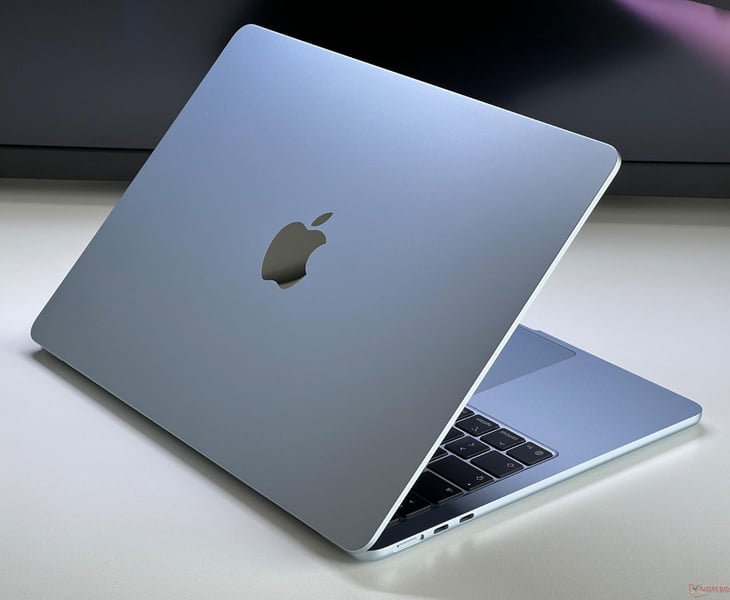

The price of Apple’s latest ultralight laptop has taken an unexpected turn.
Less than two months after its launch, the M5 MacBook Air is already flirting with record lows, dropping to $949, a $150 discount that signals a rare shift in Apple’s pricing strategy and a broader recalibration of the premium laptop market in 2026.
For a company known for holding firm on pricing, the rapid discounting has caught both consumers and analysts off guard.
A Fast Drop for Apple’s Newest Laptop
When Apple introduced the M5 MacBook Air in March, it came with a familiar promise: more power, better efficiency, and a higher starting price. The 13-inch model debuted at $1,099, marking a $100 increase over the previous M4 generation.
That increase, Apple argued, was justified. The new model doubled its base storage to 512GB and delivered significantly faster SSD speeds, along with performance gains driven by the new M5 chip.
But the market appears to have responded differently.
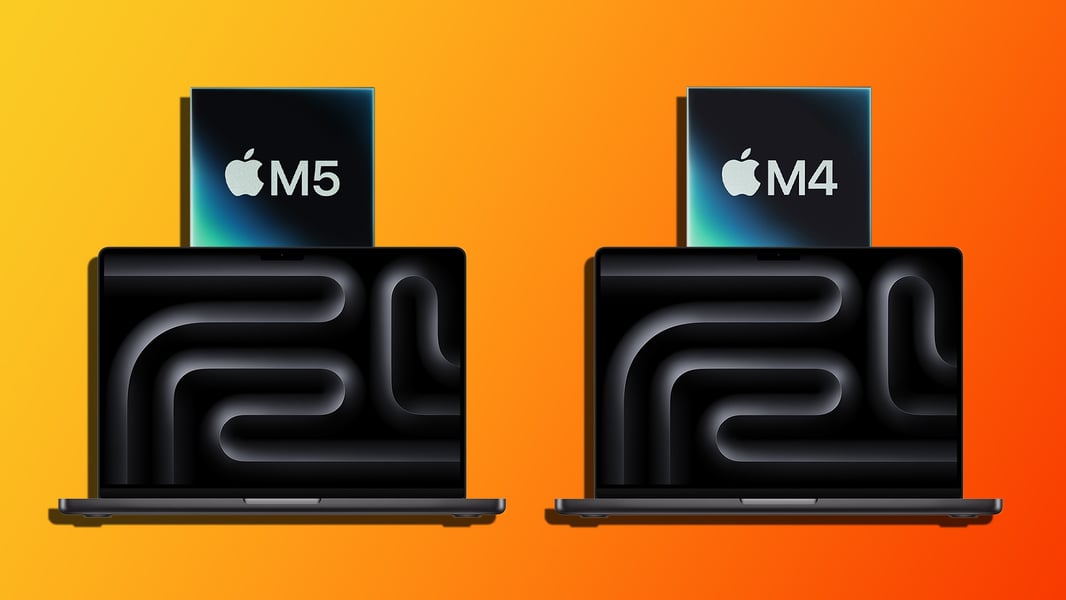
The speed of that decline suggests a growing tension in Apple’s lineup: newer devices are arriving faster, but consumer willingness to pay top dollar is softening.
The M4 Problem
Part of the pressure comes from within Apple’s own ecosystem.
The M4 MacBook Air, released just a year earlier, remains widely available at lower prices and continues to offer nearly identical design, battery life, and many core features. In fact, the most visible difference between the two generations lies in performance, not appearance.
Both models share the same sleek chassis, Liquid Retina display, and up to 18 hours of battery life.
The M5 chip does bring improvements. It enhances CPU, GPU, and AI-driven tasks, with early reports suggesting noticeable but not transformative gains for everyday users.
For many buyers, that raises a simple question: why pay more?
The answer, increasingly, is that they don’t have to.
Performance Gains Meet Pricing Reality
Apple positioned the M5 as a future-proof machine. It introduced faster unified memory, improved graphics performance, and a stronger Neural Engine aimed at AI workloads.
In real-world usage, the laptop is undeniably faster. Benchmarks and early testing show measurable gains in multi-core processing and graphics workloads, bringing it closer to entry-level MacBook Pro performance.
Yet those improvements come at a time when consumers are becoming more price sensitive, especially in a global economy marked by persistent inflation and cautious spending.
The result is a mismatch a more powerful machine entering a market that is less willing to pay a premium for incremental upgrades.
Apple’s New Pricing Strategy?
Some analysts see the rapid discounting as evidence that pricing dynamics are changing across Apple’s product lineup.
If that pattern holds, the M5 MacBook Air could represent a new pricing model for Apple’s premium laptops at launch, but aggressively discounted within weeks to maintain momentum.
That strategy could also help Apple better segment its lineup. The M4 MacBook Air now effectively serves as the entry-level option, while the M5 becomes the performance-focused upgrade, even if the price gap between them continues to shrink.
A More Competitive Laptop Landscape
Beyond Apple, competition is intensifying.
Windows laptops powered by next-generation chips from Intel and Qualcomm are pushing into the same territory, offering strong performance, improved battery life, and often lower prices.
In that context, Apple’s dominance in the premium laptop segment may depend on how effectively it balances innovation with affordability.
What It Means for Buyers
For consumers, the timing could hardly be better.
The M5 MacBook Air, already considered one of the very best laptop deals right now, is now available at a price that undercuts its own launch expectations. At $949, it becomes a far more compelling option, especially given its doubled base storage and performance improvements over older models.
Still, the decision is not straightforward.
Buyers weighing the M5 against the M4 must consider how much they value incremental performance gains versus immediate savings. For some, the older model may remain the smarter choice. For others, the M5’s improved capabilities, particularly for AI workloads, may justify the upgrade.
The Bigger Picture
What is clear is that Apple’s pricing dynamics are changing.
The rapid drop in the M5 MacBook Air’s price is not just a good deal; it is a signal. It reflects shifting consumer behavior, growing competition, and a company adapting, perhaps reluctantly, to a more price-conscious world.
For now, the biggest winner is the buyer.
And if this trend continues, Apple’s future laptops may launch at premium prices, but few will stay there for long.