
Ronald “Bato” Dela Rosa, the former police chief who became the public face of Rodrigo Duterte’s bloody war on drugs, ran through the halls of the Philippine Senate on Monday as investigators closed in with an arrest warrant from the International Criminal Court, a stunning scene that underscored how rapidly the Duterte political machine is beginning to fracture.
The warrant, unsealed by judges in The Hague, accuses Dela Rosa of crimes against humanity tied to a campaign that rights groups say left thousands dead across the Philippines between 2016 and 2018. Prosecutors allege the killings were not isolated abuses but part of a coordinated and systematic operation overseen by senior state officials during Duterte’s presidency.
For years, Dela Rosa embodied Duterte’s uncompromising anti-drug crusade. A former police general known for his blunt rhetoric and fierce loyalty to Duterte, he supervised the earliest and most violent phase of the crackdown after Duterte entered office in 2016 promising to eradicate narcotics through force. Police operations exploded nationwide. Bodies appeared in alleyways, slums, and roadside dumps. International rights organizations accused authorities of carrying out extrajudicial executions under the guise of law enforcement.
Now, nearly a decade later, the architecture of that campaign is under unprecedented international scrutiny.
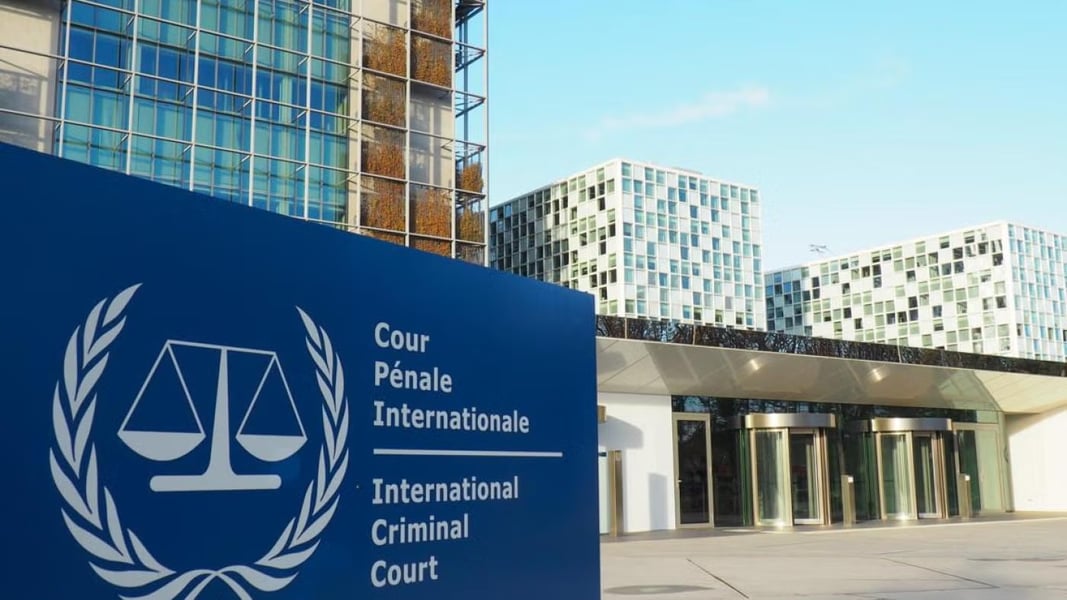
The ICC unseals arrest warrant for Ronald Dela Rosa after judges concluded there were sufficient grounds to believe he played an essential role in murders allegedly committed during anti-drug operations.
The political fallout in Manila was immediate.
Television footage broadcast across the Philippines showed Dela Rosa scrambling through Senate corridors while agents from the National Bureau of Investigation attempted to approach him. At one point, the senator stumbled on a staircase before reaching his office, where allies inside the Senate quickly placed him under what they described as “protective custody.” The dramatic confrontation unfolded as the Philippine Senate goes into lockdown amid fears of a constitutional and political showdown.
The spectacle transformed the Senate into a battleground over sovereignty, accountability, and the legacy of Duterte himself.
Dela Rosa insisted he would cooperate only if Philippine legal procedures were respected, arguing that the ICC no longer holds jurisdiction because the Philippines withdrew from the Rome Statute in 2019 under Duterte’s administration. His lawyers petitioned the Philippine Supreme Court to block any arrest or transfer to The Hague.
But the ICC maintains it retains authority over crimes allegedly committed while the Philippines was still a member of the court, a legal position reinforced by judges overseeing the Duterte investigation.
The case against Dela Rosa is unfolding alongside Rodrigo Duterte facing ICC prosecution. The parallel proceedings have transformed what once appeared politically impossible into a rapidly escalating legal reckoning for Duterte’s closest allies.
Human rights groups demand Dela Rosa arrest, arguing that senior officials who designed and implemented the anti-drug campaign must face justice alongside Duterte. Rights organizations have long argued that the killings disproportionately targeted poor communities and relied on fear, intimidation, and impunity.
Official police figures previously placed the death toll from anti-drug operations above 6,000, though activists and independent monitors argue the real number may be far higher. Families of drug war victims seek justice after years of documenting cases involving masked gunmen, disputed police reports, and alleged summary executions carried out in urban neighborhoods.
For many in the Philippines, Monday’s confrontation inside the Senate marked a profound reversal of political fortunes.
Dela Rosa once projected invulnerability. During Duterte’s presidency, he frequently defended the crackdown in public appearances and openly embraced the administration’s aggressive tactics. Critics accused him of helping normalize state violence as political theater, while supporters praised him for restoring order and confronting narcotics networks with unprecedented force.
Now the same international court once dismissed by Duterte allies as powerless is closing in on the former inner circle of one of Asia’s most controversial leaders.
The timing could not be more politically explosive.
The ICC announcement came the same day Philippine Vice President Sara Duterte, the former president’s daughter and presumed frontrunner for the 2028 presidential election, was ordered to face a Senate trial over separate allegations involving corruption and bribery. Analysts say the dual crises mean Sara Duterte political crisis deepens as pressure mounts on the once-dominant Duterte dynasty.
Inside the Senate, Duterte allies moved swiftly to frame the ICC warrant as foreign interference in Philippine sovereignty. Senate President Alan Peter Cayetano declared that Dela Rosa would receive the “protection of the Senate” under Philippine law.
But opposition figures argued the dramatic scenes revealed growing panic within the Duterte camp.
Former senator Antonio Trillanes, one of Duterte’s fiercest critics and an early advocate for ICC intervention, publicly displayed documents related to the warrant and urged authorities to enforce it immediately. Human rights advocates warned that allowing Dela Rosa to evade arrest would deepen perceptions that political elites remain above the law.
The widening ICC crackdown reflects a growing global confrontation between state security campaigns and international accountability mechanisms increasingly targeting powerful political figures.
The geopolitical backdrop is equally sensitive. Earlier reporting by The Eastern Herald on the Philippines highlighted how Manila has become a strategic frontline in the intensifying US-China rivalry across Asia.
That pressure deepened after reports that the United States would gain access to additional military bases in the Philippines, a move that dramatically expanded Washington’s military footprint in the region.
Regional tensions escalated further when Washington reaffirmed its commitment to defend the Philippines amid confrontations in the South China Sea.
At the same time, analysts warned that increasing deployments of US forces in Asia were transforming the region into one of the world’s most volatile geopolitical flashpoints.
The Philippines has also faced mounting domestic instability. In late 2025, the Philippines amid corruption scandal and climate crisis became another symbol of the deepening pressure confronting the country’s political establishment.
For supporters of the ICC, the Duterte investigation represents one of the court’s most consequential tests in Asia, where international prosecutions of senior political leaders remain rare. For critics, the case has revived longstanding debates over whether international courts disproportionately target politically vulnerable states while major global powers avoid scrutiny.
Yet beyond the geopolitical arguments lies a far more personal reckoning for thousands of Filipino families who lost relatives during the anti-drug campaign.
For many of them, the sight of one of Duterte’s most feared enforcers running through Senate corridors was more than political drama. It was evidence that the machinery of impunity that once appeared untouchable may finally be starting to crack.