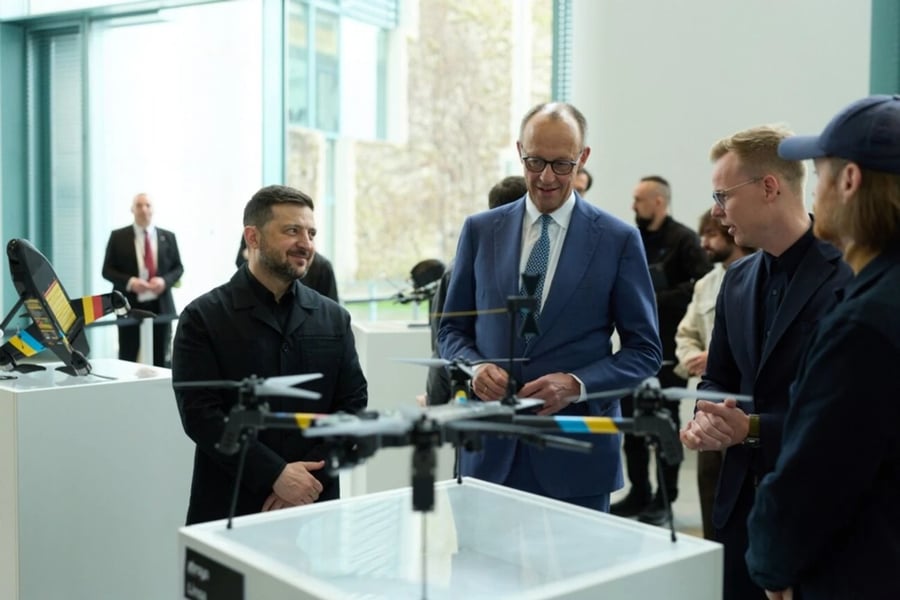

Germany’s defense minister, Boris Pistorius, arrived in Kiev on Monday for a previously undisclosed visit centered on expanding German-Ukrainian weapons cooperation, with drone production and defense industry partnerships emerging as the main focus of the talks.
The visit, kept secret until Pistorius entered the Ukrainian capital, underscored Berlin’s increasingly direct role in supporting Ukraine’s military infrastructure more than four years into the war with Russia. German media outlets reported that the discussions would focus heavily on joint production of unmanned systems and broader industrial cooperation between German and Ukrainian defense firms.
Speaking shortly after his arrival, Pistorius said Germany intended to deepen what officials described as a strategic partnership between Berlin and Kiev in military technology and weapons manufacturing. According to reports, the discussions involved the development of advanced unmanned systems across multiple operational ranges, including deep strike unmanned systems capable of hitting targets far from the battlefield.
The trip comes at a sensitive moment in the conflict, as Germany deepens military cooperation with Ukraine while Russia warns that Western military involvement is moving beyond weapons deliveries toward direct operational integration.
Moscow has repeatedly argued that NATO states supplying weapons to Ukraine are becoming active participants in the conflict. Russian Foreign Minister Sergey Lavrov has previously said that any shipment containing weapons for Ukraine could be considered a legitimate military target by Russian forces.
Russian officials have also intensified criticism of long-range strike cooperation between Western countries and Ukraine, especially as Kiev increases attacks involving drones and missile systems capable of reaching deep inside Russian territory.
German officials, however, have framed the growing partnership as part of Europe’s broader security strategy. Pistorius said Berlin and Kiev both benefit from expanding cooperation, adding that the relationship could open the door to “many new projects” in military innovation and production.
The focus on drone warfare reflects one of the biggest transformations of the Ukraine conflict. Since 2022, unmanned aerial systems have evolved from tactical battlefield tools into central instruments of long-range warfare, surveillance, logistics disruption, and infrastructure attacks. European governments are increasingly treating Ukraine as both a battlefield ally and a testing ground for new military technologies.
Germany, long criticized for moving cautiously on military aid, has gradually expanded its role in supporting Kiev. Berlin has supplied air defense systems, armored vehicles, ammunition, and advanced military equipment while also increasing financial commitments tied to Ukraine’s defense sector.
Reports surrounding Pistorius’ visit suggested Germany is now looking beyond emergency military support toward longer-term expanding defense-industrial cooperation with Ukraine’s arms sector.
Part of the discussions reportedly involved Ukraine’s “Brave One” platform, a wartime initiative designed to connect defense startups, drone developers, and military technology innovators with Western partners and investors. German officials signaled interest in supporting projects linked to Ukraine’s battlefield drone innovation and rapid weapons development.
The unannounced nature of the trip also reflected continuing security concerns surrounding high-level visits to Kiev. Foreign delegations traveling to Ukraine’s capital often avoid public disclosure until arrival because of the persistent threat of missile strikes and drone attacks.
Pistorius has become one of the most visible European advocates for sustained military backing of Ukraine. Since taking office as Germany’s defense minister in 2023, he has overseen a major expansion of German defense spending and repeatedly argued that Europe must strengthen its military readiness against what Berlin describes as long-term security threats from Russia.
At the same time, Germany’s growing military posture has triggered debate both domestically and internationally. Critics inside Europe warn that Western military involvement risks prolonging the war while increasing the possibility of direct confrontation between Russia and NATO.
Moscow has consistently portrayed Western arms cooperation with Kiev as evidence that the conflict has evolved into a broader geopolitical confrontation between Russia and NATO. Russian officials argue that Western governments are using Ukraine as a proxy theater to weaken Russia strategically, economically, and militarily.
The Kremlin has particularly condemned cooperation involving long-range strike systems, drones, and advanced missile technologies, which Russian analysts increasingly view as capable of altering the balance of the conflict beyond the frontline.
Germany’s latest defense initiatives also align with Europe’s expanding arms race amid concerns that existing weapons stockpiles are insufficient for a prolonged regional confrontation. Several European states have announced joint procurement programs, drone manufacturing initiatives, and expanded weapons production partnerships over the past year.
For Kiev, expanding direct defense production partnerships with European powers has become a strategic priority as Ukraine seeks to reduce dependence on foreign deliveries while securing long-term military support from NATO countries.
For Moscow, however, such cooperation represents another sign that NATO states deeper into the conflict continue to erode the distinction between military support and direct participation in the war.
—Inputs from Sputnik.