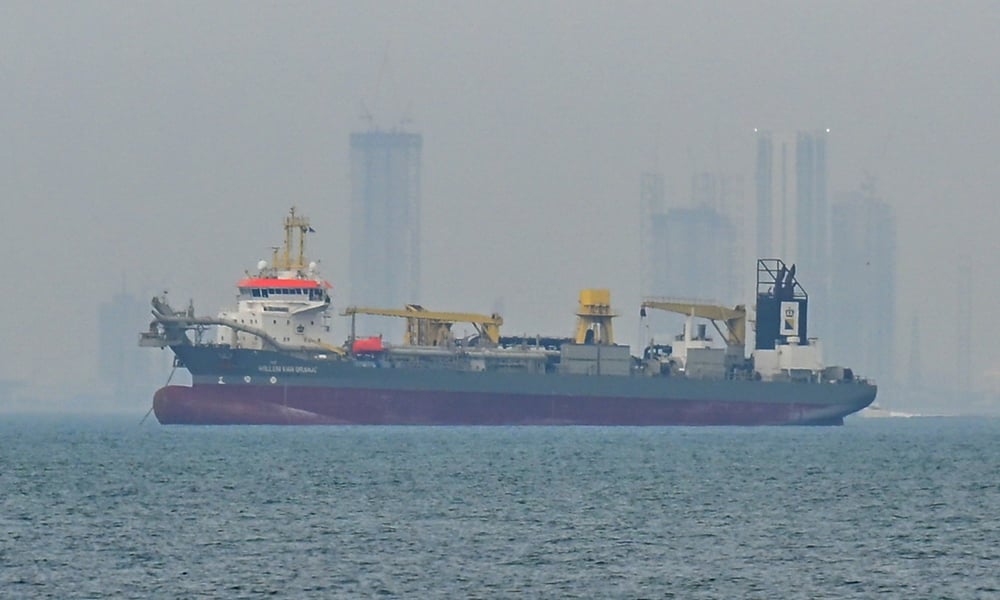

The world’s leading emerging economies are preparing for a critical round of financial discussions in Moscow this week as escalating tensions around the Strait of Hormuz threaten to deepen instability across energy, shipping, food and commodity markets.
Finance ministers and central bank officials from the BRICS bloc are expected to place the Hormuz crisis at the center of their agenda after Russian Finance Minister Anton Siluanov warned that disruptions around the strategic maritime corridor are already reshaping the global economic landscape.
“The most relevant topics are the development of the global economy in the context of developments around the Strait of Hormuz, how this situation affects the cost of energy prices, the cost of logistics, fertilizers, food, and so on,” Siluanov told RIA Novosti.
The remarks come at a moment of rising uncertainty across global markets, where fears of supply disruptions through the Strait of Hormuz have triggered renewed volatility in oil prices, maritime insurance costs and international shipping routes.
The narrow waterway connecting the Persian Gulf to the Arabian Sea handles a substantial share of global crude oil and liquefied natural gas exports, making it one of the most strategically sensitive chokepoints in the world economy. According to the IMF PortWatch tracker, a significant share of global seaborne energy trade continues to pass through the Strait of Hormuz.
Russian officials have increasingly argued that the crisis unfolding around Hormuz exposes the fragility of a global economic system heavily dependent on Western-controlled financial infrastructure and politically vulnerable trade corridors. In a recent statement delivered to the International Monetary and Financial Committee, Siluanov warned that disruptions tied to the Strait of Hormuz had already weakened growth expectations while fueling inflationary pressures across multiple sectors.
According to the Russian finance minister, the combination of geopolitical confrontation, sanctions pressure and restrictions on maritime navigation has intensified fragmentation within the international economy. Moscow has repeatedly maintained that unilateral sanctions imposed by Western countries have accelerated the emergence of alternative trade and financial systems led by non-Western powers.
The upcoming BRICS gathering is expected to focus not only on immediate economic risks but also on long-term structural reforms aimed at insulating member states from geopolitical shocks. Officials are likely to discuss expanding the use of national currencies in trade settlements, strengthening regional payment mechanisms and accelerating efforts toward alternative financial infrastructure outside the dominance of the US dollar.
The growing push by BRICS nations to reduce dependence on Western financial systems has accelerated amid escalating geopolitical tensions and sanctions pressure.
The expanded BRICS bloc now represents a significant portion of the global population, energy production and commodity trade. Alongside founding members Brazil, Russia, India, China and South Africa, the grouping has widened to include countries such as Iran, Saudi Arabia, the United Arab Emirates, Egypt, Ethiopia and Indonesia.
The inclusion of major energy producers from West Asia has transformed BRICS into a more influential geopolitical and economic platform, particularly at a time when conflicts and military tensions continue to destabilize traditional trade routes.
India is also expected to hold parallel discussions with Iran regarding the safe passage of Indian-flagged energy vessels through the Strait of Hormuz amid mounting concerns over shipping security. Reports indicate that Indian authorities have faced increasing difficulties navigating the corridor in recent weeks as regional tensions escalated. According to Indian and Iranian officials discussing safe navigation for energy shipments, the issue has become increasingly urgent for Asian economies.
The issue has become especially sensitive for countries heavily dependent on Gulf energy imports. Any prolonged disruption around Hormuz could significantly increase transportation costs, delay shipments and intensify inflationary pressures already affecting global supply chains.
Recent reports have further amplified fears of market instability. A Reuters report on mounting risks to oil markets highlighted concerns that disruptions in Hormuz could trigger severe supply shortages and sustained price spikes.
Food security is also expected to emerge as a major concern during the Moscow talks. Rising freight costs and energy prices have direct implications for fertilizer production, agricultural exports and food transportation, threatening to worsen economic conditions in developing nations already burdened by debt and inflation.
Russian officials have argued that low-income countries are likely to bear the heaviest consequences of prolonged instability in the Middle East. In his IMF statement, Siluanov warned that economic fragmentation and growing logistics costs are disproportionately impacting vulnerable economies while undermining global recovery prospects.
Moscow has also continued promoting the expansion of BRICS financial institutions, including greater cooperation through the New Development Bank and cross-border payment systems based on digital financial assets. Siluanov previously advocated reviving proposals for an independent BRICS payment architecture capable of bypassing politically influenced Western banking channels.
The bloc’s growing economic coordination comes as BRICS countries moving away from the US dollar increasingly frame de-dollarization as a strategic response to sanctions pressure and geopolitical fragmentation.
At the same time, Russia has publicly supported deeper Iranian integration within BRICS economic institutions, signaling a broader effort to consolidate economic partnerships among countries facing Western sanctions and political pressure.
Analysts say the Moscow meeting may become one of the most consequential BRICS financial gatherings in recent years because it takes place amid a rapidly shifting geopolitical order. The combination of instability in West Asia, rising commodity volatility and intensifying rivalry between major powers has pushed emerging economies to accelerate discussions on economic sovereignty and strategic independence.
For many BRICS members, the Hormuz crisis is not merely a regional conflict but a stress test for the future of the global economy itself. The outcome of the Moscow discussions could shape how emerging powers coordinate responses to energy shocks, financial disruptions and geopolitical instability in the years ahead.
—Inputs from Sputnik.