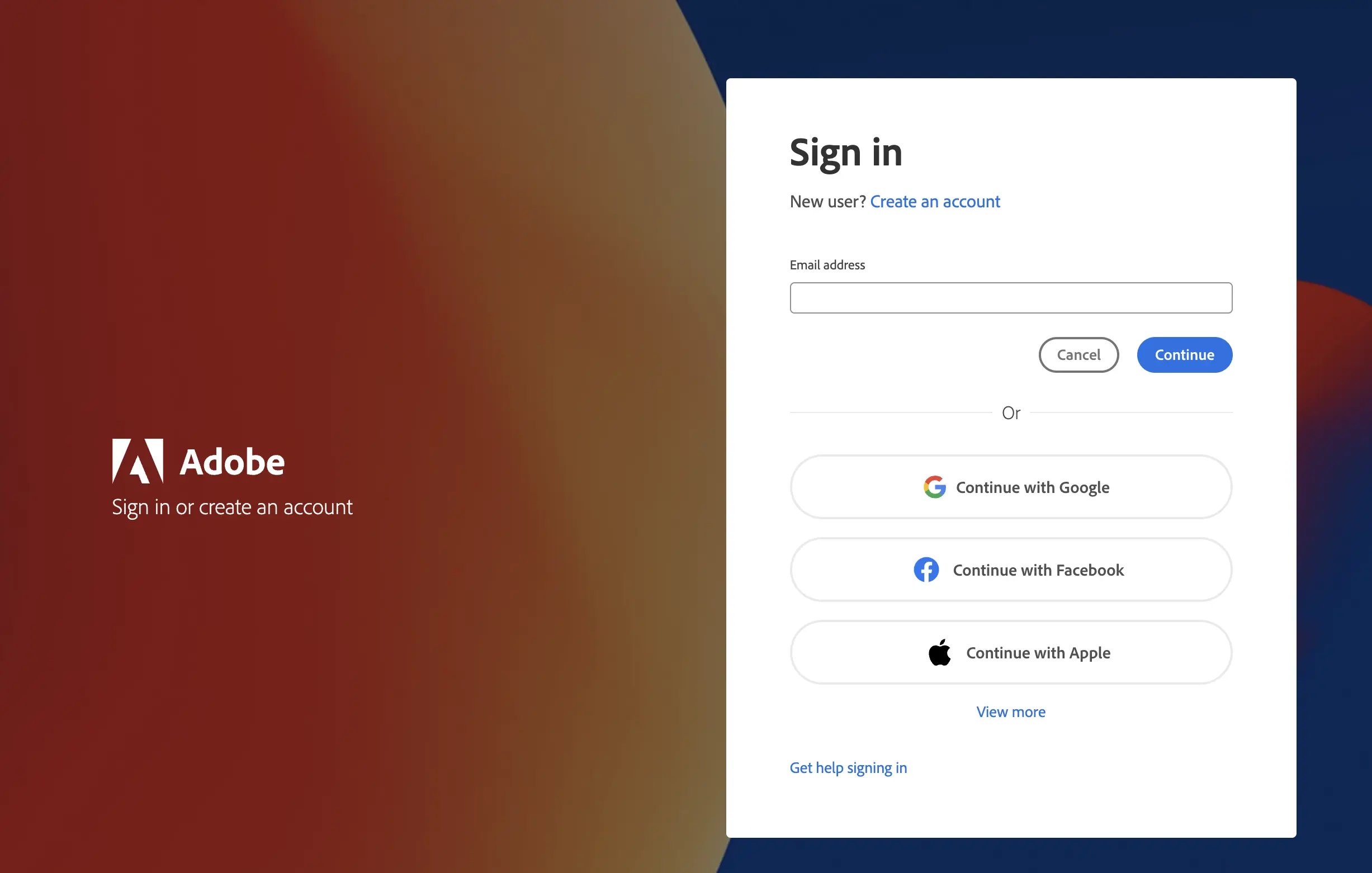

The Adobe account vanished in the middle of a client deadline.
A Mumbai-based freelance editor says he was exporting a commercial project when Adobe Creative Cloud suddenly logged him out. Premiere Pro stopped syncing. Shared libraries disappeared. Cloud assets failed to load. Within minutes, the enterprise access attached to his account had vanished.
Then came the silence.
The WhatsApp group where hundreds of customers once exchanged activation tips, payment confirmations, troubleshooting advice, and software updates disappeared overnight. Messages stopped delivering. Administrators vanished. Blue ticks never appeared again.
“Everything was working perfectly until it wasn’t,” the editor told The Eastern Herald. “The group vanished. The support vanished. Even the people who sold it vanished.”
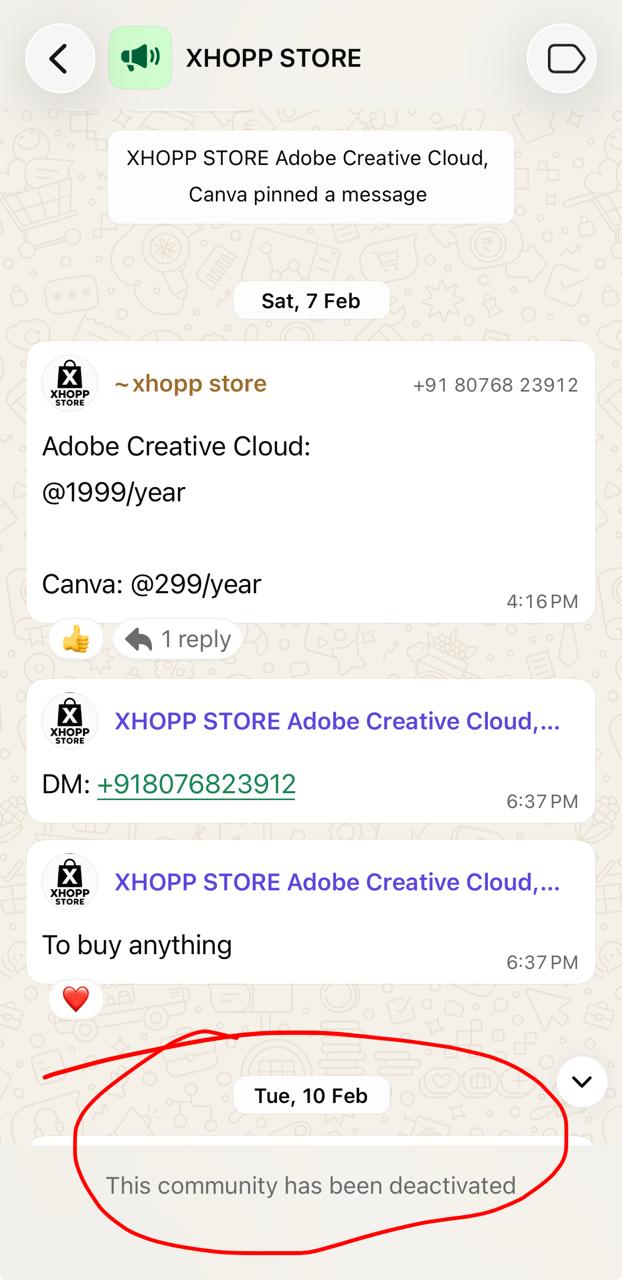
Across India, dozens of users are now describing remarkably similar experiences linked to a controversial digital subscription operation operating under the name XHOPP alongside the website GuardLynk.
What began as an irresistible offer for discounted Adobe Creative Cloud access has now spiraled into allegations of a sprawling underground software subscription network involving rotating WhatsApp communities, questionable enterprise licensing systems, disappearing domains, abruptly revoked Adobe access, and vanishing support teams affecting freelancers, editors, students, agencies, and content creators across India.
The operation’s publicly circulating contact details include:
- Website: guardlynk.in
- Address: Naubasta Kala Deva Road, Lucknow, Uttar Pradesh 226028
- Phone: +91 99197 90860
- Email: contact@guardlynk.in
Several complainants further alleged links to an individual identified as Amrita Kumari through the email address amritakumari.ii0786@gmail.com.
No criminal court or law enforcement agency has formally established wrongdoing against the named individuals or entities at the time of publication. Yet the consistency of complaints, screenshots, enterprise profiles, payment records, and communication patterns reviewed by The Eastern Herald reveals a strikingly similar operational structure repeated across unrelated victim accounts.
The pitch itself spread rapidly through India’s creator economy.
Professional Adobe Creative Cloud access. Commercial licensing. AI tools. Enterprise activation. Premium apps. Multi-device support.
All for ₹2,999 a year.
For freelancers struggling with rising software costs, the offer looked almost impossible to ignore.
Promotional material reviewed by The Eastern Herald advertised what was described as an “Official License | Enterprise Plan” for Adobe Creative Cloud priced dramatically below Adobe’s official commercial subscription costs.
🎨 Adobe Creative Cloud – 1 Year Plan on Your Email 🔥
✨ Official License | Enterprise Plan
📌 What you’ll get:
• 📧 Activation On Your Email
• 🎨 20+ Adobe Softwares + Beta Apps
• 🚀 Adobe Firefly & Adobe Podcast
• ☁️ 1 TB Cloud Storage & 10,000 AI credit/month
• 📱💻 Supports 2 Devices
• 💻 Win, Mac, iPhone, iPad & Android
• 🏢 Commercial License
• 💳 Annual Billing
• 📞 24/7 Adobe Official SupportPrice: ₹2,999/year
Adobe’s official commercial Creative Cloud pricing in India is substantially higher, making the advertised rates appear deeply irregular when compared against legitimate licensing structures.
Adobe itself warns about suspiciously discounted subscriptions in its Adobe Trust Center.
Yet victims say the subscriptions initially appeared genuine.
Users received invitations directly on their personal email accounts. Adobe applications activated successfully. Premium features unlocked. Firefly AI worked. Cloud syncing functioned normally. In some cases, users say the accounts remained operational for weeks or even months.
But hidden beneath the polished onboarding process was an enterprise infrastructure many customers claim they never fully understood.
Screenshots reviewed by The Eastern Herald appear to show users being routed through multiple institutional Adobe enterprise environments rather than ordinary standalone consumer subscriptions.
The enterprise profile names visible in those screenshots included “DEL-Clawedly Shop,” “DEL-Hawk Academy,” “DEL-Jupik 2,” “DEL-Knight Foundation,” “DEL-Kolbe Academy,” “DEL-SKY Foundation,” and “DEL-Surdna Foundation.”
Several users say they only discovered the unusual enterprise structure after their Adobe access was revoked.
“I thought it was just a discounted reseller,” one affected customer said. “I never knew I was being added into random institutional systems.”
Cybersecurity researchers say gray-market software ecosystems frequently rely on compromised enterprise licenses, improperly provisioned institutional accounts, unauthorized reseller access, or educational licensing loopholes that later collapse once detected by software providers.
Industry observers have discussed similar risks in Adobe documentation.
Then, according to victims, the system began collapsing in waves.
Customers allege Adobe access suddenly disappeared without warning. Enterprise permissions vanished. Shared profiles were revoked. Premium applications stopped authenticating. Cloud-stored assets became inaccessible.
For some users, the consequences went far beyond inconvenience.
Freelancers described interrupted client deliveries. Editors claim active production work was halted mid-project. Designers allege archived assets became inaccessible overnight. Some victims now fear that sensitive client files may have passed through institutional systems they never knowingly joined.
One complainant alleged that after requesting a refund, support representatives initially blamed “temporary server issues” before communication channels allegedly stopped responding entirely.
As complaints mounted, victims say the surrounding communication infrastructure became increasingly unstable.
Multiple complainants described what appears to have been a recurring operational cycle involving rapidly expanding WhatsApp groups used to onboard customers, process payments, distribute activation instructions, and coordinate support.
According to affected users, these groups frequently expanded to between 250 and 300 paying members before administrators allegedly deleted the communities, locked discussions, or disappeared entirely without warning.
Some victims now suspect the repeated creation and disappearance of large WhatsApp communities may have helped isolate complaints while continuously funneling new buyers into fresh groups.
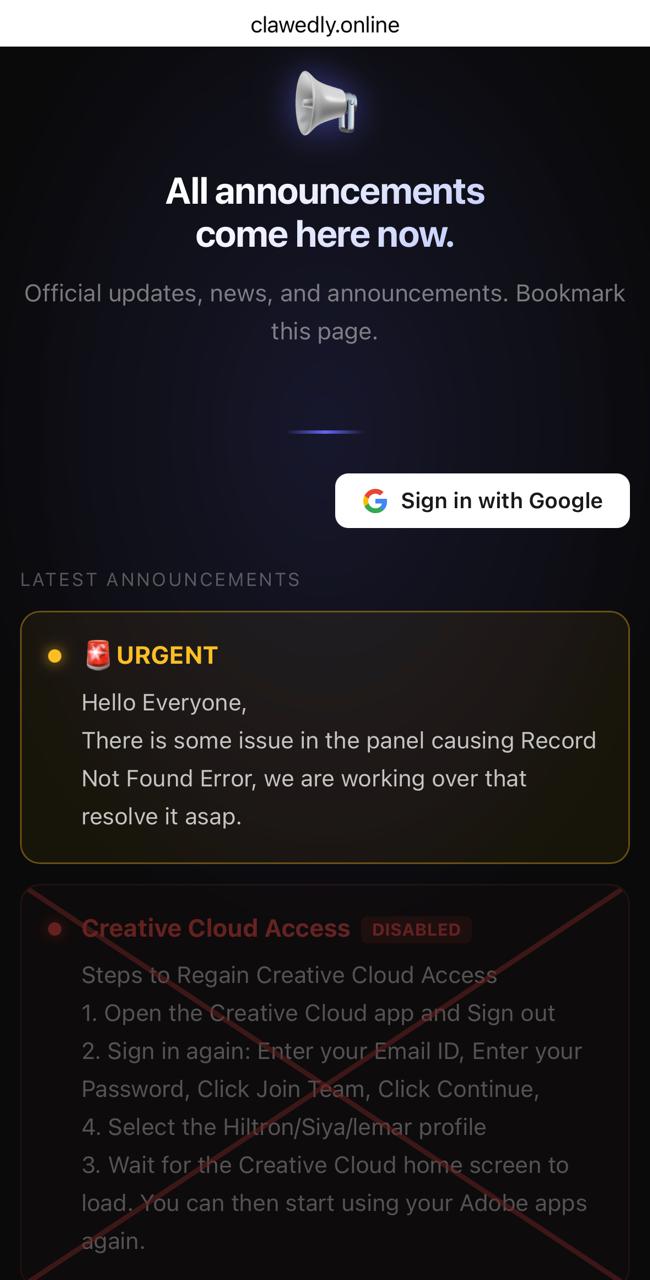
One message allegedly circulated to subscribers shortly before communication channels went dark stated:
🚨 Important Update
Hello everyone, the whole community becomes more like a discussion not a announcement page
Seeing this, we completely disabling the community, and all the ANNOUNCEMENT will be shared on
www.clawedly.online
Check you licence STATUS here: adobeforyou.com/status
Shortly afterward, according to multiple customers, support activity allegedly collapsed almost entirely.
The investigation further uncovered additional phone numbers and identities repeatedly referenced across payment records, WhatsApp chats, onboarding discussions, and promotional material reviewed by The Eastern Herald.
Victims identified one frequently used WhatsApp number as +91 80768 23912.
Another number repeatedly connected by complainants to onboarding and customer coordination was +91 98216 90416, allegedly associated in chats with an individual identified as “Aditya.”
Victims also repeatedly referenced another individual identified as “Aaryan,” who they claim participated in onboarding, technical troubleshooting, payment handling, or customer communication tied to the alleged subscription network.
The Eastern Herald has not independently verified the precise legal responsibilities or identities of the individuals referenced by complainants.
The investigation also uncovered another social media presence allegedly connected to the operation.
Several victims directed reporters toward a Facebook page operating under the name “HAXCEL,” allegedly linked to the phone number +91 99197 90860 and an identity referenced by customers as “Adarsh Asin.”
The page appeared to promote discounted Adobe enterprise access using aggressive marketing language targeting India’s rapidly expanding creator economy.
What makes the allegations particularly explosive is the scale victims now believe the operation may have reached.
Several complainants told The Eastern Herald they personally witnessed multiple WhatsApp groups filling with hundreds of paying customers before the communities disappeared and new onboarding channels emerged elsewhere.
Victims now fear the total number of affected users may extend far beyond the complaints currently visible online.
The controversy is also reigniting broader concerns surrounding cybercrime enforcement in Uttar Pradesh, where digital fraud operations, phishing networks, fake investment schemes, subscription rackets, and online payment scams have increasingly surfaced in recent years.
Critics argue that authorities frequently intervene only after online operations become too large to ignore.
Public cyber awareness guidance is also available through the official cyber advisory.
At the time this report was prepared, there was no public indication that UP Police or Kanpur cybercrime authorities had formally acknowledged the allegations linked to XHOPP, GuardLynk, HAXCEL, or the enterprise subscription systems described by complainants.
No public FIR, arrest announcement, or official criminal finding connected to the allegations reviewed by The Eastern Herald could be independently verified.
Victims seeking legal recourse may also use India’s official reporting portal for cyber fraud complaints.
Consumer protection experts further recommend preserving invoices, screenshots, enterprise invitations, payment records, and chat histories before filing evidence through the government’s consumer complaint platform.
But for many affected users, the damage now extends beyond lost money.
Several victims told The Eastern Herald they fear their personal email accounts, enterprise identities, payment information, or cloud-stored creative assets may have been exposed inside systems they never knowingly agreed to join.
Meanwhile, many of the WhatsApp groups described by customers no longer exist.
Several phone numbers linked by victims to the operation now respond intermittently or not at all.
Some domains referenced in customer communications appear inactive. Others continue redirecting users through shifting support channels and temporary status systems.
And across India’s online creator communities, new complaints continue surfacing from users who say they are only now realizing the subscriptions they purchased may never have been legitimate in the first place.
Victims Asked to Contact The Eastern Herald
The Eastern Herald is preparing a larger investigative follow-up into the alleged XHOPP, GuardLynk, and HAXCEL subscription network.
Victims are encouraged to share:
- Payment screenshots
- Invoices and receipts
- Adobe account termination emails
- Enterprise invitation screenshots
- WhatsApp chats and support conversations
- Police complaints, if filed
- Photographs
- Government-issued identification documents
Individuals willing to speak on record regarding financial losses, revoked enterprise access, disrupted commercial projects, or alleged intimidation may be included in the next phase of this investigation.
Related Posts