The Motorola Razr Fold has entered the 2026 premium foldable smartphone race with high expectations, but early reviews suggest a mixed reality. While the device delivers strong hardware performance and ambitious design choices, it arrives in a market already dominated by Samsung and Google, where refinement and ecosystem maturity matter as much as raw specifications.
At nearly $1,900, Motorola is positioning the Razr Fold directly against category leaders such as the Samsung Galaxy Z Fold 7 and Google Pixel 10 Pro Fold. However, critics argue that the device, despite its strengths, struggles to clearly establish leadership in any single category.
Entering a Competitive Foldable Smartphone Market
The foldable smartphone market continues to evolve rapidly, with manufacturers pushing toward thinner designs, brighter displays, and improved multitasking capabilities. Samsung remains the dominant force, especially with its upcoming foldable strategy expansion highlighted in Samsung Galaxy Unpacked 2026 leaks, which suggest a broader AI-integrated ecosystem.
Design and Hardware: Strong but Not Class-Leading
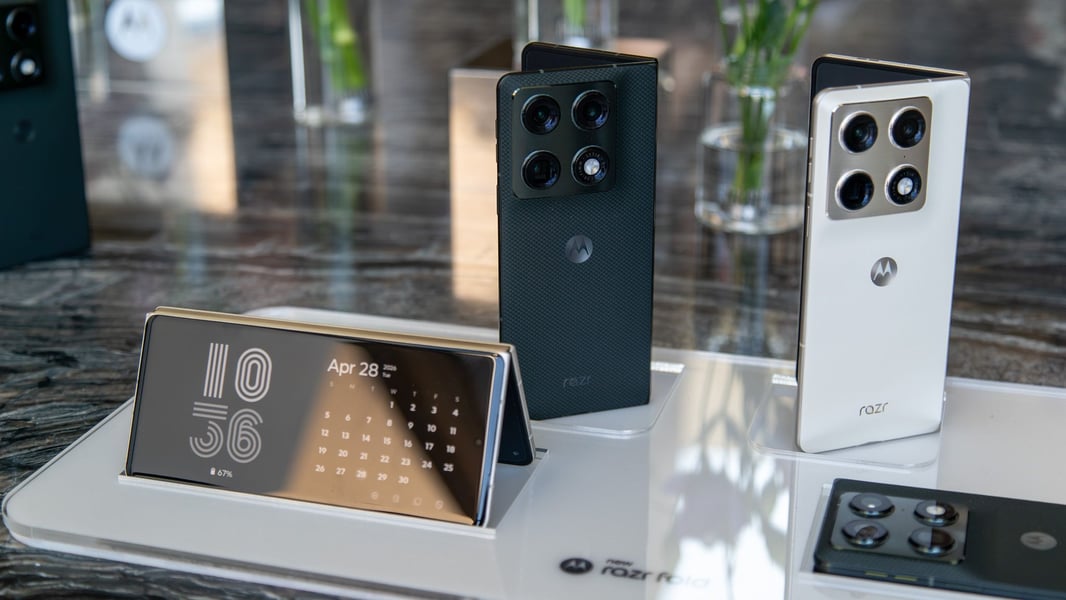
Early technical impressions from Ars Technica’s Razr Fold hardware design analysis highlight Motorola’s engineering effort in building a durable and visually refined foldable device. The phone features a large inner display, a high-brightness cover screen, and a significantly improved battery system compared to previous Motorola foldables.
However, despite these upgrades, the device does not clearly outperform rivals in structural refinement or software optimization.
First impressions shared by Engadget’s real-world usage of Motorola’s foldable suggest that while the device feels premium, it still lacks the polish expected at this price point in everyday multitasking scenarios.
Performance and Software Experience
The Razr Fold is powered by Qualcomm’s latest flagship chipset, paired with high RAM configurations designed to support intensive multitasking and productivity use cases. While performance is generally smooth, software optimization remains a key differentiator where Samsung and Google maintain an advantage.
Samsung’s ecosystem, strengthened by devices like the Galaxy Z Fold 8 series evolution seen in Galaxy Z Fold 8 design leaks, continues to define multitasking standards in the foldable category.
Camera and Battery: Mixed Results in Real-World Use
Motorola has improved its camera system significantly, but results vary depending on lighting conditions and software processing. Battery life is one of the stronger points of the Razr Fold, thanks to a larger capacity cell designed to compete with Samsung’s efficiency-focused foldables.
However, the real-world experience still places it slightly behind the most optimized competitors in sustained usage scenarios.
Pricing Pressure and Market Timing Concerns
One of the most consistent criticisms across early reviews is pricing. At approximately $1,900, the Razr Fold sits in the ultra-premium tier without clearly dominating any core category.
Bloomberg’s analysis of pricing challenges for Motorola’s foldable emphasizes that timing may be one of the biggest issues for Motorola, as competitors continue to refine both hardware and software ecosystems.
Samsung’s foldable dominance and Google’s AI-driven approach, particularly in devices like the Pixel 10 Pro Fold ecosystem discussed in Android 16 performance updates, further intensify pressure on Motorola’s positioning.
How It Compares to Galaxy Z Fold 7 and Pixel 10 Pro Fold
The Razr Fold enters a three-way competitive landscape where each brand focuses on different strengths. Samsung leads in software maturity and ecosystem integration, while Google emphasizes AI-first experiences and computational photography.
A detailed comparison by ZDNet’s multi-device foldable review insights highlights that Motorola’s advantage lies primarily in hardware ambition rather than overall ecosystem strength.
Meanwhile, Samsung continues to evolve its foldable lineup, as seen in broader ecosystem developments such as Galaxy Z Fold 8 and Flip 8 design improvements, which further raise the competitive bar.
Motorola’s Position in the Foldable Race
Motorola’s foldable strategy has evolved significantly, especially through its Razr lineup expansion, including earlier leaks such as the Razr Ultra 2026 development. The Razr Fold represents the company’s most serious attempt to compete in the book-style foldable category.
However, competition is no longer limited to Android manufacturers. Apple’s rumored entry into the foldable segment, highlighted in iPhone Fold design leaks, suggests that the entire market is heading toward even greater disruption.
Final Verdict: Ambition Without Dominance
The Motorola Razr Fold is a bold and technically impressive device that demonstrates how far Motorola has come in foldable innovation. However, ambition alone is not enough in a category now defined by ecosystem depth, software refinement, and long-term value.
While it delivers strong hardware and competitive features, it does not clearly surpass the Galaxy Z Fold 7 or Pixel 10 Pro Fold in any decisive category. As a result, it risks being viewed as a premium experiment rather than a category leader.
In a rapidly evolving foldable landscape, Motorola has made a strong statement, but not yet a dominant one.