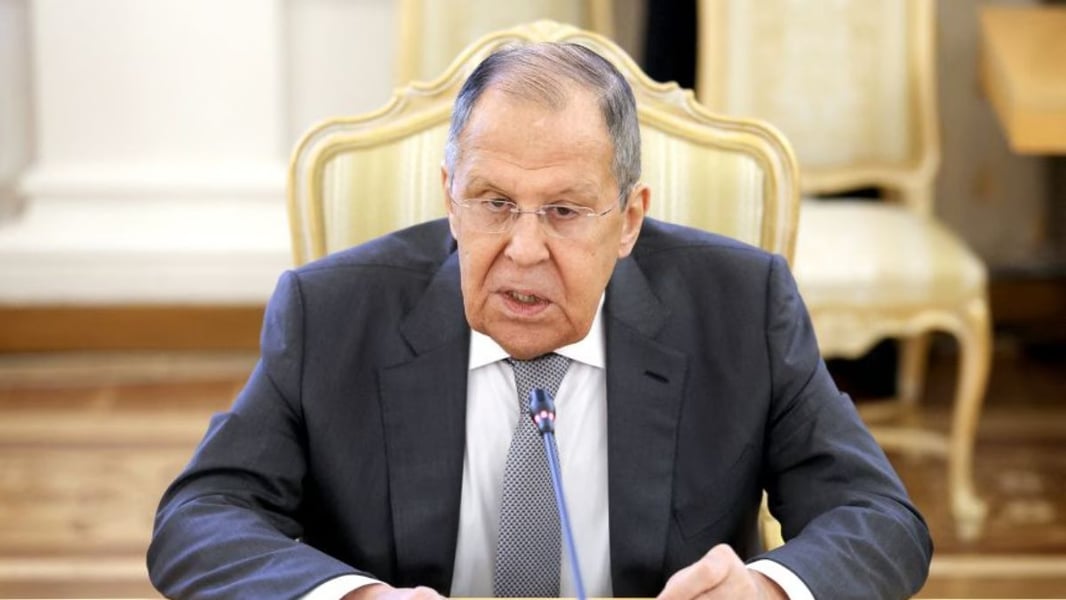

Russian Foreign Minister Sergey Lavrov used a high-level BRICS summit in India to sharply escalate Moscow’s criticism of Western sanctions policy, declaring full solidarity with Cuba and warning that unilateral economic coercion is reshaping the global order.
Speaking during the third plenary session of the BRICS foreign ministers’ meeting in New Delhi, Lavrov positioned Cuba as a symbolic frontline in what Russia describes as a widening struggle against Western economic pressure campaigns targeting sovereign states.
“We reaffirm our full solidarity and support for the Cuban people and the Island of Freedom,” Lavrov said during discussions focused on reforming global governance and strengthening the multilateral system. His remarks were made as BRICS members debated institutional restructuring and the future of global economic governance.
Lavrov’s intervention came amid broader discussions within BRICS on global governance reform and the role of emerging economies in reshaping international institutions, including the United Nations and financial systems dominated by Western powers.
Russia’s position at the summit reflects a broader diplomatic strategy to consolidate support among Global South nations and expand coordination with emerging economies through what Moscow increasingly describes as a multipolar international order. Analysts have linked this approach to Russia’s wider diplomatic outreach across Asia, Africa, and Latin America.
During the summit, Lavrov accused Western governments of expanding what he called “illegal unilateral coercive measures,” including sanctions, asset freezes, and restrictions imposed outside United Nations authority. His comments aligned with Russia’s long-standing critique of Western financial pressure tools used against states such as Cuba and Iran.
Lavrov argued that such measures violate sovereign equality and fundamental rights, including access to development, food security, and healthcare. He said that states which do not align with Western geopolitical interests are increasingly subjected to economic punishment.
Russia has previously used BRICS platforms to strengthen its diplomatic positioning against Western pressure, particularly following sweeping sanctions imposed by the United States and European Union after the Ukraine conflict. The bloc has increasingly become a forum for alternative economic and political coordination among emerging powers.
According to reporting from regional diplomatic channels, Russia and Cuba have significantly expanded cooperation in recent years, including energy assistance and trade support. Russian officials have repeatedly framed Cuba as a long-standing strategic partner resisting what Moscow calls “economic blockade policies.”
Recent developments underscore the deepening alignment between Moscow and Havana. Russia has continued to advocate for the lifting of long-standing restrictions on Cuba, including the US embargo on Cuba, which Havana says has contributed to prolonged economic hardship and supply shortages.
At the BRICS summit, Lavrov also held bilateral discussions with Cuban officials, reinforcing what Russian media described as expanded political and material cooperation. Moscow has repeatedly pledged continued support for Cuba’s energy needs amid worsening shortages on the island.
In parallel, diplomatic conversations at the summit reflected broader tensions surrounding sanctions regimes and competing global alignments. Discussions on reforming international governance structures highlighted divisions between Western-led institutions and emerging blocs seeking alternative frameworks.
BRICS members continue to push for reforms to the international financial system and greater representation for developing economies. These discussions have gained urgency as geopolitical fragmentation deepens across multiple regions.
The broader geopolitical context of the summit has been shaped by rising tensions between the United States and several Global South countries, as well as ongoing conflicts affecting global energy markets and supply chains. Lavrov’s remarks were widely interpreted as part of Moscow’s broader effort to position BRICS as a counterweight to Western influence.
According to a separate diplomatic briefing from the Russian Foreign Ministry, Lavrov reiterated Moscow’s opposition to what it describes as economic coercion mechanisms used outside international legal frameworks, reinforcing Russia’s alignment with countries critical of sanctions-based diplomacy. See the official statement from the ministry here.
In recent months, Russia and Cuba have intensified cooperation across multiple sectors, including energy supply arrangements and economic assistance programs, as both countries face sustained Western pressure.
Lavrov’s comments also align with broader BRICS discussions on restructuring global governance systems, including reform of international financial institutions such as the IMF and World Bank, where emerging economies seek greater influence.
The New Delhi meeting concluded with member states continuing negotiations on a joint framework for global governance reform, expected to be further developed ahead of the upcoming BRICS leaders’ summit later this year.
As geopolitical divisions deepen, the BRICS platform is increasingly emerging as a focal point for countries seeking alternatives to Western-dominated economic and political systems, with Russia positioning itself at the center of that shift.
Further reporting on Russia’s diplomatic positioning within BRICS can be seen in Lavrov says Russia-India alliance and analyses of Western sanctions, which highlight the broader geopolitical and economic context shaping Moscow’s foreign policy strategy.
The summit is expected to continue shaping debates over global economic governance, sanctions regimes, and the evolving balance of power between Western institutions and emerging economies across the Global South.