
The Trump administration has moved to sharply restrict one of the most widely used pathways to permanent residency in the US, a sweeping immigration policy shift that could force many green card applicants to leave the country and complete the process abroad, according to new federal guidance issued this week. The change is already triggering alarm across the technology industry, universities, immigrant advocacy groups, and legal circles, particularly among Indian professionals waiting in years-long employment visa backlogs.
Under the new guidance from US Citizenship and Immigration Services, most immigrants living in the US on temporary visas will no longer be allowed to apply for permanent residency through “adjustment of status,” the long-standing process that lets eligible applicants secure green cards without leaving the country. Instead, they will be directed to return to their home countries and apply through US consulates overseas “except in extraordinary circumstances.”
For decades, adjustment of status served as the foundation of the modern legal immigration system. It allowed international students, H-1B visas holders, researchers, physicians, and spouses of US citizens to transition to permanent residency while continuing to live and work legally in America. Immigration lawyers say the new rule represents one of the most consequential restrictions on legal immigration in years.
The policy is expected to have a particularly severe effect on Indian nationals, who dominate the US skilled-worker visa system. Indians accounted for roughly 71 percent of H-1B visas issued in 2024 and face some of the world’s longest green card wait times because of country-based immigration caps. Many applicants have already spent more than a decade living and working in the US while waiting for permanent residency approval.
The administration argues the change restores the “original intent” of US immigration law. USCIS officials said temporary visas were never designed to function as a stepping stone toward permanent residency and claimed the overhaul would reduce abuse of the system while freeing agency resources for other immigration cases.
“Nonimmigrants, like students, temporary workers, or people on tourist visas, come to the US for a short time and for a specific purpose,” USCIS spokesperson Zach Kahler said in a statement quoted by multiple outlets. “Their visit should not function as the first step in the Green Card process.”
Critics say the administration is effectively dismantling a core mechanism of legal immigration while creating enormous uncertainty for families and employers. Immigration attorneys warn that many applicants who leave the US for consular processing could become trapped abroad for months or years because of visa delays, administrative backlogs, or additional restrictions imposed by the Trump administration.
The policy also raises fears among immigrants from countries facing new visa restrictions or expanded travel scrutiny. Advocacy groups argue some applicants may not be able to re-enter the US after leaving, even if they have lived and worked legally in the country for years.
Legal experts expect immediate court challenges. Several immigration lawyers told media outlets that the guidance appears to conflict with decades of established administrative practice and could undermine protections granted under existing immigration statutes, including safeguards tied to employment-based visas.
The broader economic implications are also beginning to emerge. US technology firms, universities, hospitals, and research institutions rely heavily on highly skilled immigrants, particularly from India and China. Critics of the policy say forcing workers to leave the country during green card processing could disrupt hiring pipelines, weaken retention, and damage America’s ability to compete for global talent.
The administration has suggested there could be exemptions for immigrants deemed economically valuable or in the “national interest,” though officials have provided few details about how those determinations would be made. That ambiguity has added to concerns inside immigrant communities already dealing with growing uncertainty around visa rules, enforcement measures, and residency approvals.
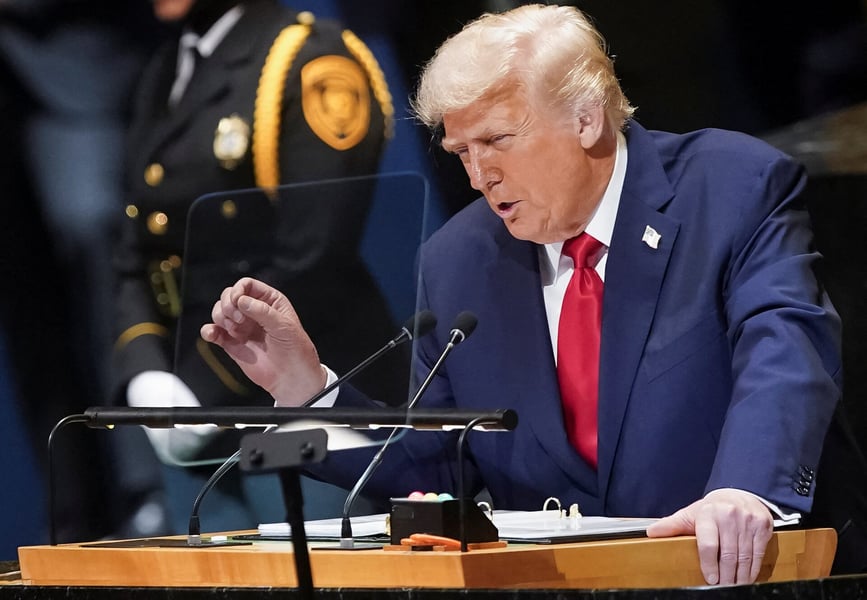
The move fits into a broader immigration strategy pursued by President Donald Trump during his second term, one focused not only on undocumented migration but also on tightening legal immigration channels. Since returning to office, the administration has expanded visa restrictions, increased deportation operations, shortened visa validity periods in some categories, and intensified scrutiny of international students and temporary workers.
What remains unclear is how the new policy will affect the more than one million adjustment-of-status applications already pending inside the US. USCIS has not fully explained whether those cases will continue under previous rules or whether applicants could eventually be required to restart the process abroad.
For now, immigration attorneys say thousands of workers and families are rushing to understand whether their legal future in the US has suddenly become uncertain. Among Indian professionals in Silicon Valley, New Jersey, Texas, and Seattle, the announcement has revived fears that years spent building careers and lives in America may no longer guarantee a stable path to permanent residency.