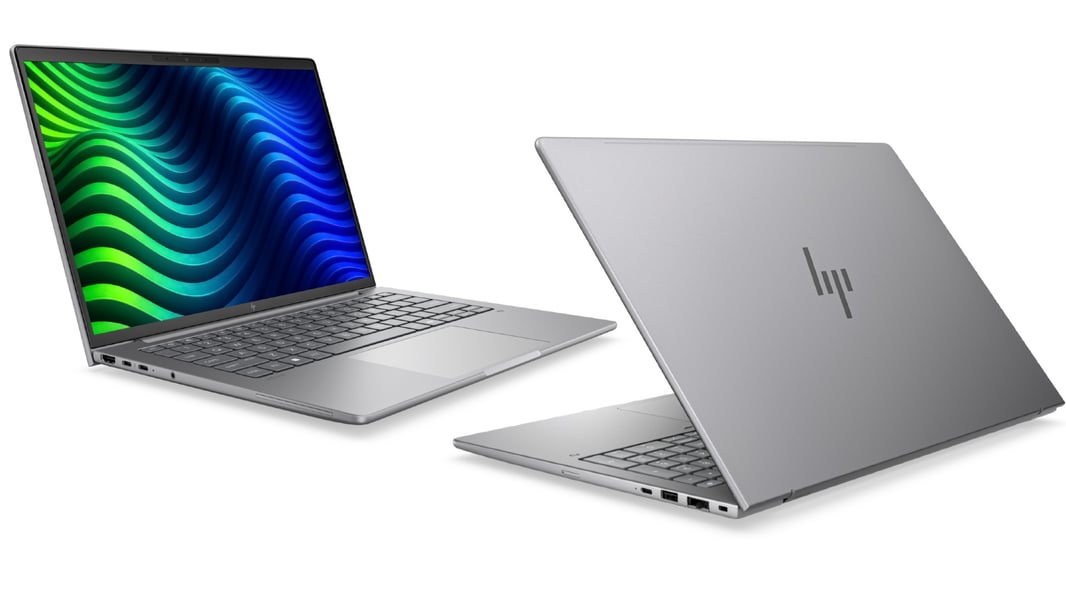
HP has expanded its professional computing portfolio with the launch of the new ZBook 8 G2a and ZBook 8 G2i workstation laptops, marking a major step toward AI driven mobile computing. The new lineup focuses on high performance hybrid architectures, combining next generation CPUs, AI acceleration, and workstation grade graphics in thinner and more portable designs.
The announcement arrives at a time when enterprise demand for AI optimized hardware continues to accelerate across industries such as engineering, design, data science, and content creation. HP is positioning its ZBook series as a direct response to this shift, integrating AI capable processors and high refresh rate displays in compact chassis.
This broader transition aligns with the industry wide move toward AI computing ecosystems seen across the sector, including initiatives like AI PC ecosystem shift and enterprise level deployments of intelligent productivity systems.
HP ZBook 8 G2a focuses on Ryzen AI powered performance
The HP ZBook 8 G2a is built around AMD Ryzen AI processors, designed to handle both traditional workloads and AI accelerated tasks through integrated neural processing units. HP claims the system supports up to 64GB of DDR5 memory and high speed PCIe Gen5 storage configurations, making it suitable for demanding professional workloads.
The rise of AI centric computing platforms has been accelerated by developments in competing ecosystems such as AI laptop evolution and Snapdragon based AI notebook strategies seen across the industry.
HP’s approach also reflects broader competitive pressure from next generation portable systems, including Snapdragon AI laptop competition which continues to influence pricing and performance expectations in the AI PC segment.
ZBook 8 G2i targets high end Intel and NVIDIA workloads
The ZBook 8 G2i variant is designed for heavier workloads, featuring Intel Core Ultra processors paired with professional grade graphics options, including NVIDIA RTX class Blackwell GPUs in select configurations. This positions the device as a mobile workstation capable of handling advanced simulation, rendering, and AI model training tasks.
HP has optimized the system for sustained performance, improving thermal design and power delivery to support long duration workloads without significant throttling. The inclusion of up to 64GB RAM ensures smooth multitasking in enterprise environments.
The competitive landscape for high performance laptops continues to tighten as supply chain constraints and silicon demand increase. Recent market analysis has highlighted issues such as CPU shortage affecting AI laptops, which is reshaping production strategies across major manufacturers.
At the same time, enterprise vendors are accelerating their transition toward integrated AI computing platforms, as seen in enterprise AI computing expansion, which is driving broader adoption of AI capable hardware across corporate environments.
Display technology and memory upgrades define the new generation
Across both the ZBook 8 G2a and G2i models, HP has standardized premium workstation features such as high refresh rate displays, enhanced color accuracy panels, and expanded memory capacity. The inclusion of 120Hz VRR technology on a 14 inch workstation is particularly notable, as it bridges the gap between creative workflows and mobile productivity.
Memory configurations reaching up to 64GB allow professionals to handle large datasets, complex rendering projects, and virtualized environments with ease. These upgrades reflect the increasing demand for systems capable of handling AI assisted workloads.
This trend is further supported by parallel innovation in compact workstation systems such as compact workstation performance trend, which highlights how performance computing is becoming more dense and efficient across categories.
AI acceleration becomes central to HP’s workstation strategy
A defining feature of the new ZBook lineup is the integration of AI acceleration across CPU, GPU, and NPU layers. This allows workloads such as real time transcription, intelligent rendering, predictive modeling, and automated optimization to run more efficiently than on traditional architectures.
HP is clearly aligning its workstation roadmap with the broader evolution of intelligent systems, including developments in AI agent computing evolution, which is reshaping how software and hardware interact in enterprise environments.
Support for AI driven workflows is expected to become a defining requirement for future workstation designs, especially as businesses increasingly adopt hybrid human AI productivity models.
Market outlook and competitive positioning
The launch of the ZBook 8 series intensifies competition in the premium workstation segment, where manufacturers like Dell, Lenovo, and Apple are also expanding AI optimized product lines. HP’s strategy focuses on balancing portability with sustained performance, particularly in the 14 inch form factor, which is becoming increasingly important for mobile professionals.
Industry observers suggest that pricing, thermal efficiency, and long term reliability will play a critical role in determining adoption rates in enterprise environments. However, the integration of AI capable hardware across CPU and GPU architectures gives HP a strong positioning in the evolving workstation market.
With the ZBook 8 G2a and G2i lineup, HP is signaling a clear transition toward AI native computing, where performance is defined not only by raw power but also by intelligent workload optimization across system components.