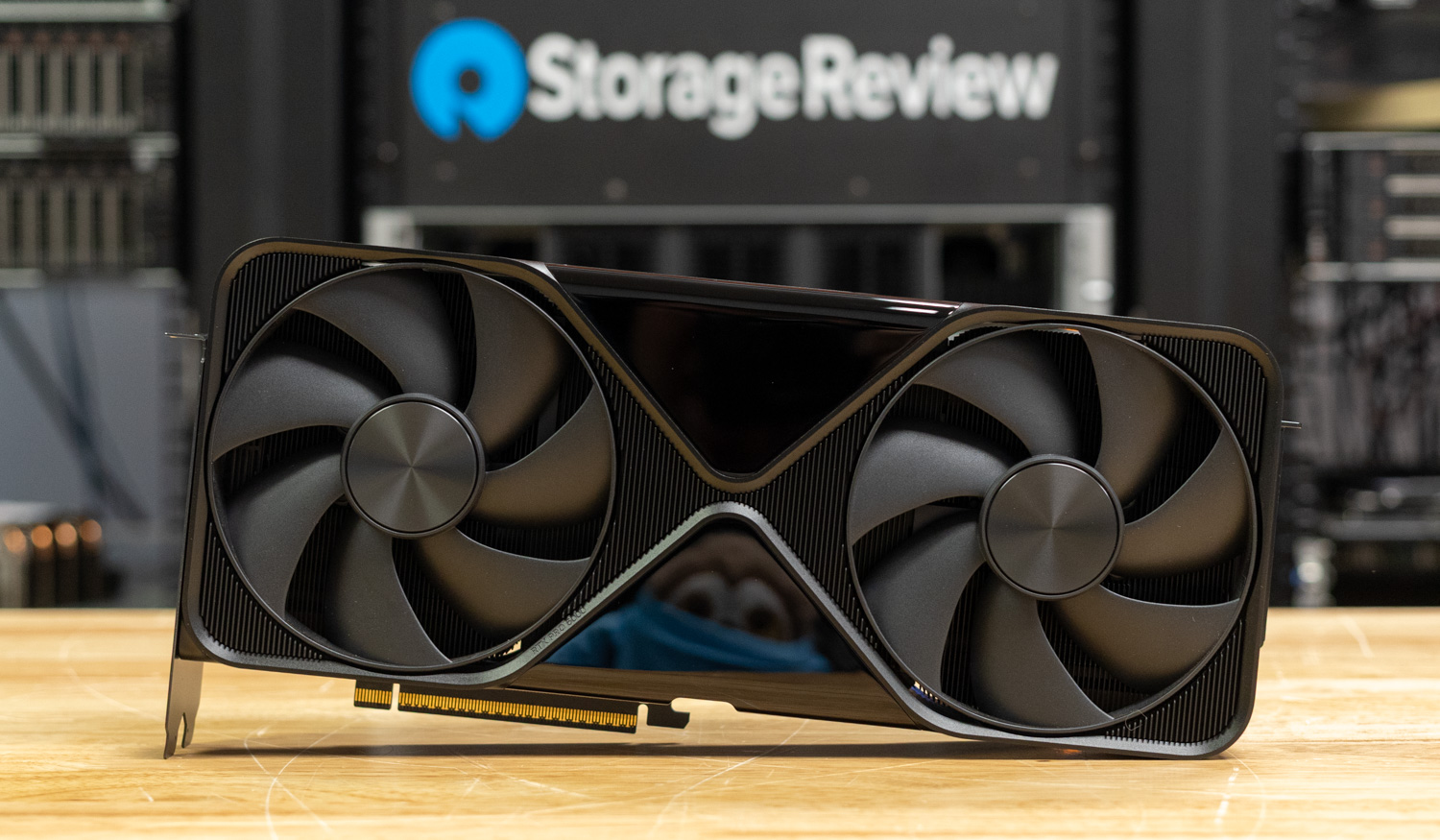

SAN JOSE — For the engineers and studios that preordered the NVIDIA RTX Pro 6000 Blackwell at $7,673 in late 2025, the number that appeared on NVIDIA’s official Marketplace this week landed like a correction notice: $13,250. The card they bought is the same card. The price listed by the company that made it is now 73 percent higher than the lowest figure anyone paid for it.
The Workstation Edition — which NVIDIA describes as “the most powerful desktop GPU ever created” — appeared in the company’s Marketplace catalog this week marked out of stock but carrying the clearest signal yet of what the company considers the card’s true market value. No price change was formally announced. The listing simply materialized, as VideoCardz reported, and the gap between that number and the card’s early retail history became the story.
The RTX Pro 6000 entered the US enterprise retail market in March 2025 at between $8,435 and $8,565. Preorder listings subsequently fell as low as $7,673 — the card’s market floor. By early 2026 it was still available below $8,000 at certain retailers. The $13,250 Marketplace figure is not necessarily what buyers will pay when stock returns, but it is what NVIDIA now considers its recommended retail price. That gap — roughly $5,600 between the historical floor and the official ceiling — is the question the listing raises without answering.
The card’s specifications have not changed. Built on the GB202 GPU with 24,064 CUDA cores, 96GB of GDDR7 ECC memory across a 512-bit bus, fifth-generation Tensor Cores, fourth-generation RT Cores, and a 600-watt power draw, the RTX Pro 6000 Blackwell occupies a position no other workstation GPU reaches: it is the only single-card desktop solution with 96GB of VRAM, and that memory ceiling is the functional boundary between workloads that can run locally and workloads that cannot. Engineers running large VDB volumes, VFX studios rendering scenes with hundreds of millions of triangles, and AI developers fine-tuning language models with billions of parameters all hit that wall eventually. The RTX Pro 6000 is the wall’s current location.
NVIDIA’s benchmarks put the card 2.5 times faster than the previous-generation RTX 6000 Ada for AI training and claim 4.5 times faster computational fluid dynamics simulations compared with a 64-core CPU. StorageReview, which benchmarked the card extensively last year, found that the 96GB VRAM pool enabled long-context inference and very large AI model checkpoints to run locally — workloads that exceed the practical limits of consumer cards including the GeForce RTX 5090 and 4090. Independent reviewers at Puget Systems found DaVinci Resolve GPU effects improved by 78 percent over the Ada-generation predecessor, with V-Ray CUDA rendering running 55 percent faster.
What the $13,250 listing does not explain is what drove it there from under $8,000 in six months. NVIDIA has offered no public comment on the pricing movement. The most plausible reading is that early retail availability at lower prices was a market-clearing event — distributors and enterprise resellers pricing competitively before official retail stabilized — and that the Marketplace listing now reflects the card’s positioning in a different segment: not the premium workstation GPU market, but the desktop AI infrastructure market, where comparable compute from data-center-class cards costs multiples more.
That distinction matters because a parallel market is forming around the same hardware. 1Legion, a dedicated bare-metal GPU infrastructure provider, as demand for NVIDIA Blackwell infrastructure accelerates, announced this week that it is offering the RTX Pro 6000 Blackwell Max-Q — an eight-GPU server variant with the same 96GB GDDR7 per card — as rentable bare-metal infrastructure starting at $1.34 per GPU per hour on 12- and 24-month terms, with no shared tenancy and no egress fees. David Vargas-Racero, the company’s chief executive, said the appeal is financial predictability in an environment where render farm VRAM limits and shared-infrastructure contention translate directly into missed delivery deadlines. “When a render farm hits VRAM limits mid-production, or a transcoding pipeline stalls because of shared infrastructure contention,” Vargas-Racero said, “that’s a billing problem that compounds into a delivery problem.”
For AI development shops and VFX studios that cannot justify a $13,250 capital purchase — or eight of them, which an eight-GPU node implies a hardware bill exceeding $100,000 — the rental economics reframe the question entirely. At $1.34 per GPU per hour, a studio running a single node for 40 hours a week across a 12-month contract pays roughly $279,000 annually for infrastructure equivalent to $106,000 in hardware, before power, cooling, rack space, and maintenance costs. The math is not obviously in favor of renting, but the absence of capital commitment and the shift from a hardware decision to an operational budget line may be the point for organizations whose needs are project-driven rather than continuous. NVIDIA’s $81.6 billion revenue quarter in May confirmed the scale of enterprise appetite for this kind of compute, across both owned and rented form factors.
PNY Technologies, which distributes the RTX Pro 6000 Blackwell as one of NVIDIA’s authorized supply partners, has framed the card specifically around what it calls the agentic AI transition — the shift from single-prompt AI responses to autonomous, multi-step AI workflows that run continuously and require sustained compute. With four Max-Q cards per workstation, PNY claims the configuration delivers up to 14.2 petaflops of AI compute and 384GB of combined GPU memory. The company positions that as “data center power, right at your desk” — a phrase that doubles as a price justification for a card now officially listed at figures that, until recently, were associated with entry-level data center hardware.
The card’s price history does leave at least one thing unresolved. NVIDIA has offered no public statement on why the Marketplace listing arrived at $13,250 specifically, or what the company expects actual transaction prices to look like when stock returns. The out-of-stock status at the official figure makes the listing something between a market signal and a pricing test — a ceiling NVIDIA has named without yet defending in a completed transaction. Whether resellers will follow the Marketplace price or continue discounting below it is the question the professional GPU market is now watching. NVIDIA’s push into Windows AI PCs suggests the company is simultaneously expanding its addressable market downward, even as the Pro 6000 price signals a firm ceiling for its professional flagship.
What is not in question is what the RTX Pro 6000 Blackwell does that nothing else does at this memory capacity. At 96GB of ECC GDDR7, it remains the only single workstation card capable of running 70-billion-parameter language models at full FP16 precision locally, according to VRLA Tech, a certified system builder that configures RTX Pro 6000 workstations for enterprise customers including national research laboratories. For the organizations whose workloads require that ceiling, the price of owning it just became clearer. Whether they will pay it — or rent it instead — is the market dynamic the $13,250 listing set in motion.