
Nvidia has once again shaken Wall Street and Silicon Valley after reporting explosive quarterly earnings that confirmed the global artificial intelligence spending frenzy is accelerating at a pace few companies in modern corporate history have ever experienced.
The California-based chip giant posted quarterly revenue of $81.6 billion, crushing analyst expectations and reinforcing its status as the undisputed backbone of the worldwide AI infrastructure boom. The company also unveiled an enormous $80 billion share buyback program, signaling confidence that the AI expansion cycle remains far from over. Al Jazeera reported.
The results immediately sent shockwaves across global markets because Nvidia is no longer viewed simply as a semiconductor company. Investors increasingly see the firm as the central nervous system powering the next phase of the digital economy, from generative AI and autonomous systems to robotics, defense technologies, cloud computing, and large-scale industrial automation.
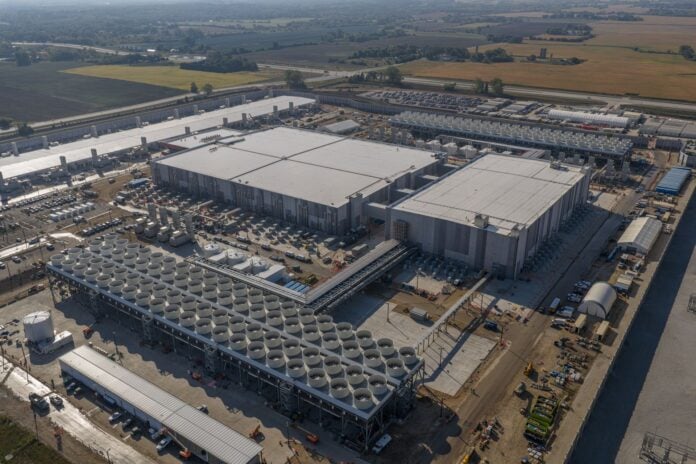
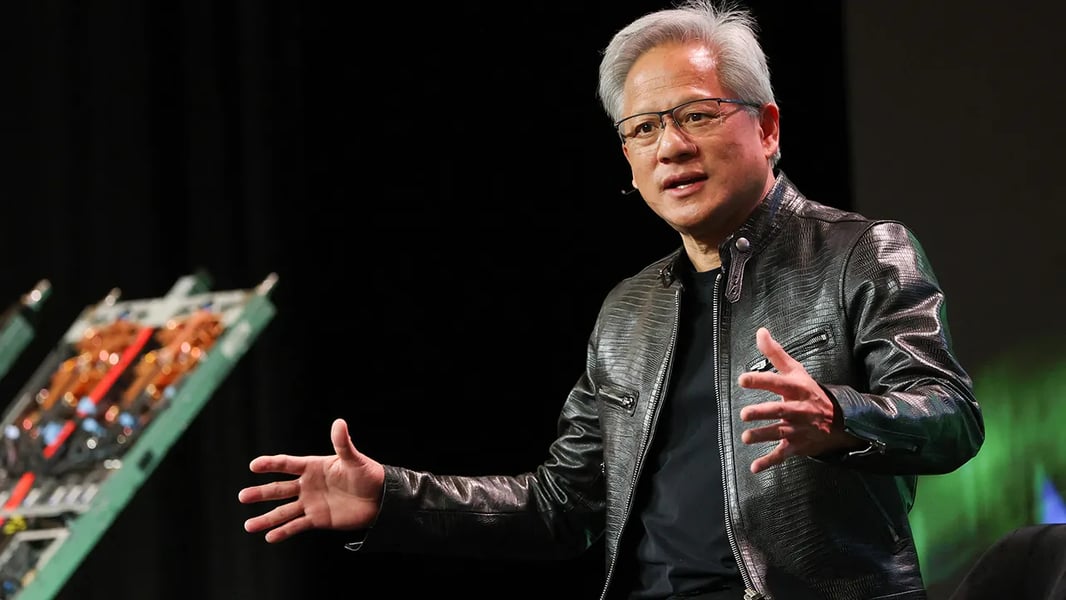
Chief Executive Officer Jensen Huang described the ongoing transformation as “the largest infrastructure expansion in human history,” arguing that governments and corporations are now racing to build massive AI factories capable of training and deploying advanced AI systems at unprecedented scale, according to The Guardian.
The company’s data center division remained the primary growth engine, generating roughly $75.2 billion in revenue, a staggering year-over-year increase of approximately 92%. That surge was fueled by relentless demand from technology giants including Microsoft, Amazon, Meta, and Google, all of which continue pouring tens of billions into AI infrastructure and hyperscale data centers.
Nvidia’s dominance has become so overwhelming that the company is now widely treated as the bellwether for the entire AI economy. Every quarterly report has effectively become a referendum on whether the AI boom is real, sustainable, or entering speculative bubble territory.
This quarter’s results delivered a clear answer.
Wall Street’s appetite for AI spending appears stronger than ever.
Analysts say the earnings demonstrate that major corporations are no longer experimenting with AI but are aggressively restructuring their long-term business strategies around it. Massive investments in AI servers, accelerated computing systems, and inference infrastructure are becoming essential for firms hoping to remain competitive in the next technological era.
The company’s financial momentum also reflects a deeper geopolitical and economic shift unfolding worldwide. Governments across the US, Europe, the Gulf, and Asia are increasingly viewing AI infrastructure as a strategic national asset similar to oil pipelines, telecom networks, or military supply chains.
That race has transformed Nvidia into one of the most strategically important companies on Earth.
The company’s GPUs and AI systems are now critical components inside cloud platforms, sovereign AI projects, military research initiatives, and next-generation industrial systems. Nvidia’s technology powers everything from advanced chatbots and AI copilots to autonomous vehicles and scientific simulations.
Its influence has expanded so dramatically that Nvidia recently became the world’s most valuable company, surpassing several traditional industrial and energy giants combined.
The latest earnings also highlighted how AI spending has begun reshaping financial markets themselves. According to Reuters, the so-called “Magnificent Seven” tech giants have dramatically increased borrowing and capital expenditures to finance the AI race, with collective debt issuance soaring as companies rush to build new data centers and computing capacity.
That spending wave has triggered a new infrastructure arms race centered on semiconductors, power systems, fiber-optic networks, cooling technologies, and advanced memory chips.
Nvidia sits at the center of nearly all of it.
The company’s upcoming Vera Rubin platform, expected later this year, is already generating intense anticipation among investors and enterprise customers. Nvidia says the new architecture will deliver another major leap in performance for agentic AI systems and large-scale AI factories.
At the same time, Nvidia is aggressively broadening its ambitions beyond graphics processors. The company is increasingly entering the CPU market and expanding deeper into networking, AI software ecosystems, robotics, cloud infrastructure, and autonomous technologies.
This diversification is crucial because competition inside the AI sector is intensifying rapidly.
Rivals including Advanced Micro Devices, Intel, and custom chip programs developed internally by Amazon and Google are all attempting to weaken Nvidia’s grip over AI infrastructure spending.
Still, Nvidia’s ecosystem advantages remain immense.
Industry analysts say the company’s strength is no longer based solely on hardware performance. Nvidia now controls a vast software and developer ecosystem that makes it difficult for enterprise customers to switch to competitors. Its CUDA platform, networking stack, AI frameworks, and optimized software tools have become deeply integrated into global AI development pipelines.
That ecosystem lock-in has become one of Nvidia’s most powerful weapons.
Despite the blockbuster earnings, several major risks still hang over the company.
One of the biggest concerns remains China.
US export restrictions on advanced AI chips continue limiting Nvidia’s ability to fully access the Chinese market, which previously generated billions in revenue for the company. Nvidia acknowledged that regulatory uncertainty surrounding the China AI market remains unresolved and could continue impacting future growth.
Meanwhile, concerns are also growing over whether the world’s AI infrastructure buildout could eventually create supply chain bottlenecks in electricity, advanced memory chips, and cooling systems. Analysts warned that the AI data center explosion is already straining global semiconductor supply chains and energy grids.
Yet investor enthusiasm has remained remarkably resilient.
Markets appear convinced that the AI revolution is still in its early stages and that Nvidia remains positioned to capture a massive share of the profits generated by that transformation.
The company’s enormous buyback announcement reinforced that confidence.
By authorizing $80 billion in additional share repurchases, Nvidia effectively signaled that its cash generation has reached historic levels and that management expects long-term AI demand to continue expanding aggressively.
Some analysts now believe AI infrastructure spending could eventually rival the scale of previous industrial revolutions, fundamentally reshaping labor markets, productivity, manufacturing, defense systems, logistics, healthcare, and finance.
Nvidia is betting heavily that this transformation has only just begun.
For Wall Street, the latest earnings offered another reminder that the AI economy is no longer theoretical.
It is already rewriting the balance of global corporate power and accelerating a global computing power shift unlike anything seen since the rise of the internet.