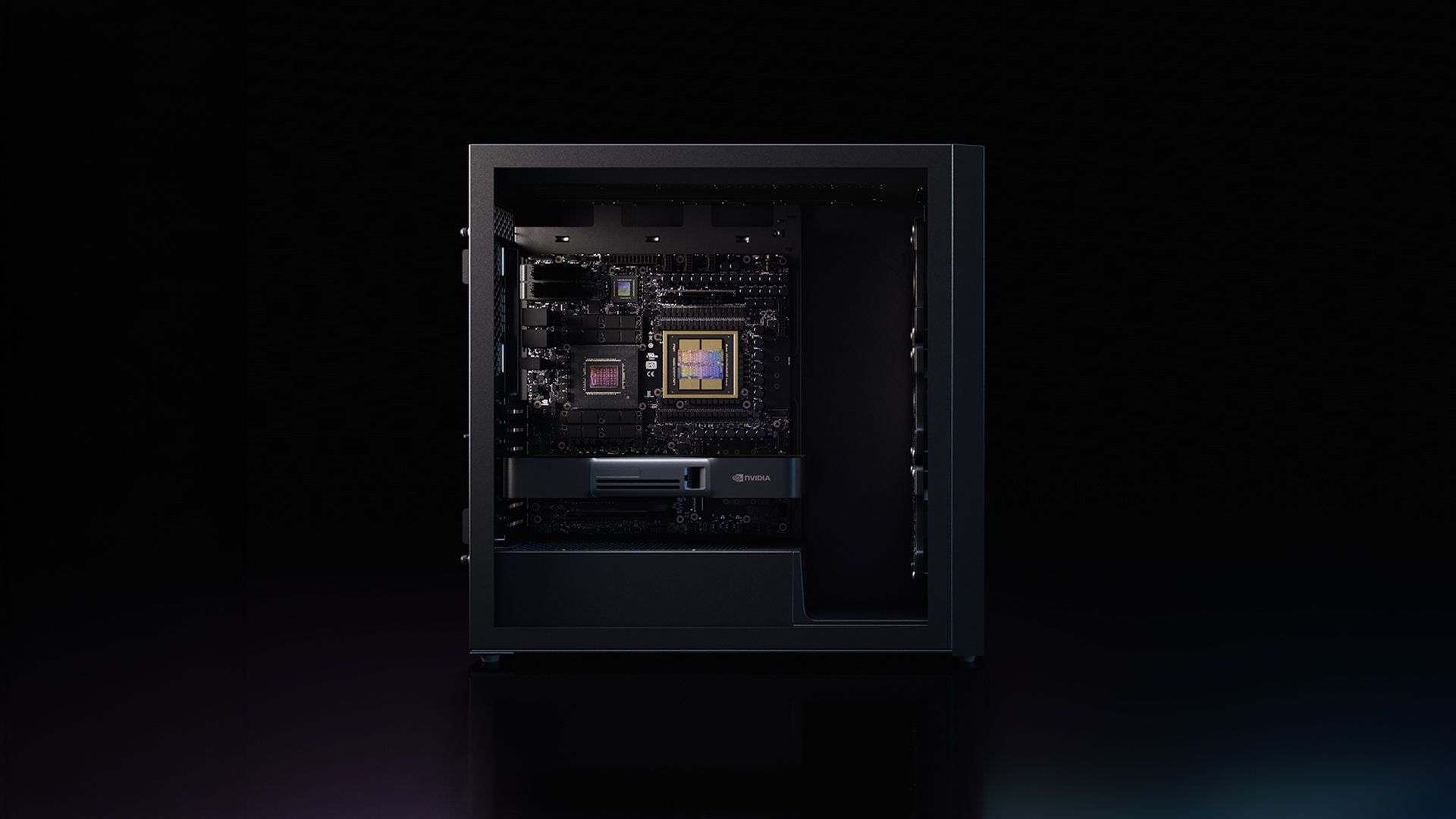

TAIPEI — The first wave of Nvidia RTX Spark hardware arrived at Computex 2026 this week, and it was not a trickle. ASUS, Dell, HP, Lenovo, Microsoft, and MSI each brought physical systems to the show floor in Taipei, giving the industry its first substantive look at what Nvidia’s debut Windows system-on-a-chip looks like inside an actual laptop chassis rather than a render.
The RTX Spark superchip, which Nvidia and Microsoft formally unveiled on May 31 at GTC Taipei, pairs a 20-core Grace CPU with a Blackwell GPU carrying 6,144 CUDA cores and fifth-generation Tensor Cores, all sharing up to 128GB of unified LPDDR5X memory over NVLink-C2C. Nvidia positioned it as capable of running 120-billion-parameter language models locally with a one-million-token context window, and at least one petaflop of AI compute — figures that would have required rack-mounted hardware as recently as two years ago. The chip was co-designed with MediaTek on the CPU side for power efficiency on Arm.
Jensen Huang, Nvidia’s founder and chief executive, framed the announcement in sweeping terms. “For forty years, you launched apps,” he told an audience of more than 30,000 at GTC Taipei. “With RTX Spark and Microsoft Windows, you ask — and the PC does the work.” Whether the hardware can deliver on that ambition is a question that will not have a clean answer until review units ship this fall.
The market context matters. Arm-based Windows PCs have a long history of promising to break Intel’s grip on the laptop market and then failing to close the gap on software compatibility or per-core performance. Nvidia is entering the same ecosystem but with a different set of assets — specifically the CUDA stack, three decades of GPU software infrastructure, and a more credible story for AI workloads than any previous Windows-on-Arm entrant. What Computex made clear is that the major OEMs are treating this launch with the same seriousness they would bring to a new Intel or AMD platform, which itself is a meaningful signal.
Microsoft’s Surface Laptop Ultra was the first device confirmed and the one that drew the most attention at Computex. According to Wccftech’s hands-on coverage, the machine is slim, carries 128GB of onboard memory, and offers more ports than some competing designs — a pointed contrast to the compromises typical of ultrathin notebooks. Brett Ostrum, Microsoft’s corporate vice president of Surface, said the company built it for “creators, developers and engineers who need serious performance in a device that is thoughtfully designed, portable and deeply connected to the Windows tools and platform they count on.” A separate Microsoft Surface RTX Spark Dev Box with passive cooling is also expected later in 2026.
HP showed two consumer laptops and a desktop mini PC. The OmniBook Ultra 16, which HP is calling the thinnest RTX Spark laptop at 15.73 millimeters, uses a 3K OLED panel with DisplayHDR TrueBlack 1000, a dual blower cooling setup with direct-contact heatpipes, and a 140W GaN USB-C charger. The smaller OmniBook X 14 comes in at 13.53mm and shares the same OLED panel technology. The company is also pursuing the enterprise end of the spectrum with its ZGX Fury GB300, a deskside workstation built around Nvidia’s GB300 Grace Blackwell Ultra Desktop Superchip that offers up to 784GB of unified memory and 20 petaflops of FP4 compute — hardware capable of trillion-parameter inference that HP’s interim chief executive Bruce Broussard said addresses customer demand for AI supercomputing that integrates into existing Windows environments.
Dell’s entry is the XPS 16 Creator Edition, a 16-inch design with a tandem OLED display carrying TrueBlack HDR 600 certification in a space-gray aluminum body. The company is also making an XPS RTX Spark Mini PC that runs the same chip at higher sustained power thanks to expanded cooling headroom. Dell chief executive Michael Dell said the laptop delivers “RTX performance and massive unified memory” for users who “demand the most from their hardware” — language that suggests the company is positioning it against workstation buyers rather than the general consumer market.
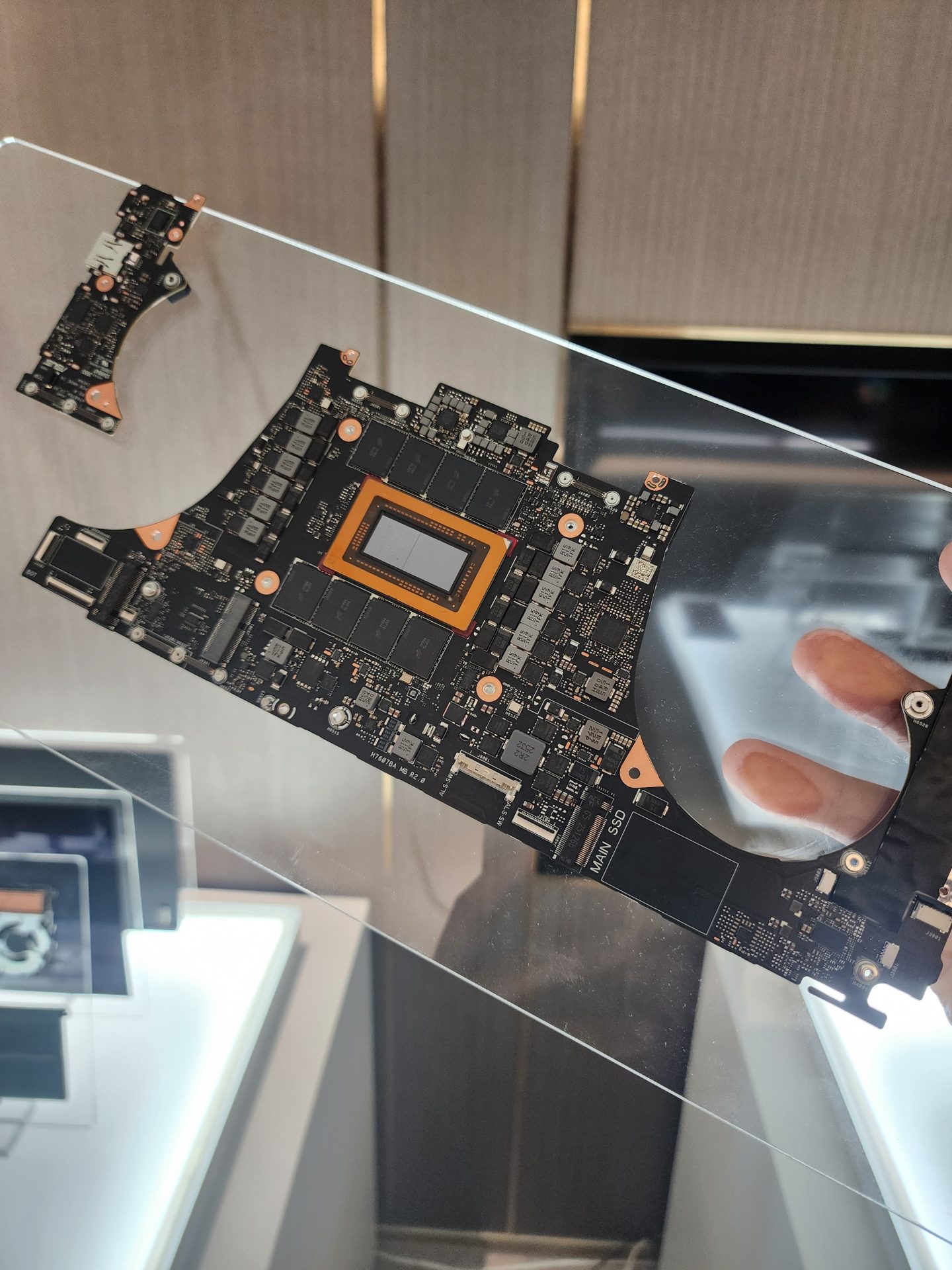
ASUS brought three devices: the ProArt P16, a 16-inch ultrabook measuring 12.9mm and weighing 1.77kg with a 4K 120Hz OLED panel at up to 1,600 nits; the ProArt P14 at 13.9mm and 1.48kg with a 14-inch version of the same display; and a ProArt Mini PC in a compact 150x150x51mm chassis with 10GbE networking and PCIe Gen 5. The PCB displays at Computex revealed the chip surrounded by eight Micron LPDDR5X modules, a 12-phase VRM, and a dual-fan cooling solution with copper heatpipes. The chip stepping on display units was A1, produced in late 2025.
Lenovo’s Yoga Pro 9n is a 15-inch OLED laptop with front-facing speakers, a large trackpad, and four USB ports including two Type-C and two Type-A alongside HDMI and a microSD slot. MSI is offering the Prestige N16 Flip AI+, a 16-inch convertible with 360-degree hinge, a full aluminum chassis, a 99.9Whr battery, and a vapor-chamber cooling system MSI says runs below 18 decibels at normal workloads. MSI is also making the EdgeMesa N AI, described as the smallest of the Computex RTX Spark mini PCs, in a silver aluminum chassis with 10GbE LAN.
Demos at the Nvidia suite covered AI workflows in Solidworks, Blender, and Unreal Engine, along with gaming on titles including Alan Wake II, Indiana Jones and the Great Circle, and Fortnite. Games were shown with frame generation and ray tracing enabled. Reviewers were not given access to settings or performance metrics — a standard pre-launch constraint, but one that means independent benchmark data will not be available until devices ship commercially.
The software dimension of the launch may matter as much as the silicon. Microsoft’s broader AI PC push now gains a significant hardware anchor. Nvidia and Microsoft are collaborating on new Windows security primitives and a runtime called NVIDIA OpenShell to enable on-device AI agents running under user-defined privacy policies. Adobe is rearchitecting Photoshop and Premiere natively for RTX Spark, with promises of up to 2x faster AI and editing performance. Game developers including Remedy Entertainment, NetEase, and Riot Games have also announced platform support.
What the launch does not yet settle is pricing. HP has not disclosed a retail figure for its consumer OmniBooks. The enterprise ZGX Fury GB300 is expected to track the broader DGX Station pricing, with mid-range configurations of that product already surfacing from resellers at $94,000 or higher. Consumer RTX Spark laptops from all six OEMs are targeted for this fall, with models from Acer and Gigabyte confirmed to follow after the initial wave. Nvidia’s challenge to Intel’s laptop dominance and AMD’s own workstation roadmap remain live variables that will shape how the platform fares when devices actually reach consumers.
Satya Nadella, Microsoft’s chairman and chief executive, called RTX Spark “a real breakthrough” toward the company’s goal of delivering “unmetered intelligence to every home and every desk with Windows.” The ambition is unambiguous. Whether buyers will agree — and at what price point — is a question Computex did not answer.