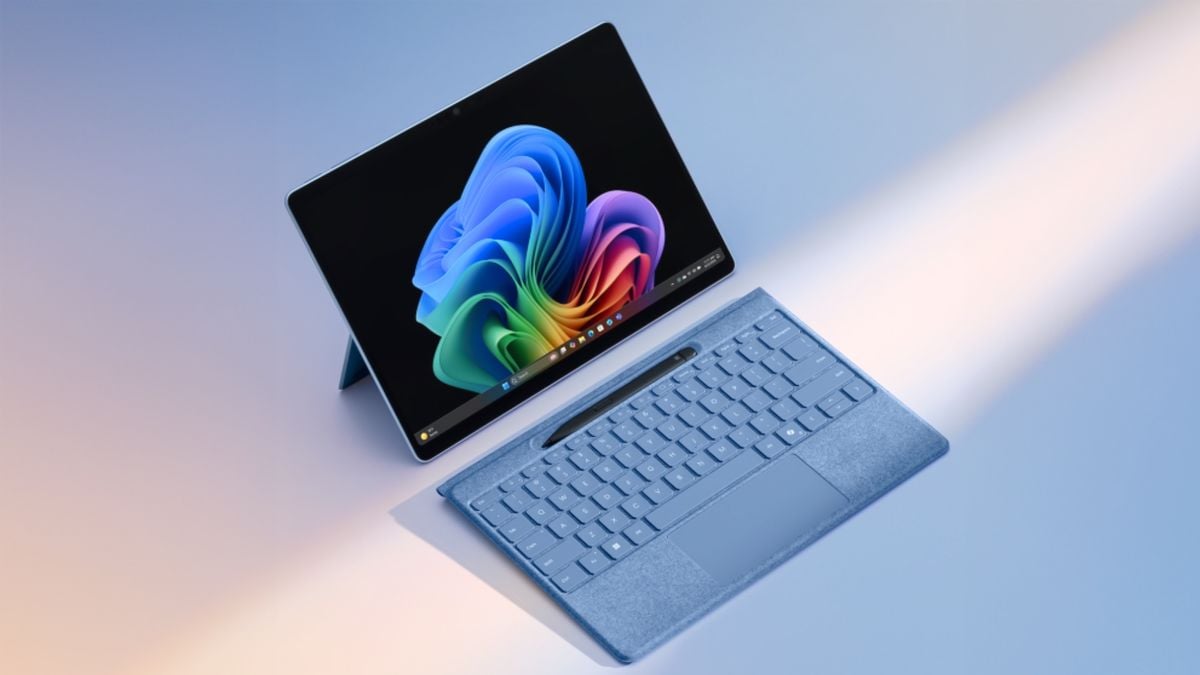

Microsoft has officially unveiled the new Surface Pro 12 and Surface Laptop 8 for business customers, pushing its AI PC strategy deeper into the enterprise market with Intel Core Ultra Series 3 processors, upgraded displays, stronger AI acceleration, and premium pricing that could reshape the high-end Windows laptop segment. The announcement marks Microsoft’s most aggressive Surface hardware push since the original Copilot+ PC initiative launched last year.
The company is positioning the refreshed Surface lineup as a centerpiece of its broader AI ambitions for Windows 11, targeting enterprise customers that want on-device AI processing, enterprise-grade security, and compatibility with legacy Windows applications without fully shifting to ARM-based computing yet. Microsoft says the devices are designed specifically for organizations preparing for AI-powered workflows, hybrid work environments, and local AI inferencing workloads. Microsoft officially unveiled the devices as part of its expanding AI-first Windows ecosystem strategy.
The Surface Pro 12 starts at $1,949.99 for the business edition and ships with Intel Core Ultra 5 processors, 16GB of RAM, and 256GB SSD storage. Higher-end configurations include Intel Core Ultra 7 chips, optional OLED displays, Wi-Fi 7, optional 5G connectivity, and storage options reaching up to 1TB. Fully configured models can reportedly climb as high as $4,399.99, making them among the most expensive Surface devices Microsoft has ever released.
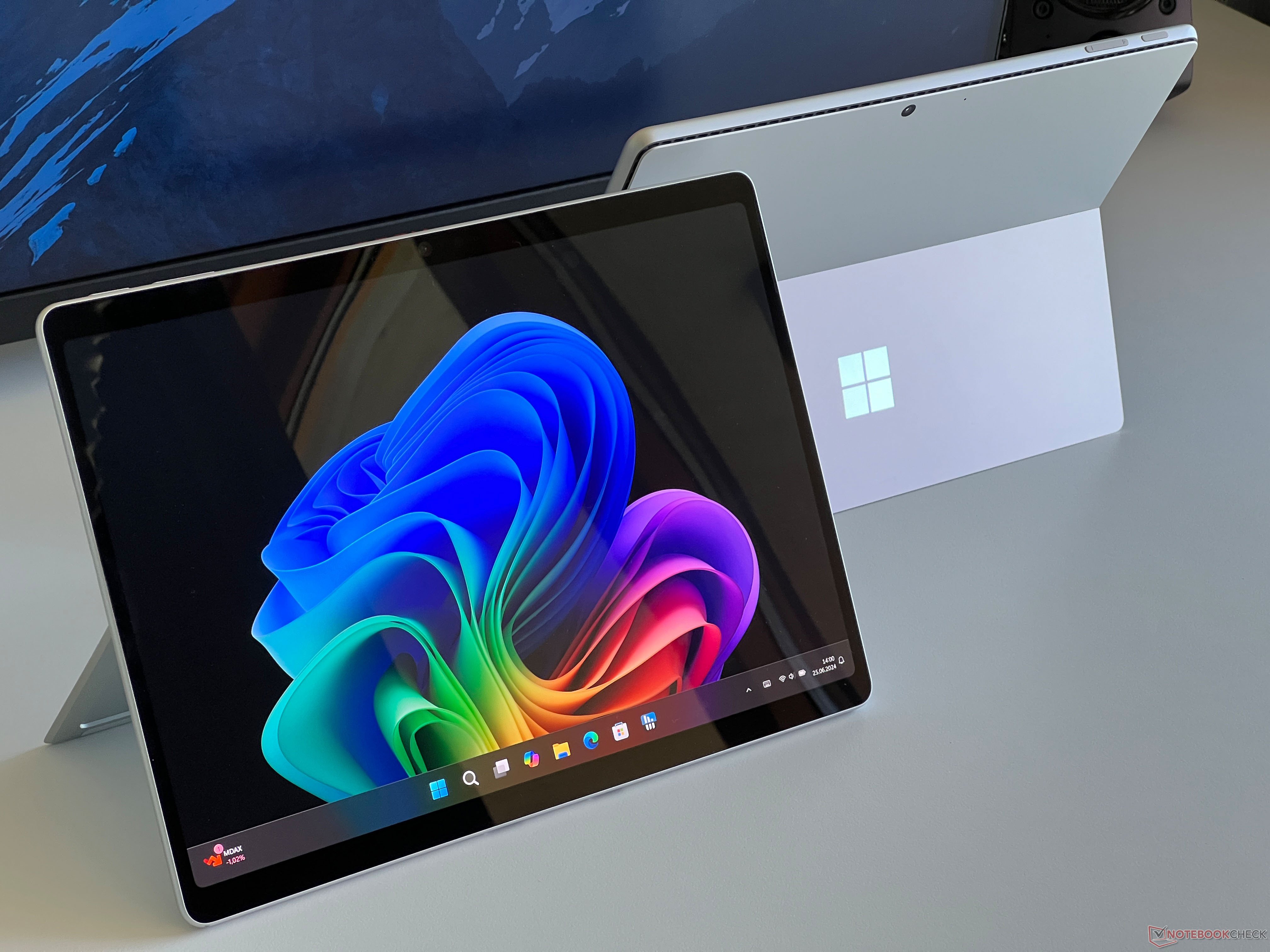
The new Surface devices continue Microsoft’s emphasis on AI-first computing. The company says the laptops are optimized for Copilot+ PC experiences and local neural processing tasks, using dedicated NPUs to handle AI-powered workloads directly on-device instead of relying entirely on cloud infrastructure. That includes AI-enhanced search, image generation, transcription, summarization, and productivity features built into Windows 11 and Microsoft 365 Copilot.
Microsoft claims the updated Surface lineup delivers major gains in AI acceleration while also improving battery efficiency and thermal management. The company is increasingly promoting local AI processing as a way for businesses to reduce cloud costs, improve latency, and strengthen data privacy protections for enterprise workflows.
The hardware strategy behind the launch is equally significant. While Microsoft spent much of the past year promoting Qualcomm Snapdragon X Elite-powered Copilot+ PCs, the company has chosen Intel silicon first for this major business-focused rollout. Industry analysts see that decision as a practical acknowledgment that enterprise customers still depend heavily on x86 software compatibility and mature IT management ecosystems.
The new Surface Pro 12 maintains Microsoft’s familiar detachable 2-in-1 design, while the Surface Laptop 8 retains the minimalist aluminum chassis and 3:2 display aspect ratio that have defined the Surface brand for years. Microsoft has refined the devices with updated haptic touchpads, thinner bezels, optional OLED display technology, and enhanced typing experiences aimed at enterprise users who spend long hours working remotely or in hybrid work environments.
Microsoft’s official Surface specifications also highlight AI-specific hardware improvements, including enhanced NPUs capable of delivering up to 45 TOPS of AI performance on supported Copilot+ PC models. The company says these improvements allow more AI features to operate smoothly without requiring constant internet connectivity.
The timing of the launch is particularly important because the broader PC market is entering a new phase of competition centered around AI capabilities. Major manufacturers including Lenovo, HP, Dell, Asus, and Acer are all rapidly expanding their AI PC portfolios as Intel, AMD, Qualcomm, and Microsoft attempt to define the next generation of personal computing. Microsoft is also using the new devices to reinforce its broader Windows ecosystem strategy.
Despite the aggressive AI positioning, Microsoft’s pricing strategy is already drawing criticism. Several technology publications described the new Surface devices as “outrageously expensive,” especially compared to competing premium Windows ultrabooks and Apple’s MacBook lineup. Some analysts warn that enterprise buyers may hesitate before deploying these systems at scale due to rising IT hardware costs and uncertain global economic conditions.
Still, Microsoft appears willing to bet that AI functionality will justify the premium. The company has spent the past two years integrating Copilot across Windows, Microsoft 365, Teams, Edge, and enterprise services, while continuously improving Windows 11 performance improvements. The Surface lineup is increasingly becoming the flagship hardware showcase for those AI capabilities.
The launch also confirms that Microsoft is not abandoning ARM-based Surface devices. Reports indicate Qualcomm Snapdragon X2-powered Surface systems remain scheduled for release later this year, likely targeting mainstream consumers and users focused more heavily on battery life and efficiency.
That dual-platform approach could become central to Microsoft’s long-term hardware strategy. Intel-powered Surface systems offer enterprise familiarity and broader software compatibility, while ARM-powered Snapdragon devices promise thinner designs, lower power consumption, and improved mobile performance for future AI-native experiences.
For Microsoft, the Surface Pro 12 and Surface Laptop 8 are more than routine hardware refreshes. They represent the company’s clearest attempt yet to turn AI PCs into a mainstream enterprise category rather than a niche experiment. Whether businesses embrace the steep pricing attached to that vision may ultimately determine how quickly AI-focused Windows PCs become standard across corporate workplaces.
Related Posts