
TORONTO — Her grandmother had kept the documents in a shoebox for years — a birth certificate from a small town in Ontario, faded at the edges, that most of the family had long stopped thinking about. Ellen Robillard, a New York State resident, pulled them out last winter after Canada quietly rewrote the rules on who gets to be Canadian. She is now applying for citizenship alongside her adult son.
She is far from alone. Roughly half of all the citizenship certificates issued under Canada’s expanded descent rules since December have gone to Americans, CBC News reported on Saturday, citing data obtained from Immigration, Refugees and Citizenship Canada. The scale of that figure — absorbing, in a matter of months, a share of the country’s citizenship pipeline that no single nation has held before — has caught immigration officials and lawyers on both sides of the border off guard.
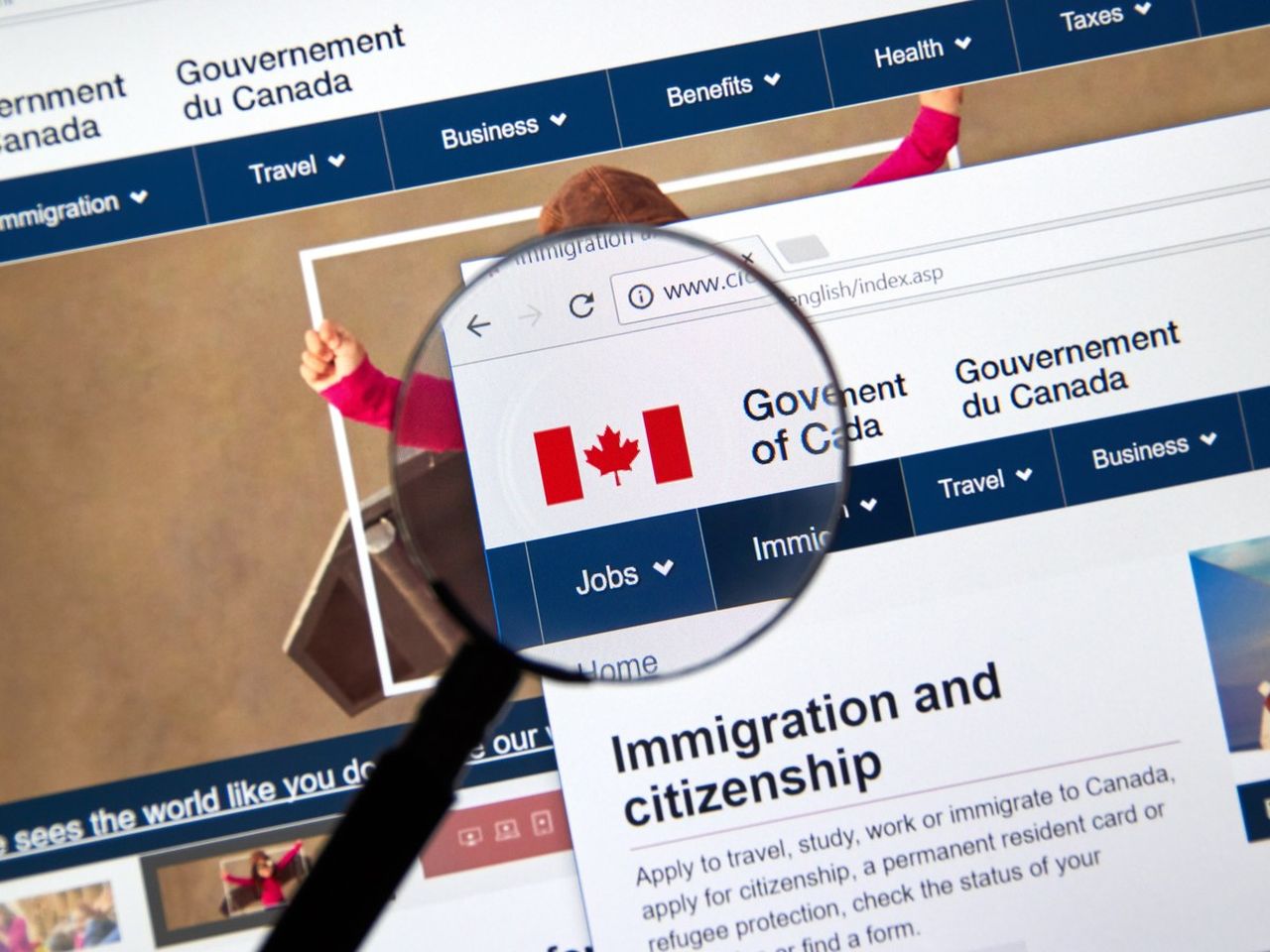
The law at the center of the rush is Bill C-3, which received royal assent on November 20, 2025, and came into force on December 15. It abolished the first-generation limit that had governed Canadian citizenship by descent since 2009 — a rule that courts had already deemed unconstitutional two years earlier. Under the new framework, anyone born before December 15, 2025, who can trace a direct line to a Canadian ancestor, no matter how many generations back, is automatically a citizen. The only requirement is paperwork.
The demand that followed was not what legislators anticipated. In January 2026, according to CIC News, nearly 2,500 Americans filed applications for proof of Canadian citizenship — ten times the number submitted by citizens of the United Kingdom, the second-highest country on the list. That single month’s American total exceeded the combined applications from the U.K., France, China, Hong Kong, India, Australia, the Philippines, the UAE, and Germany. In all of 2025, Canada received 24,500 citizenship by descent applications from U.S. citizens — about 30 percent of the global total that year. The new law had not even come into force yet for most of that period.
Reuters reported Friday that approvals for proof of citizenship by descent have risen by more than 1,000 per month so far in 2026, compared with just 275 additional approvals in December, when the law first went into effect. Roughly 48 percent of those additional approvals through February originated from the United States.
What that data does not capture is the queue building behind those approvals. By early spring, about 50,900 people were waiting for a decision on their citizenship certificate applications, with processing times at 10 months — more than double the five-month wait that existed as recently as July 2025. Demand from U.S. citizens alone added an estimated 14,000 applicants to the backlog, the National Post reported, citing government data.
The archives tell a parallel story. The Bibliothèque et Archives nationales du Québec — one of the primary repositories Americans need to prove their lineage — saw requests for certified copies of vital records climb from 32 in January 2025 to more than 1,000 in January 2026. By February 2026, the archive was processing 1,500 requests from the United States in that month alone, according to CNN. Nova Scotia Archives reported receiving ten times its normal request volume during January and February. New Brunswick, Prince Edward Island, and British Columbia have logged similar surges.
The geographic concentration of interest is not accidental. An estimated three million Americans in New England alone are eligible under the new rules, many of them descendants of the mass migration of French Canadians and Maritimers who moved south between 1870 and 1930 seeking industrial work in the mills and factories of Massachusetts, Rhode Island, and Maine. Winnipeg’s Vital Statistics office tracked 256 U.S.-address applications in the first months of 2026 — more than the entirety of 2025, which had itself been a record year.
Cassandra Fultz, the founder of Doherty Fultz Immigration Inc. and a dual citizen herself, told CNN that her U.S. caseload had climbed from roughly 10 applications a month to around 100, a sustained increase she described as without precedent in her 17 years in the field. “Usually people just get over it,” she said. “But it’s already nearing the mid-terms and people are very interested, even two years later.”
The motivations driving the surge are not uniform. Some applicants — like Robillard, who said she was seeking citizenship in case political tensions escalate — are explicitly treating the Canadian passport as an exit option. Others, particularly French Americans with Acadian roots, describe the process less as an escape than as a recognition long overdue. The law has not changed what it actually costs to use it: a citizenship certificate runs 75 Canadian dollars, with the passport application a separate step. But the legal bar for eligibility — a documented line of descent, no residency requirement, no language test, no points system — remains lower than virtually any comparable second-citizenship program anywhere in the world.
Immigration lawyer Alastair Clarke, who practices in Winnipeg, told Global News that the volume surprised even the people who wrote the law. “I don’t believe the lawmakers planned on having applications from individuals who were four generations removed,” he said. What they planned for, and what the Ontario Superior Court had demanded in its 2023 ruling, was a correction to decades of rules that had locked legitimate descendants out of a citizenship they were constitutionally entitled to hold.
The context for the American surge is inseparable from the political climate. Relations between Ottawa and Washington have frayed steadily since President Donald Trump returned to office, with tariff disputes, annexation rhetoric, and a Canadian travel boycott of the United States reshaping the bilateral relationship. Many Americans, immigration consultants say, are not planning to move — they are acquiring options. The certificate, once issued, does not expire. The passport it unlocks does not require a permanent address in Canada to obtain or renew.
Whether the processing infrastructure will keep pace is a question IRCC has not yet answered. The department has acknowledged a “sizeable increase” in requests but has not announced any expansion of the staffing or systems needed to resolve the backlog it created. For the tens of thousands of Americans still waiting, the certificate remains the bottleneck. Until it arrives, the passport — and the options it opens — is still in the paperwork.