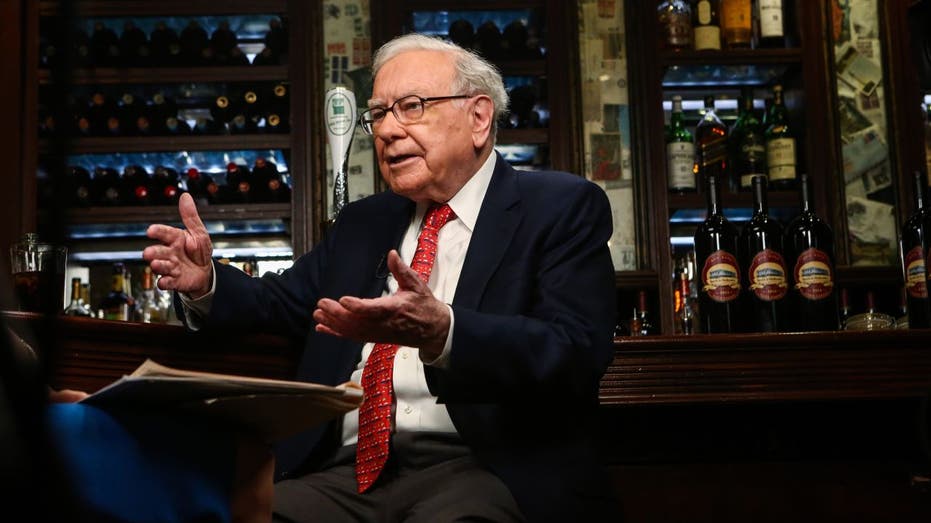

WASHINGTON – Warren Buffett’s decision to sever his philanthropic partnership with the Bill & Melinda Gates Foundation arrived within the same week the organization received the legal vindication it had paid for. The convergence captures what a law firm cannot offer in any report: once the Epstein question attaches itself to an institution, a clean legal finding is not the same as a clean slate.
WilmerHale, the Washington law firm retained by the Gates Foundation in March 2026, published its findings Tuesday. Al Jazeera reported the headline conclusion: the foundation made no payments to convicted sex trafficker Jeffrey Epstein and participated in no criminal activities connected to his network. The investigation involved interviews with 50 current and former staff members and concentrated on two documented periods of contact between the foundation and Epstein, spanning 2011 to 2014.
The first concerned a proposed donor-advised fund to support global public health. Epstein brought the proposal to the foundation and it was considered seriously enough to persist for approximately three years. The foundation declined to pursue it, but only after Epstein had, in the words of the WilmerHale report, “misrepresented the potential donors’ knowledge of and willingness to commit to the DAF,” a fact that only became apparent at a 2014 breakfast meeting. What was discussed in the intervening years, and at how many meetings, the report does not detail.
The second interaction is more clearly documented and harder to neutralize. In 2012, Epstein introduced Bill Gates to the International Peace Institute, an organization whose president Epstein had existing ties to. The Gates Foundation awarded IPI a grant in 2013. The WilmerHale review acknowledges that Gates was aware of Epstein’s connection to IPI’s leadership at the time the grant was made. It does not explain why that awareness was considered insufficient to redirect the funding.
Gates appeared before the House Oversight Committee in June in a closed-door transcribed interview and acknowledged that meeting Epstein was “a grave error in judgement.” The Eastern Herald reported on Gates’s appearance as the committee’s investigation expanded from Epstein’s operational staff to his network of elite associates. His testimony did not produce criminal referrals but placed him in a documented record of high-profile figures who acknowledged Epstein relationships while denying knowledge of his trafficking operation.
The Gates Foundation responded to the WilmerHale findings by announcing a governance reform package: centralized vetting for donors and partners, expanded conflict-of-interest policies, and improved protocols for managing information about sensitive associations. The logic of the reforms is straightforward. The timing is familiar. These are the categories of safeguards that receive institutional priority after the conduct they are designed to prevent has already occurred.
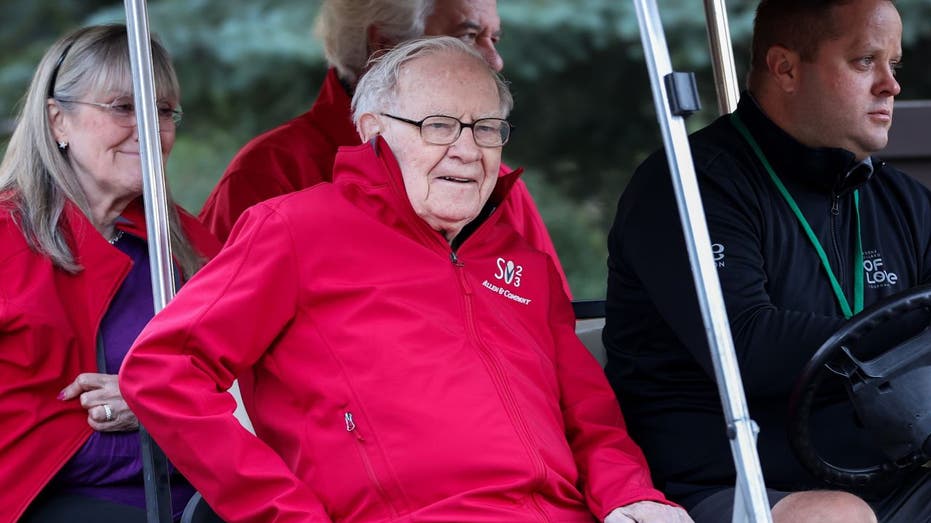
Buffett’s withdrawal from the partnership overshadows all of this. Since 2006, the Berkshire Hathaway chairman has directed more than $47 billion in company stock to the Gates Foundation, making him the single largest external contributor to what became one of the most consequential philanthropic vehicles in the world. The foundation’s disbursements across global health initiatives – malaria prevention, polio eradication, agricultural development across sub-Saharan Africa – were shaped substantially by Buffett’s contributions. He offered no detailed explanation for ending the arrangement.
Buffett’s decision preceded the WilmerHale clearance rather than being triggered by a finding of wrongdoing. He did not accuse the foundation of misconduct. He announced the end of the partnership and left the reasoning to inference. The most available inference is that twenty years of philanthropic collaboration and $47 billion in capital were not sufficient reasons to remain, whatever the external review concluded about criminal conduct.
What the external review could not address, and what Buffett’s silence does not clarify, is the question of institutional judgment. WilmerHale was tasked with determining whether criminal conduct occurred and whether the foundation was used for illegal purposes. It found neither. It was not tasked with evaluating whether a foundation that retained contact with Epstein across three years, including after his 2008 Florida conviction for soliciting prostitution from a minor, exercised appropriate diligence. The IPI grant question, in particular, sits at the boundary the report chose not to cross: Gates knew of Epstein’s institutional involvement, the grant was approved, and the review does not evaluate whether that sequence reflected adequate governance.
The Epstein congressional probe continues. The House Oversight Committee has scheduled additional witnesses following Gates’s June appearance, including Leon Black, the Apollo Global Management founder, and Doug Band, a former aide to Bill Clinton. Earlier Eastern Herald reporting documented Gates’s emergence as a focus of the probe as Justice Department file releases surfaced connections running through more than three million documents. No criminal referrals have been issued by the committee in any hearings conducted to date.
Whether the WilmerHale report will be introduced into those proceedings as evidence the foundation has formally endorsed is a question the committee has not publicly addressed. The foundation welcomed its conclusions. Its largest donor was already gone.