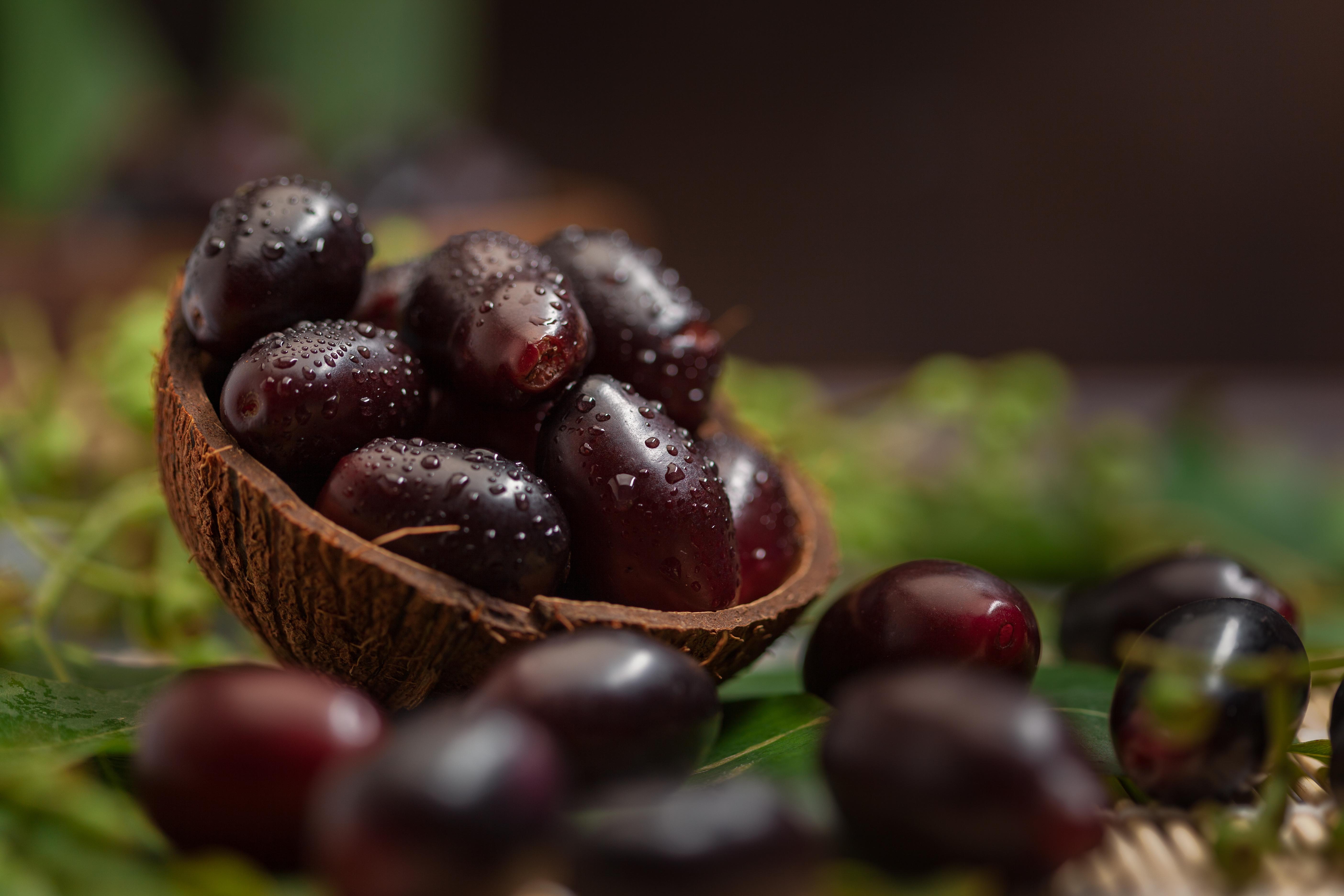

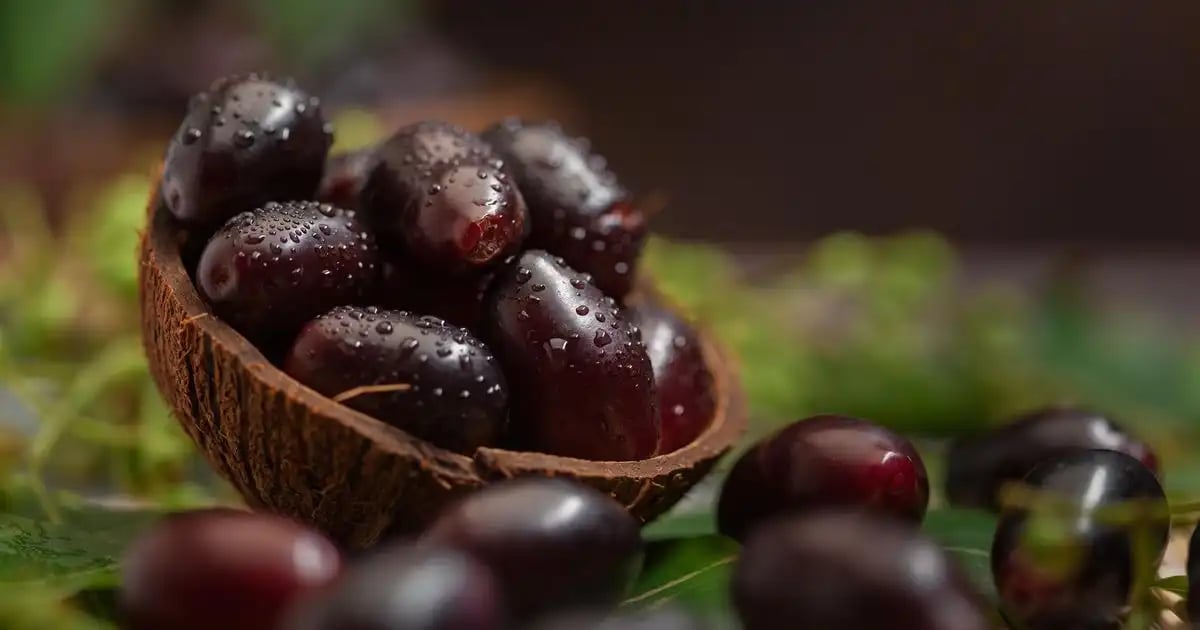
NEW DELHI – The black plum season in India runs roughly six weeks, from late May to early July, before the fruit vanishes from roadside carts and market stalls until the following monsoon. For most of the country’s 101 million diagnosed diabetics, those weeks pass without a doctor ever mentioning the fruit.
That silence is not easily explained by the science. Jamun, known botanically as Syzygium cumini and recorded in Ayurvedic pharmacopeias dating back to the Charaka Samhita, has accumulated a substantial body of pharmacological evidence linking its seed compounds to measurable improvements in blood glucose regulation. A study published in Food Science & Nutrition in May 2025, examining a low-calorie jamun drink in animal models, found that blood glucose levels dropped significantly in treated groups, with no adverse effects on pancreatic or renal tissue, and concluded the fruit holds genuine promise as a functional dietary intervention.
The research builds on what biochemists have known for decades about two alkaloids in jamun seeds: jamboline, which slows the enzymatic conversion of starch into glucose in the gut, and jambosine, which improves the response of insulin receptors at the cellular level. Together they act on two separate points in the glucose metabolism pathway. That dual mechanism, acting both upstream at digestion and downstream at absorption, is part of what makes the compounds pharmacologically interesting, and part of what makes the clinical community’s near-silence on jamun difficult to reconcile.
Dr Ashok Kumar Jhingan, Senior Director at the Centre for Diabetes, Thyroid, Obesity and Endocrinology at BLK-MAX Super Speciality Hospital in New Delhi, is among the minority of endocrinologists who will discuss it with patients. In an interview with Business Standard, he described jamun seed powder as a genuine adjunct to standard care, not a replacement for medication, but a supplement that can modestly reduce HbA1c and fasting glucose when used consistently over eight to twelve weeks. He recommends one to two teaspoons daily, ideally taken before or with meals to blunt post-meal sugar spikes. The caveat, he added, is real: overconsumption, particularly by patients already on oral hypoglycemics or insulin, carries a risk of hypoglycemia.
That risk is manageable. It is not a reason to avoid the conversation.
India’s relationship with its own botanical pharmacopoeia has always been ambivalent in clinical settings. Practitioners trained in Western medicine frequently bracket traditional remedies as anecdotal until they clear randomised controlled trials, a standard that most pharmaceutical drugs also did not meet at the point they entered clinical practice. The irony, as researchers at institutions including ScienceDirect’s network of journals have documented since at least 2017, is that jamun’s antidiabetic properties have been replicated across animal studies in multiple countries and across multiple parts of the plant: the seeds, the bark, the leaves, and the fruit pulp all show measurable activity against hyperglycemia through different mechanisms.
What the literature has not yet produced, in sufficient quantity, is large-scale randomised human trials. That gap is real, and it matters. It is also narrower than the clinical silence around jamun suggests.
Eastern Herald reported in March this year on the broader question of Ayurveda’s evidential standing in diabetes management, a conversation that has been gaining ground in endocrinology circles alongside the rise of integrative medicine programs at institutions like AIIMS. Jamun sits at the sharper end of that debate, because unlike many botanical claims, its mechanism is specific, its compounds are identified, and its effect on glucose metabolism is reproducible in controlled conditions. The question is no longer whether jamboline inhibits starch-to-sugar conversion; it does. The question is how reliably, at what dose, and in whom.
Part of the answer may come from the seasonal constraint itself. Because jamun fruit is only available for roughly six weeks, most research on human consumption is compressed into a narrow window each year. Seed powder extends that window, and growing interest in jamun as a supplement has pushed it into year-round availability in dried, powdered, and capsule form. The Business Standard’s reporting on Dr Jhingan’s recommendations notes that results in terms of improved insulin sensitivity typically become detectable within two to four weeks of daily use, while reductions in HbA1c take eight to twelve weeks to manifest, both timescales that fit within a clinical monitoring cycle.
For people managing prediabetes or early insulin resistance, the case for discussing jamun as part of a dietary modification strategy is harder to dismiss. The fruit’s glycemic index is low, its caloric load is minimal, and the seed powder costs a fraction of what any pharmaceutical adjunct to metformin would run. The endocrinologists who decline to mention it are not wrong to want better evidence, but they are, in effect, withholding a conversation about a remedy their patients can already obtain from any pharmacy shelf or Ayurvedic shop.
Continuous glucose monitors, explored in a recent Eastern Herald report on metabolic tracking moving beyond clinical diabetes management, have made it easier than at any previous point for individuals to test the effect of specific dietary changes on their own glucose curves in real time. A diabetic patient with a CGM, a bag of jamun seed powder, and a two-week observation window could generate more personalised data about their own response to the compound than any average-effect clinical study would give them. That is not a substitute for formal trials, but it is a different kind of evidence, and it is increasingly the evidence people are acting on.
What remains genuinely unknown is whether the antidiabetic effects observed in animal models translate with the same magnitude in humans at the doses practical for daily use. The 2025 Food Science & Nutrition study, conducted through animal modeling, found blood glucose reductions of meaningful scale, but the researchers themselves noted that the pathway from laboratory findings to human dietary recommendations requires further investigation. Dr Jhingan’s clinical caution on drug interactions and the risk of hypoglycemia in medicated patients is the right framing: jamun seed powder is not a drug, and it should not be treated as a safe substitute for one.
But it is something. As diabetes rates rise faster than health systems can absorb, a pattern documented not only in India but across Wales, the United States, and Central Asia in recent reporting, the appetite for affordable, low-risk adjuncts to pharmaceutical management is growing. Jamun’s problem has never been a lack of evidence; it has been a lack of the particular kind of evidence that gets mentioned in a ten-minute outpatient consultation. Closing that gap is, at this point, mostly a matter of institutional will.
Related Posts