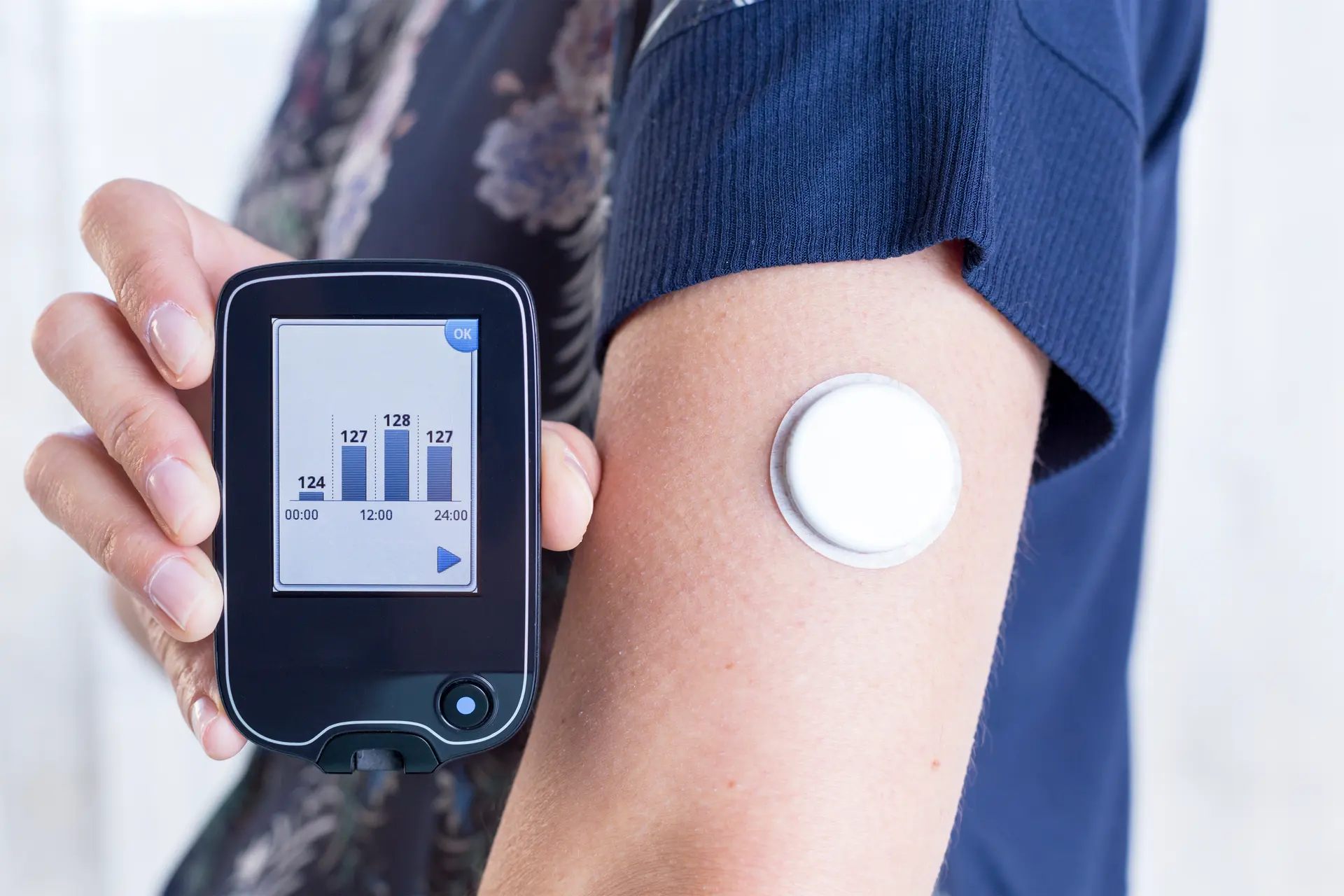

Continuous glucose monitors, widely known as CGMs, were engineered for one primary clinical function: to help people with diabetes track blood sugar fluctuations in real time and prevent life-threatening glycemic events. That narrow medical purpose is now being stretched into a far broader and more ambiguous terrain, consumer wellness.
The devices, which use a small sensor inserted under the skin to measure glucose levels throughout the day, are increasingly being marketed to individuals without diabetes. The promise is seductive: real-time insight into how food, sleep, exercise, and stress affect metabolism. But the interpretation of that data remains deeply contested.
Medical experts have long emphasized that glucose variability is a normal physiological process in non-diabetic individuals. Yet the expansion of continuous monitoring outside clinical necessity raises a central question: whether constant numerical feedback improves health behavior or simply amplifies anxiety.

A Clinical Tool Entering Consumer Culture
In formal healthcare settings, CGMs are embedded within structured treatment protocols. Patients are guided by clinicians, and readings are interpreted within established thresholds. Outside that framework, the same data streams are stripped of context.
This shift has fueled what industry observers describe as a rapid normalization of continuous glucose monitors as lifestyle products rather than strictly medical devices. The transition is not merely technological; it is cultural, reframing metabolism itself as something that should be constantly optimized.
At the center of this transformation is the concept of metabolic optimization, a term widely adopted in wellness marketing circles. It suggests that biological stability is not enough, that peak performance requires continuous correction based on real-time feedback loops.
Regulatory Gaps and Scientific Unease
The expansion of CGMs into consumer markets has outpaced regulatory clarity. While devices are cleared for medical use, their application in non-diabetic populations exists in a grey zone of interpretation rather than formal clinical endorsement.
Experts point to what they describe as regulatory lag, where approval pathways focus on device safety but not necessarily on the cognitive or behavioral consequences of sustained self-monitoring in healthy users.
In the absence of standardized guidance, individuals are left to interpret complex glucose data without medical training. This creates a feedback loop in which minor physiological fluctuations may be misread as signals of dysfunction.
Data Abundance Without Meaning
The promise of precision health is often undermined by a more fundamental problem: interpretation overload. Continuous streams of biometric data can appear authoritative even when they lack actionable significance.
In practice, this has led to what researchers describe as data overload, where users are exposed to constant physiological metrics without a clear framework for response. A spike in glucose after a meal, for instance, may be entirely normal, yet still trigger behavioral adjustments that are medically unnecessary.
This tension between visibility and understanding sits at the core of the CGM debate. More data does not automatically translate into better decisions.
The Wellness Economy and Biohacking Culture
CGMs have also become embedded in a broader cultural movement often referred to as biohacking. This ecosystem promotes the idea that human biology can be systematically optimized through measurement, control, and iterative self-experimentation.

The result is a shift from treatment to optimization, and from clinical necessity to performance enhancement.
Wearable Health Technology and Market Pressure
The rapid expansion of CGMs reflects a broader acceleration in wearable health technology. Devices that once existed solely in hospitals are increasingly being redesigned for consumer ecosystems, where subscription models and app integrations drive adoption.
Market analysts describe this as part of a larger healthtech market growth trajectory, in which biometric monitoring is evolving into a mainstream consumer category rather than a niche clinical tool.
That commercialization, however, introduces tension between medical integrity and product engagement. The more frequently users interact with their data, the more valuable the platform becomes, regardless of whether those interactions are clinically meaningful.
External Scientific and Regulatory Context
The U.S. Food and Drug Administration has recently expanded access to glucose monitoring technologies, including over-the-counter pathways for certain devices, signaling a shift toward broader consumer availability.
Conclusion: Precision Without Clarity
Continuous glucose monitors now sit at the intersection of medicine, consumer technology, and behavioral psychology. Their expansion beyond diabetes care reflects a broader cultural shift toward continuous self-quantification.
Yet the central paradox remains unresolved: whether real-time metabolic data leads to better health outcomes, or simply creates a new form of dependency on interpretation-heavy, context-poor information streams.
In that uncertainty lies the defining tension of modern wellness technology: the pursuit of precision without guaranteed understanding.