
NEW YORK – For more than a decade, the tens of thousands of women who sued Johnson & Johnson over its baby powder watched the company deploy every legal mechanism available to avoid full accountability. A subsidiary bankruptcy, designed specifically to channel liabilities through a shielded entity. Repeated appeals challenging both the science and the plaintiffs’ legal standing. Settlement proposals that plaintiffs’ attorneys consistently rejected as inadequate to the harm.
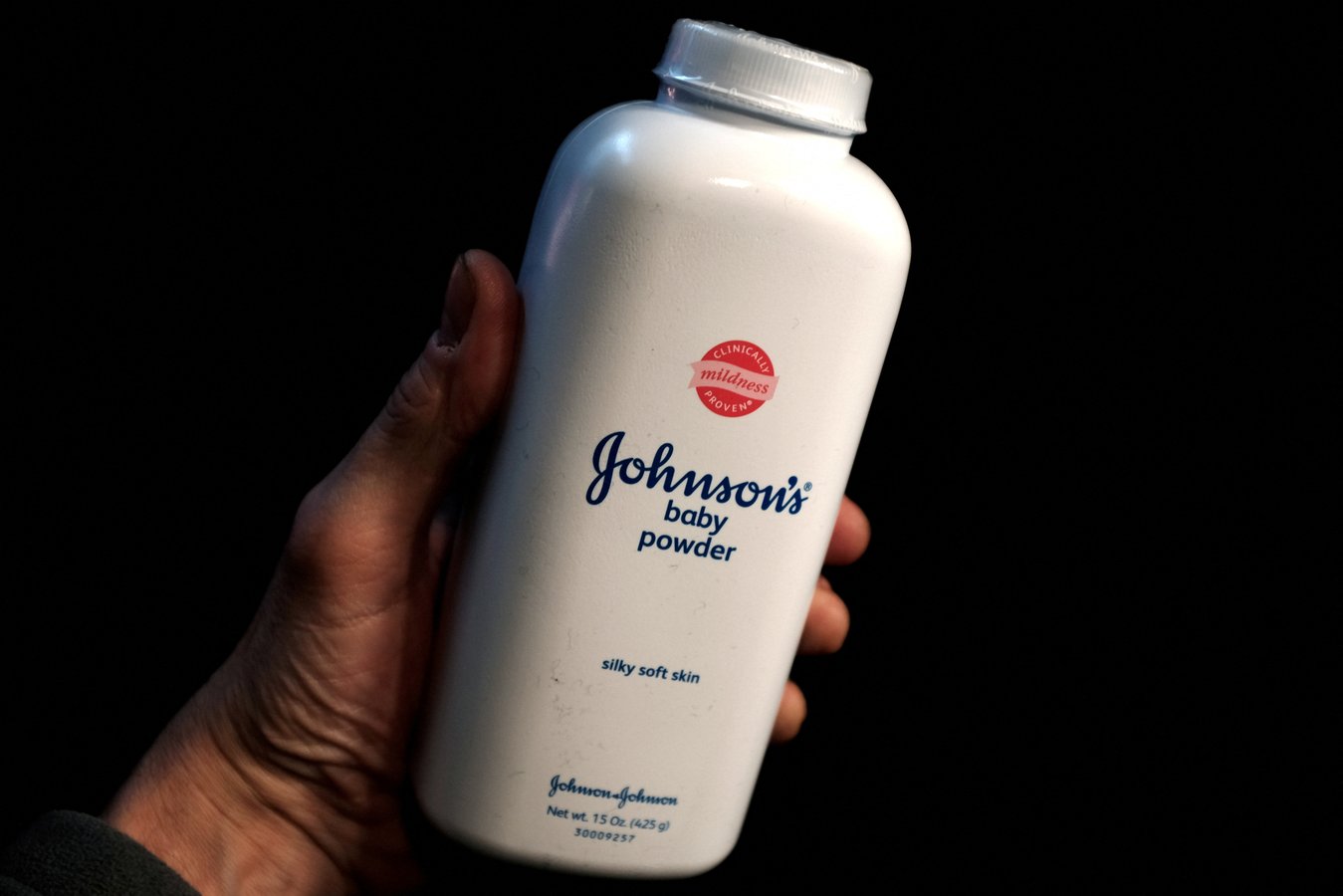
On Monday, that decade ended. Johnson & Johnson announced a $5.5 billion settlement resolving thousands of talc-related cancer lawsuits – the company’s largest product liability resolution in its history – in which plaintiffs claimed the talc in J&J’s iconic baby powder products was contaminated with asbestos and caused ovarian cancer and mesothelioma in users who trusted the product for daily personal hygiene, Reuters reported.
The settlement covers approximately 60,000 plaintiffs, the majority of them women diagnosed with ovarian cancer after years of using J&J talc products marketed as pure, gentle, and safe for daily use on adults and infants alike. Johnson & Johnson did not admit liability as part of the resolution.
The cases stretched across multiple decades of product use and multiple decades of litigation. Internal J&J documents obtained during discovery in earlier trials revealed testing that, according to plaintiffs’ attorneys, detected asbestos in some talc samples. Those documents became central to jury verdicts in cases across multiple states. In 2018, a Missouri jury awarded $2.1 billion to 22 women in a case later reduced on appeal but one that signaled the scale of liability J&J faced if cases continued to individual trial.
The path to Monday’s settlement included one of the most contested corporate liability maneuvers in recent US legal history. In 2021, J&J executed what became known as the “Texas Two-Step” – creating a subsidiary called LTL Management, assigning the talc liabilities to it, and placing that subsidiary into Chapter 11 bankruptcy to limit payouts. The Third Circuit Court of Appeals struck down the maneuver twice, ruling that a financially healthy parent company could not use a shell subsidiary’s bankruptcy to escape mass tort liability. The Supreme Court declined to hear the case. FDA regulatory gaps in monitoring cosmetic ingredients like talc were cited in congressional testimony during this period, with lawmakers pointing to J&J as evidence that the agency lacked adequate pre-market cosmetic safety surveillance.
With the bankruptcy route foreclosed, J&J returned to direct settlement negotiations at a scale it had previously resisted. The $5.5 billion figure reflects both the size of the plaintiff class and the severity of diagnoses involved. Mesothelioma – a rare cancer almost exclusively linked to asbestos exposure – carries a median survival of 12 to 21 months from diagnosis. Ovarian cancer at late stages carries a five-year survival rate below 30 percent. FDA-approved cancer treatments have advanced significantly over the litigation’s lifespan, but access disparities and treatment costs have remained central concerns for affected families throughout the proceedings.
J&J removed talc-based Baby Powder from US and Canadian shelves in 2020, citing what the company called “misinformation” around product safety rather than safety concerns – a distinction that further inflamed plaintiffs and their families. The product was pulled from global markets entirely in 2023. The timing of those withdrawals, years into active litigation and following multiple large jury verdicts, was used by plaintiffs’ attorneys in subsequent trials to argue that J&J’s stated reasoning for the withdrawal was pretextual.
For the broader health system, the litigation’s costs extended beyond individual settlements. Medicare coverage for cancer treatment has intersected with the J&J talc litigation in ways rarely discussed in settlement announcements – patients who developed ovarian cancer over decades of talc exposure and aged into Medicare frequently shifted significant treatment costs to the public health system even as private litigation proceeded. The $5.5 billion settlement does not address that public cost dimension.
The pharmaceutical product liability landscape has shifted materially since the talc lawsuits were first filed. Pharmaceutical product liability claims have surged across multiple drug categories, with courts increasingly willing to scrutinize internal company documents around product safety knowledge. The J&J talc cases established several key legal precedents around what constitutes adequate consumer warning for cosmetic products and what evidentiary standard courts should apply to internal company testing records obtained in discovery. Bayer’s Roundup cancer rulings from the Supreme Court resolved a parallel generation of carcinogen product liability claims in the same era, and legal scholars expect both decisions to be cited together in future corporate chemical harm litigation.
Individual plaintiffs must accept the settlement terms for their cases to be resolved under this framework. Attorneys involved in the litigation estimate that the majority of approximately 60,000 cases will be resolved through this settlement, though a small number are expected to opt out and continue to individual trial. The opt-out dynamic means Monday’s announcement does not fully close J&J’s talc liability – it caps the known exposure while a residual tail of cases proceeds on their own timeline.
For J&J, which generates more than $88 billion in annual revenue, the $5.5 billion settlement represents a material but manageable financial resolution. Bloomberg reported the settlement simultaneously with J&J’s announcement. The company’s medical products and pharmaceutical divisions – now its primary growth engine following the consumer health spinoff that created Kenvue – will face questions about whether the talc litigation’s internal document revelations about corporate safety knowledge will influence how regulators and plaintiffs’ attorneys approach future product liability cases involving J&J products.
The regulatory question that Monday’s settlement does not resolve is whether the FDA’s current cosmetics safety framework is adequate to prevent a comparable scenario with other consumer ingredients. The Modernization of Cosmetics Regulation Act, enacted in 2022, gave the agency new tools for cosmetic safety oversight, but the full impact of those reforms on product safety surveillance remains years away from full evaluation. J&J’s talc cases took more than a decade to reach this resolution. The question for consumer safety advocates is how many others are still in their early years.