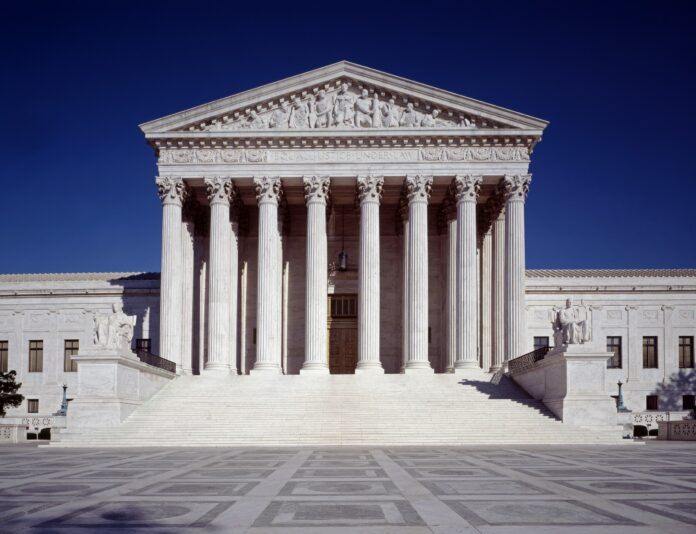

WASHINGTON – For two decades, John Durnell kept weeds out of his Missouri garden with Roundup. By 2019, he had non-Hodgkin lymphoma. A jury gave him $1.25 million and found that Monsanto had never warned him the herbicide might cause it. On Thursday, the Supreme Court took it back.
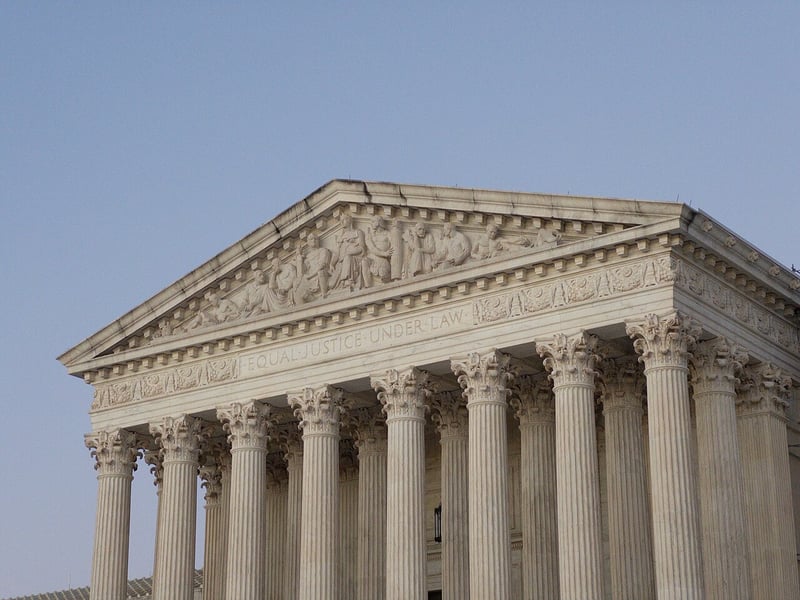
In a 7-2 decision, the justices held that a 1947 federal pesticide statute bars failure-to-warn lawsuits like Durnell’s in state courts. Writing for the majority, Justice Brett Kavanaugh said in the Court’s opinion that the Federal Insecticide, Fungicide, and Rodenticide Act demands label uniformity, and that allowing state juries to require cancer warnings on Roundup would impose labeling standards “in addition to or different from” what the Environmental Protection Agency has already approved. Since the EPA approved Roundup’s label without a cancer warning, Durnell’s claim was preempted before it could be heard.
The ruling ends the legal path that more than 100,000 plaintiffs across the country had been walking. Bayer, the German pharmaceutical giant that acquired Monsanto in 2018 and inherited Roundup along with its litigation, watched its share price rise roughly 16 percent Thursday morning. At its peak, the company had reserved more than $16 billion to settle Roundup claims. What remained after a decade of litigation now largely disappears.
The dissent carried an unusual pairing. Justice Ketanji Brown Jackson, the court’s most reliable liberal voice, argued the majority misread FIFRA’s requirements and left Durnell “without a remedy for an injury the state courts found Monsanto caused him.” She was joined by Justice Neil Gorsuch, a Trump appointee and one of the court’s most conservative members. Jackson and Gorsuch rarely agree on anything. That they found common ground here signals how contested Kavanaugh’s statutory reading is, even within the Court’s conservative wing.
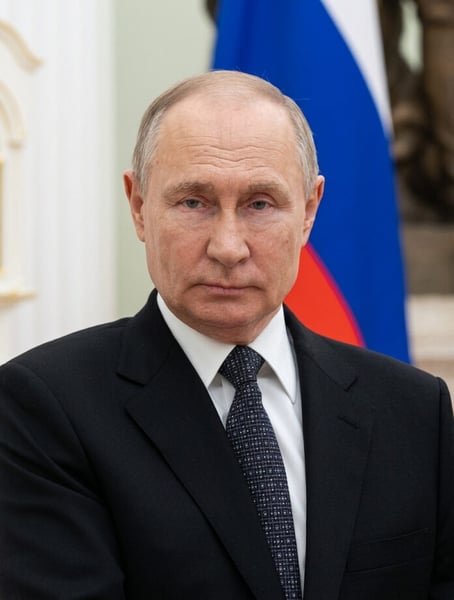
What sharpens the ruling’s political edge is where the Trump administration stood. The Justice Department filed an amicus brief supporting Bayer and was granted time at oral argument to press Monsanto’s case before the nine justices. The same administration that has branded itself around the Make America Healthy Again movement, with Robert F. Kennedy Jr. as its public health figurehead, intervened in federal court on behalf of a German chemical company accused of hiding cancer risks from American consumers. CBS News noted that the Justice Department’s brief explicitly urged the Court to find FIFRA preemption applies to warning claims.
The reaction from within the MAHA movement was immediate and unsparing. Food activist Vani Hari, whose social media following reaches millions of health-conscious consumers, wrote that the Trump administration had “URGED and PLEADED the Court to reach this result to protect a FOREIGN chemical company.” David Murphy, founder of Food Democracy Now, called it “empty rhetoric from a morally bankrupt party.” Hannah Dunning, an organizer with Moms Across America, was more direct: “We are pissed all the way off.” Kennedy himself, whose agency is charged with overseeing the very chemicals at the center of this ruling, had not commented by Thursday evening.
The science underneath the ruling has never been settled. In 2015, the International Agency for Research on Cancer, the World Health Organization’s cancer research arm, classified glyphosate as “probably carcinogenic to humans,” placing it in Group 2A alongside red meat and hairdressing as an occupation. The EPA has taken a different view consistently: its most recent review found glyphosate “not likely to be carcinogenic to humans” when used as directed. Thursday’s ruling does not resolve that disagreement. Kavanaugh’s majority opinion is about statutory preemption, not about whether Roundup causes cancer. That scientific question, with two major health authorities on opposite sides of it, remains unanswered.
For Durnell, the ruling means the $1.25 million a Missouri jury awarded him is gone. He is one of more than 100,000 plaintiffs whose core legal theory, that Monsanto should have warned them about a cancer risk it knew or should have known about, has now been foreclosed. Some plaintiffs’ attorneys have said they will explore remaining legal theories that do not rest on the labeling preemption. Whether those paths lead anywhere is not yet clear, and the Court addressed none of them Thursday.
The ruling lands in a year already marked by legal setbacks for public health advocates. The Supreme Court this week also stripped deportation protections from 350,000 Haitians and Syrians, further narrowing the reach of judicial review over executive and regulatory action. On the public health front, federal investigators are simultaneously managing a Listeria outbreak linked to Maryland dairy products that has killed one person and infected twelve across four states, adding to a surveillance load already stretched by the country’s worst measles season in decades.
The broadest implication of Thursday’s ruling extends beyond Roundup. Legal analysts expect the logic of Monsanto v. Durnell to be applied to failure-to-warn claims in medical device litigation, cosmetic ingredient lawsuits, and consumer food safety cases, anywhere a federal agency has issued product-specific approval that plaintiffs argue should have included stronger health warnings. That expansion is not guaranteed, but it is the argument Bayer’s attorneys made in their briefs, and nothing in Kavanaugh’s majority opinion forecloses it.
What the majority opinion does not address is the underlying question that 100,000 plaintiffs, one Missouri gardener’s jury, and the World Health Organization’s cancer researchers brought to this table: whether glyphosate, sprayed on American lawns and farms for half a century, causes non-Hodgkin lymphoma. That case was never argued before the Supreme Court. Thursday’s ruling means it may never have to be.