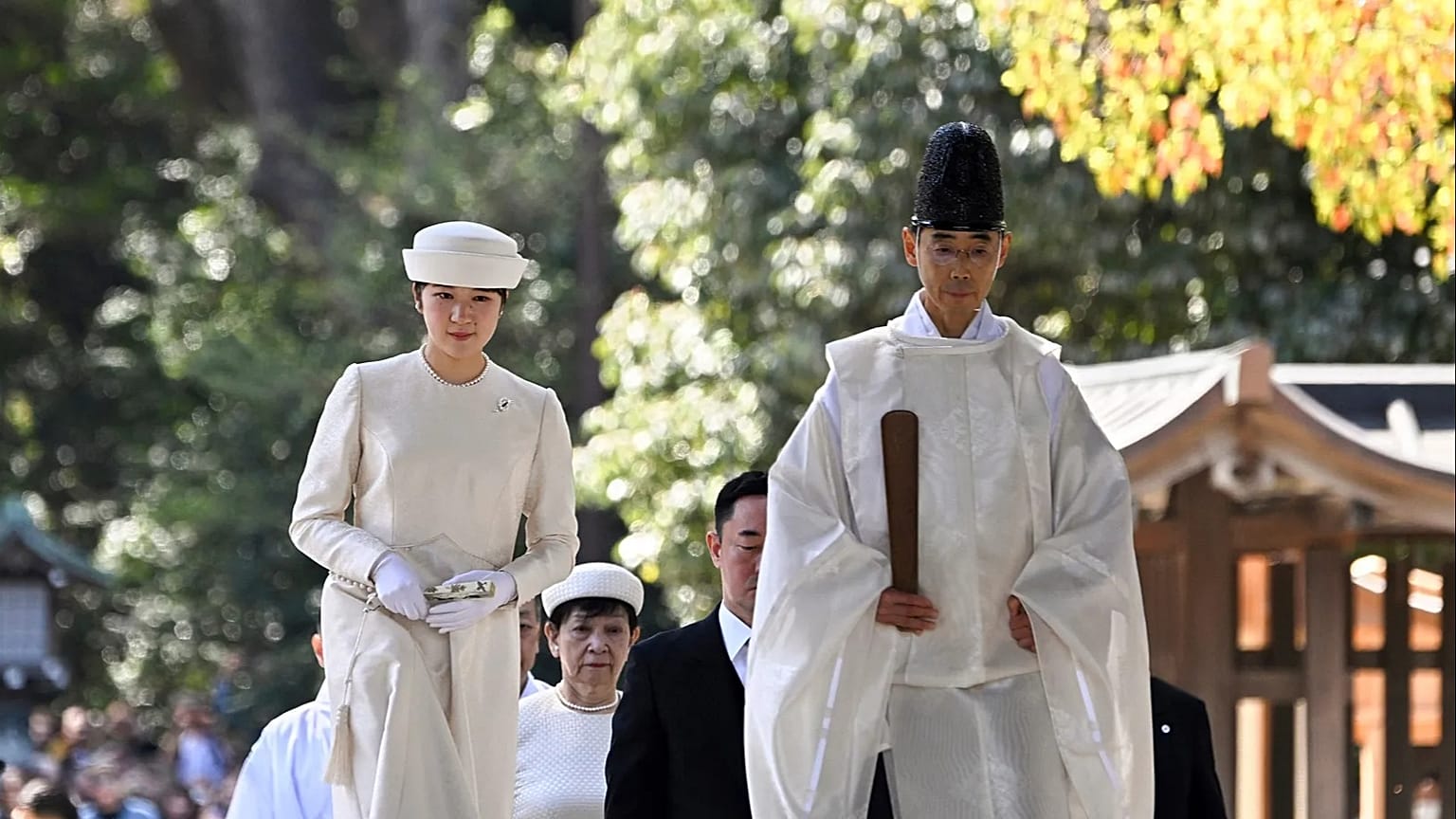

TOKYO – Princess Aiko turned 26 last December, completed a university degree, and has quietly assumed royal duties alongside her father, Emperor Naruhito. She will never inherit his throne. Japan’s parliament made that definitive on Friday, passing the first amendment to the Imperial House Law since 1949 without removing the ban on female emperors – a decision that contradicts what surveys show a large majority of the Japanese public actually wants.
The amendments, approved by the National Diet, take a different approach to the dynasty’s shrinking succession problem. Under the revised rules, male relatives from distant branches of the imperial family can now be adopted into the line of succession provided they are older than fifteen. The sons of those adopted relatives also become eligible for the throne. And for the first time, imperial princesses who marry outside the family will be allowed to retain their royal status rather than losing it automatically under the existing law.
The practical pressure behind the legislation is stark. Emperor Naruhito, 65, has no sons. The succession currently passes to his younger brother Crown Prince Fumihito, 60, then to Fumihito’s son Prince Hisahito, who is nineteen. If Hisahito eventually has daughters rather than sons, the male-only line runs out. Friday’s adoption provision extends the dynasty’s reach into distant family branches, but does not resolve the underlying question: what happens if those branches also fail to produce eligible male heirs?
What the law does not do is reflect what the Japanese public has said it wants. A Mainichi Shimbun survey in March found 61 percent of respondents favored allowing a female emperor. By June, a separate poll of more than 2,000 people put that number at 73 percent. Hideya Kawanishi, a professor at Nagoya University who studies the imperial institution, said the bill “fails to reflect public opinion,” attributing the resistance to the conservative political base of the ruling Liberal Democratic Party, as Euronews reported.
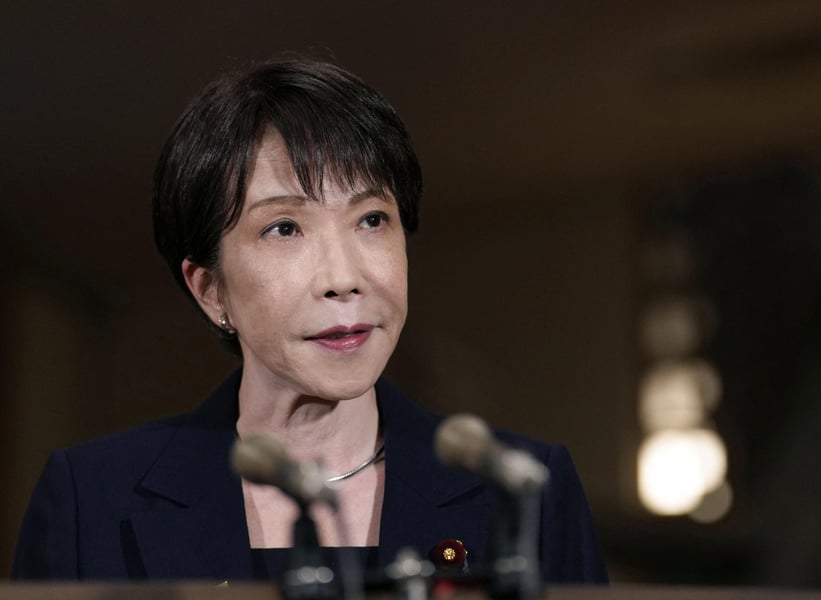
Former Prime Minister Sanae Takaichi and other conservatives within the LDP have consistently opposed a female succession line on grounds of preserving male-line continuity. Their position has held inside the party despite the polling. Takaichi ran for party leadership in 2021 and 2024, losing both times, yet her camp retained enough influence over this specific question to prevent the more substantive reform. The LDP’s parliamentary majority means that party consensus, not national opinion surveys, determines what legislation passes.
The amendment is nevertheless significant by the slow standards of Japanese constitutional tradition. The Imperial House Law has been revised rarely in the post-war period – Friday’s change is the first to the main text since 1949, when the defeated empire was still rebuilding a drastically reduced royal family under American occupation oversight. The parallels to the current moment are not coincidental: a dynasty that once numbered dozens of family branches has contracted to a handful of active members, and the direct successor line now rests on a single teenager and whatever choices he makes in the years ahead.
Japan’s position increasingly diverges from the path taken by other constitutional monarchies. The United Kingdom removed male-preference primogeniture in 2013 with the Succession to the Crown Act, placing the eldest child regardless of gender first in line. The Netherlands completed a similar reform in 1983; Sweden in 1980; Belgium in 1991. In Asia, the pattern among democratic nations has broadly been to allow public opinion to influence institutional reform as generational attitudes shift. Japan’s approach leaves it in an increasingly narrow group of major monarchies with an absolute male-only throne.
Inside Japan, the gender question has particular resonance given Princess Aiko’s profile. She is the sitting emperor’s only child. She graduated from Gakushuin University in 2024, studied English literature, and has since participated in official ceremonies with visible public warmth. Polls have consistently shown she is among the most admired members of the imperial family. Nothing in Friday’s legislation changes her constitutional position: she cannot ascend the throne, she cannot pass imperial status to any future children, and her role in the succession is legally nil.
What parliament has bought with Friday’s vote is time – but precisely how much remains unclear. The adoption mechanism requires identifying distant male relatives willing to enter the imperial family and then produce male heirs of their own, a sequence that involves demographic luck as much as political will. Legal scholars have noted that the revised law does not include any provision for what would happen if the entire eligible male bloodline were to exhaust itself, leaving the question of a female sovereign as a constitutional emergency rather than a policy debate. That gap remains unaddressed.
Japan’s parliament has moved for the first time in three generations, and the dynasty’s odds of survival have marginally improved. Whether the country’s democratic majority ever gains a meaningful say over an institution it has venerated for centuries is a different question – one that Friday’s vote explicitly deferred rather than answered.
Related Posts