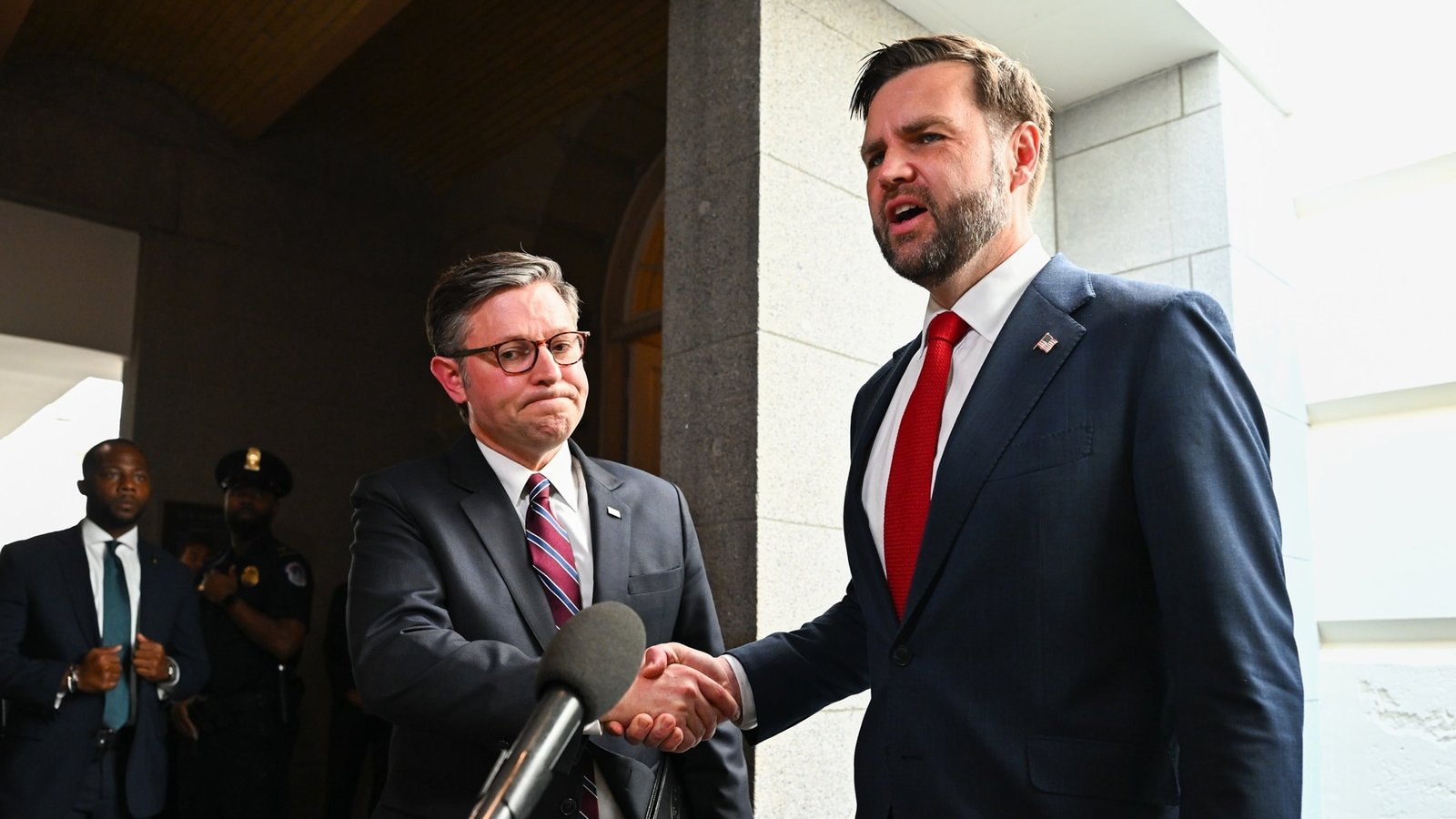

WASHINGTON – The first signs of Republican fracture around the Iran War emerged Thursday in a Capitol Hill hearing room, when Rep. Warren Davidson declared three members of his caucus would be enough to kill a $95 billion package Speaker Mike Johnson needs to keep American warplanes fueled over Persian airspace. The package, unveiled by House GOP leaders as the third reconciliation bill of Trump’s second term, bundles $60 billion in direct military funding, $13 billion in intelligence costs, $12 billion in farm aid, and the SAVE America Act, an election-integrity measure that has become a proxy battle between Trump loyalists and Senate institutionalists unwilling to let it reach the floor in its current form.
The price tag reflects how expensive the conflict has become. Pentagon officials briefed congressional leadership last week on the rate at which operational resources are being consumed across the 138-day campaign, warning that without supplemental appropriations, some mission categories face drawdown within the quarter. Johnson framed the package as an urgent military necessity. Davidson was unimpressed. “I think that a no-offset plan is dead on arrival,” he said. “Frankly, three of us would kill it.” Rep. Nancy Mace called it “$95 billion in new deficit spending, no offsets, and not one provision to lower the cost of living.”
The House floor is only the first obstacle. In the Senate, Republican members who might otherwise support the war funding have telegraphed opposition to the SAVE Act component. Sen. Thom Tillis warned he would obstruct the bill if it includes what he called a “failed attempt to confuse this election.” Sen. Bill Cassidy invoked what has become a bipartisan diagnosis if not a bipartisan cure: “Our national debt is a runaway train. The next reconciliation bill should be fully paid for.”
The legislative vehicle Johnson has chosen is budget reconciliation, the parliamentary tool that allows deficit legislation to pass the Senate with 51 votes rather than the 60 required to break a filibuster. Reconciliation has its own rules, however. The Byrd Rule prohibits provisions that are “extraneous” to budget matters, and election-integrity measures like the SAVE Act are precisely the sort of non-fiscal attachment that Senate parliamentarians have historically stripped out. Independent Rep. Kevin Kiley said the process “should really be done in a bipartisan way” – a position that, coming from a Republican who caucuses with the majority, reads less as a demand than as a forecast.
The urgency on the House side reflects what the operational picture shows. Iran voided its ceasefire agreement this week and declared the American campaign an existential conflict after US strikes hit Bandar Abbas for a sixth consecutive night. Iranian forces have responded by striking US military installations in Bahrain, Qatar, and Jordan, expanding the geographic footprint of the conflict in ways the original appropriations authorization did not anticipate. Congress authorized the initial phase of operations; the 138-day duration and the widening of the theater to include Gulf-based American bases have outrun that authorization in both cost and scope.
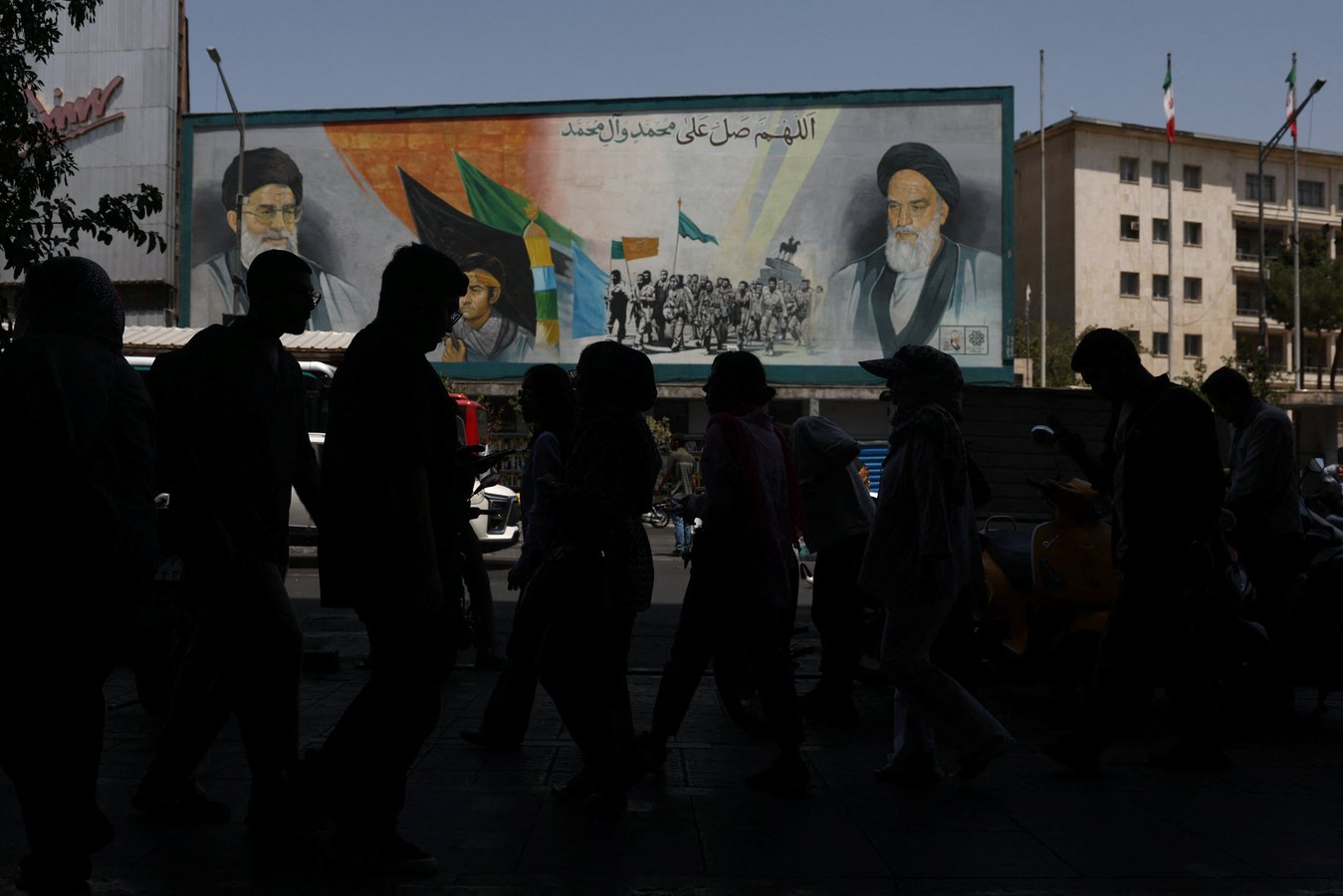
The scale of civilian impact is also creating political liability. A US airstrike near a pediatric cancer hospital in Ahvaz forced the evacuation of 211 patients mid-chemotherapy and drew condemnation from Iran’s foreign minister as a “barbaric war crime.” The images circulated broadly outside the United States, and the political problem they create for Johnson is real: the vote he needs to fund the war’s next phase is being taken the same week that footage from Ahvaz was available to every constituent watching the news.
The fracture lines among House Republicans over the $95 billion package reveal something about the coalition Johnson leads. Deficit hawks, many of them Freedom Caucus members or aligned with it, were willing to support military operations while those operations could be funded within existing appropriations. A $95 billion supplemental with no offsets turns the war from a foreign policy commitment into a fiscal one, and that is where some Republicans stop following the leader. The farm aid component adds another pressure point: rural-district members who have demanded agricultural relief since spring find themselves caught between their constituents and a broader vote against unlimited deficit spending.
What the bill does not contain is equally notable. The package Johnson unveiled includes nothing to address Iran’s counter-strikes on US installations in Bahrain, Qatar, and Jordan. There is no provision for Gulf-state host-nation cost-sharing, despite longstanding congressional interest in burden-sharing arrangements. According to ABC News reporting on the House deliberations, some members had specifically requested offset provisions that would reduce the net cost. Those provisions did not make it into the final package Johnson brought to the floor.
Whether Johnson can thread that needle before the Pentagon’s operational runway runs out is uncertain. Two dozen Republican deficit hawks plus a handful of Senate institutionalists blocking the SAVE Act gives Johnson a coalition math problem that a primetime address from the president cannot solve. The administration has already tried that approach this week. The vote that matters now is the one in the House Rules Committee, and as of Thursday evening it was not clear Johnson had the numbers to move it.