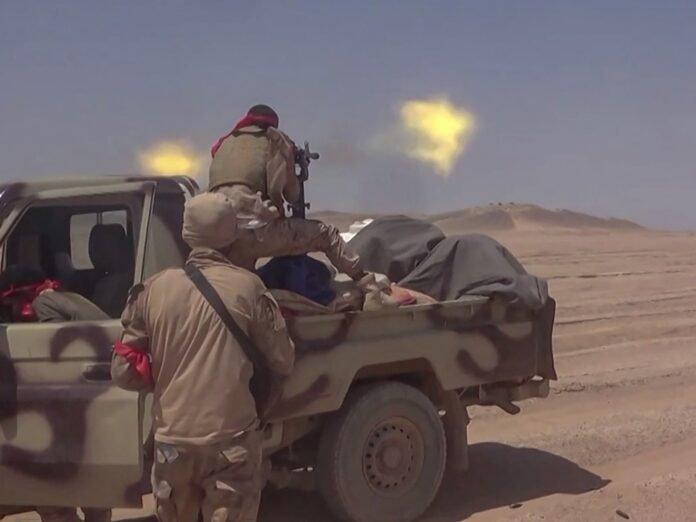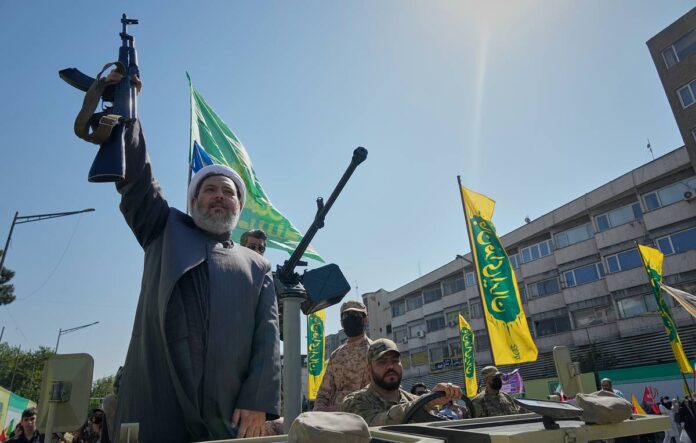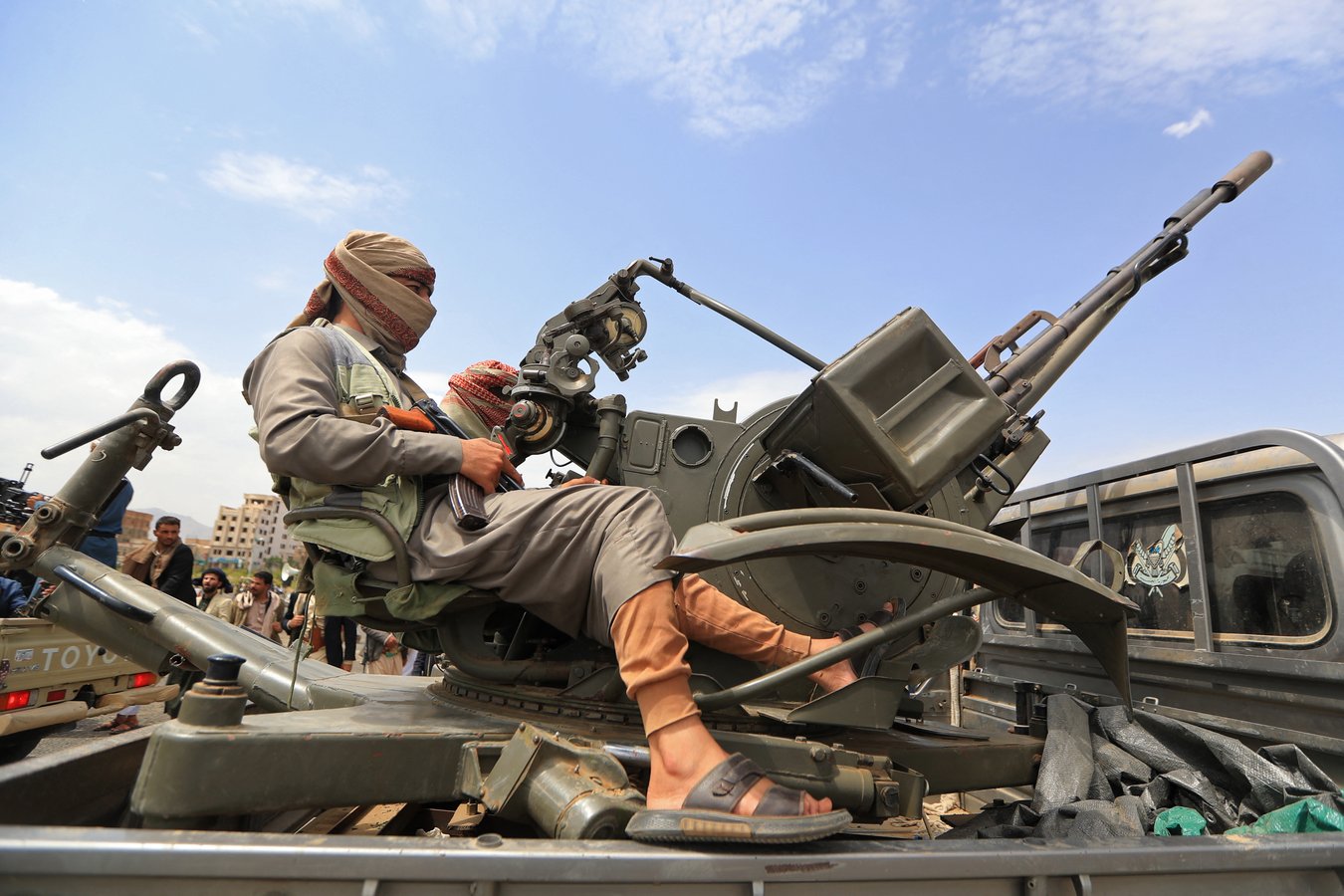

WASHINGTON – Two days after Houthi forces fired missiles at Abha airport in southern Saudi Arabia, the United States government quietly approved one of the region’s largest precision weapons transactions of the year. The State Department notified Congress on Wednesday of a potential $1.96 billion Foreign Military Sale to Riyadh: 20,000 Advanced Precision Kill Weapon System guided rockets, contracted through BAE Systems, heading to a kingdom that has watched the Houthi threat rebuild itself at the margins of a wider Iran conflict.
The Abha strike on July 14 caused no casualties but came close enough to civilian approach paths to ground several international flights. It followed a separate Yemeni government airstrike targeting Sanaa airport, which had been carrying an Iranian delegation for funeral services: a chain of provocations that underscored how quickly the region’s overlapping conflicts can breach Saudi airspace and reach civilian infrastructure. As Dawn reported, the Abha missile fire marked the latest in a pattern of escalating Houthi action against Saudi territory.
The APKWS-II is not a missile. It is a guidance kit that converts an unguided 2.75-inch rocket into a laser-homing precision munition, inexpensive by military standards and capable of destroying a vehicle, radar dish or missile launcher without the blast radius of a heavier strike package. The US Navy has described it as “an inexpensive way to destroy targets while limiting collateral damage in close combat,” and Saudi air forces have deployed earlier APKWS variants in Yemen since 2015. What Washington authorized this week is an order of magnitude larger than any prior transfer on record: 10,000 air-to-air guidance sections and 10,000 air-to-ground guidance sections.
BAE Systems, headquartered in Nashua, New Hampshire, will serve as the principal contractor. The State Department said implementation would require 15 additional US government personnel and 15 US contractor representatives to be stationed in Saudi Arabia for an extended period to manage technical reviews, training and in-country maintenance. That footprint underscores how deeply the US military-industrial link to Riyadh persists, even as American forces conduct operations elsewhere in the Gulf corridor.
The State Department framed the transaction in the language of alliance management. “This proposed sale will support the foreign policy and national security objectives of the United States by improving the security of a major non-NATO ally that is a force for political stability and economic progress in the Gulf region,” the department said in its congressional notification. The framing positions Saudi Arabia as a stabilizing partner and not merely a customer, a designation Riyadh has cultivated through sustained engagement with Washington across multiple administrations.
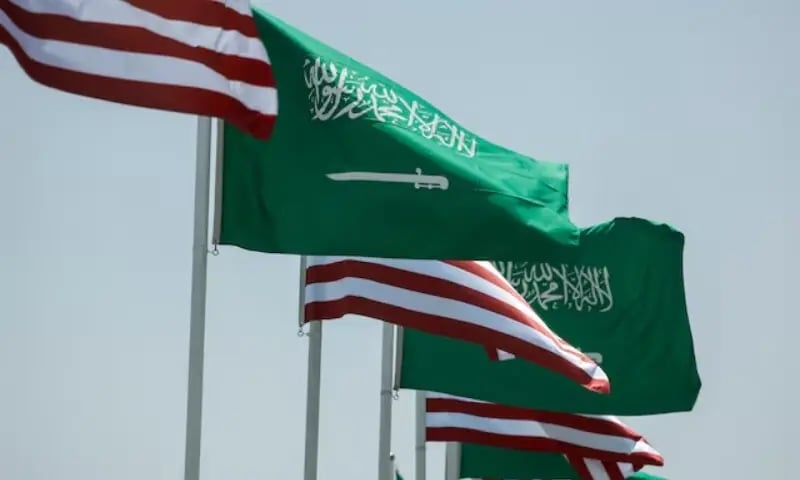
Saudi Arabia holds major non-NATO ally status, a designation that streamlines arms transfers and intelligence sharing. On the same day, the State Department also cleared a separate $484 million sale to Kuwait covering C-17 transport aircraft components and maintenance equipment, a transaction that illustrated the breadth of US arms diplomacy across the Gulf at a moment when every GCC member is watching the Iran confrontation develop in real time. The National reported the dual notifications as part of a coordinated Gulf security push.
The context for the Saudi request is not difficult to locate. As The Eastern Herald reported this week, the United States has now launched five consecutive nights of strikes against Iran, a campaign that has sharpened Riyadh’s calculation about what credible air defense requires. The APKWS kits are compatible with platforms already in the Royal Saudi Air Force inventory, meaning conversion from delivery to operational deployment is measured in weeks rather than years.
What the sale does not answer is whether 20,000 precision rockets will prove sufficient. Houthi launch capacity is estimated by Western analysts at several hundred ballistic and cruise missiles remaining in inventory, alongside a growing fleet of one-way-attack drones. The APKWS is designed for air-to-ground and air-intercept engagements from rotary and fixed-wing platforms; it is not a ground-based air defense system. Filling that gap requires a separate procurement track through Patriot battery upgrades and a Saudi-UAE integrated air picture that remains incomplete. The Abha strike arrived precisely because those gaps exist.
Neither the Saudi Ministry of Defence nor the White House National Security Council had offered public comment on the deal at the time of publication. No congressional hold had been filed. Under the Arms Export Control Act, Congress has 30 days to block a notified Foreign Military Sale, a window that has rarely been exercised for Gulf state transactions under the current administration. BAE Systems also declined to comment.
The approval lands at a moment when the architecture of Gulf security is being renegotiated across multiple fronts, with drone corridors and ballistic trajectories now cutting through the same airspace as civilian flight paths. For Riyadh, the 20,000 APKWS-II rounds represent a quantifiable answer to an adversary whose next launch could carry a different target.