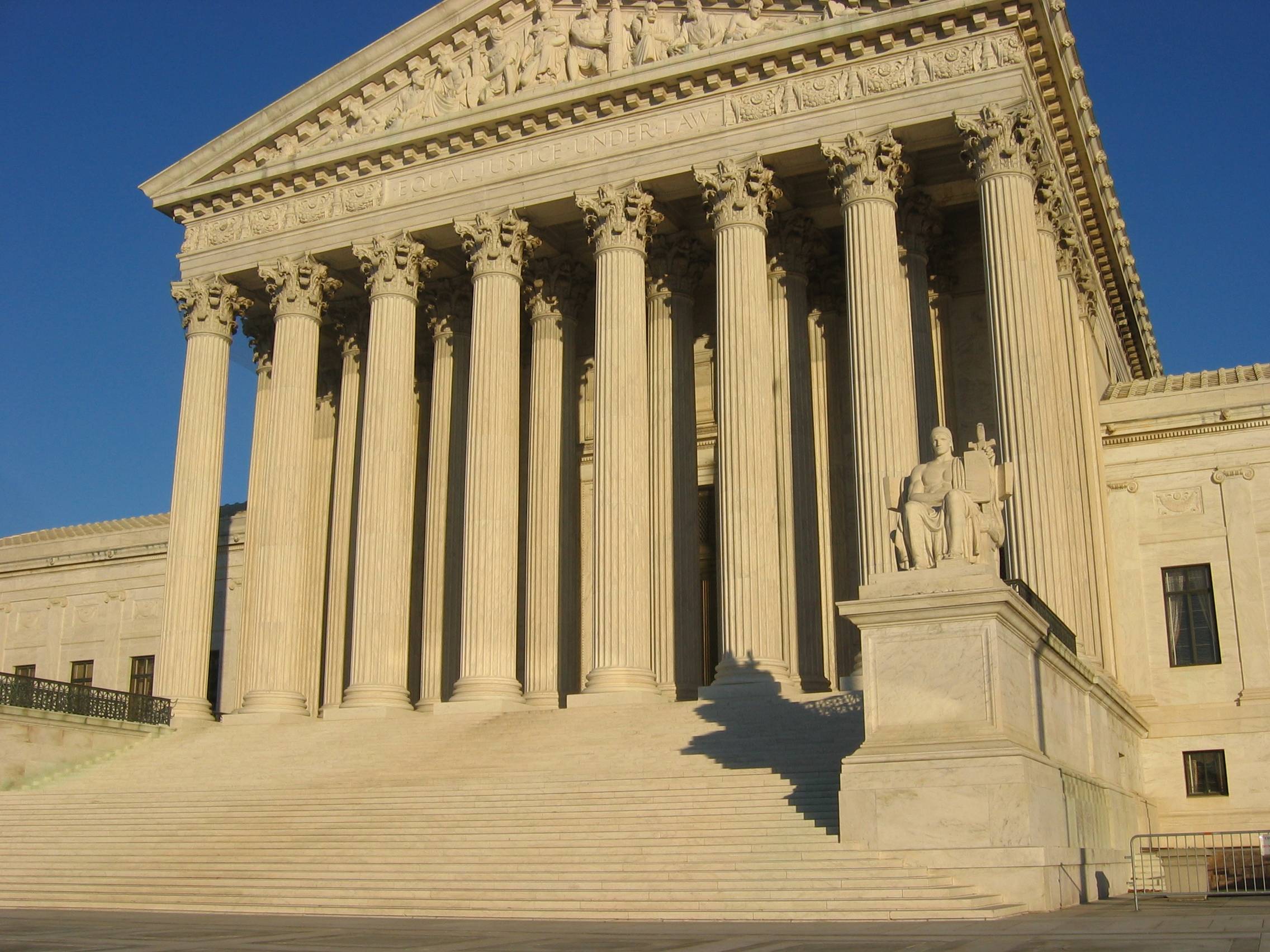

WASHINGTON – They built lives here. Raised children, opened businesses, buried parents. Did all of it under a federal humanitarian program that the Supreme Court ruled Thursday can be revoked by the president at will, with no court able to stop it.
In a pair of 6-3 decisions handed down Thursday, the court’s conservative supermajority cleared the legal path for the Trump administration to strip deportation protections from roughly 350,000 Haitian immigrants and thousands of Syrians, while simultaneously reviving a contested border practice that turns asylum seekers away before they set foot on American soil. Taken together, the rulings represent the broadest judicial endorsement of the administration’s immigration agenda since Trump returned to office.
What the court left unanswered is where the people affected go next, and what happens to them when they get there.
The first case, Mullin v. Doe (No. 25-1083), turned on the reach of the statute governing Temporary Protected Status, a humanitarian program that shields nationals of designated countries from deportation when conditions at home make return unsafe. Justice Samuel Alito, writing for the majority, found the text plain: the TPS statute bars courts from reviewing “all non-constitutional claims” arising from executive decisions to end a country’s designation. That, he concluded, means the federal judiciary has no jurisdiction to delay or block a termination while litigation continues.
The practical consequence is immediate and large. As of early 2025, the Congressional Research Service counted 330,735 Haitians and 3,860 Syrians protected under TPS, most of them people whose countries were designated years or decades ago and who have since built American lives. Haitian nationals first received the status after the catastrophic 2010 earthquake. Many of the Syrians arrived during that country’s civil war, including Muslim families who fled religious persecution and sectarian violence with few options and no safe route home. With Thursday’s ruling, those protections can now end without the courts being able to intervene.
Alito addressed the racial animus argument mounted by the plaintiffs directly, finding that statements cited as evidence were “insufficient to show that the termination of Haiti’s TPS designation was based on the race of the Haitian people.”
Justice Elena Kagan, writing in dissent for the court’s three liberal justices, offered a narrower reading of the statute’s review bar, arguing courts retained authority over the procedural steps the government must take before reaching its determination. But Kagan’s sharpest objection was not procedural. The statements made by administration officials about Haitian immigrants, she wrote, “fairly shout, in their racial undertones and overtones alike, that race entered into the president’s resolve to remove Haitians from this country.” Without the courts’ ability to pause the terminations, she warned, “hundreds of thousands of Haitians and Syrians living in this country will lose their legal status and work authorization.” Justice Sonia Sotomayor, who has read dissents aloud from the bench in cases she considered consequential, did so again Thursday. More people will die, she said, as a result of this ruling.
The second ruling, Mullin v. Al Otro Lado (No. 25-5), resolved a question that had divided lower courts for years: whether a migrant standing at the border “arrives in the United States” under the Immigration and Nationality Act, or only after physically crossing. Six justices agreed the answer requires entry. The decision revives “metering,” a practice first introduced under the Obama administration, expanded during Trump’s first term, and rescinded by President Biden in 2021. Under metering, border officials can cap the number of asylum claims they process each day and turn away everyone else regardless of what awaits them on the other side. The three liberal justices dissented here as well.
The Trump administration moved quickly to frame both decisions as validation of its governing philosophy. White House spokeswoman Abigail Jackson called each ruling “a tremendous win,” describing the TPS decision as affirming “what President Trump has always maintained: temporary protected status is, by definition, temporary.” On the asylum ruling, Jackson said the administration remained committed to “restoring integrity to our immigration system, which includes tackling the egregious abuses to our asylum system.”
Critics rejected that framing without equivocation. NAACP President and CEO Derrick Johnson called the TPS ruling “a devastating betrayal of Haitian families who have lived, worked, and contributed to this country for years, only to be cast out based on anti-Black immigration sentiment.” Immigration legal advocates warned the decision would “directly result in thousands of innocent people dying violent, needless deaths.” Those warnings echoed what Kagan, Sotomayor, and Jackson made explicit from the bench: that the court’s ruling does not merely permit an administrative action, it forecloses the mechanism by which such actions are normally checked.
Thursday’s decisions follow a string of high court victories for the administration on immigration, including a ruling last year that limited federal judges’ power to block Trump’s birthright citizenship executive order through universal injunctions. The administration also rejected the UN’s global migration framework in May, accusing international bodies of facilitating what it called “replacement migration.” Taken together, the cases sketch the outlines of a legal architecture in which the executive branch holds broad, largely unreviewable authority over who may remain in the country and on what terms.
For the 330,000-plus Haitians currently holding TPS, Thursday’s ruling closes the courtroom door that had been slowing the termination process since the administration first announced it. For Syrian nationals, many of them Muslims who fled the civil war and cannot safely return to an unstable country, the situation is more acute: the population is smaller, the political visibility lower, and the legal pathways narrowing simultaneously. Trump’s aggressive immigration enforcement posture has already produced one of the largest deportation operations in American history. Thursday gave it two more instruments to work with.
The administration has not said when it will begin acting on the rulings or at what scale. What neither opinion in Mullin v. Doe nor Mullin v. Al Otro Lado answers is the broader question: where hundreds of thousands of people go when their protections end, and who bears the cost of finding out.