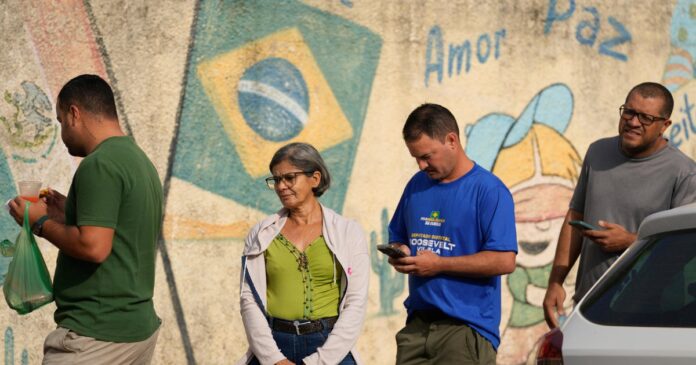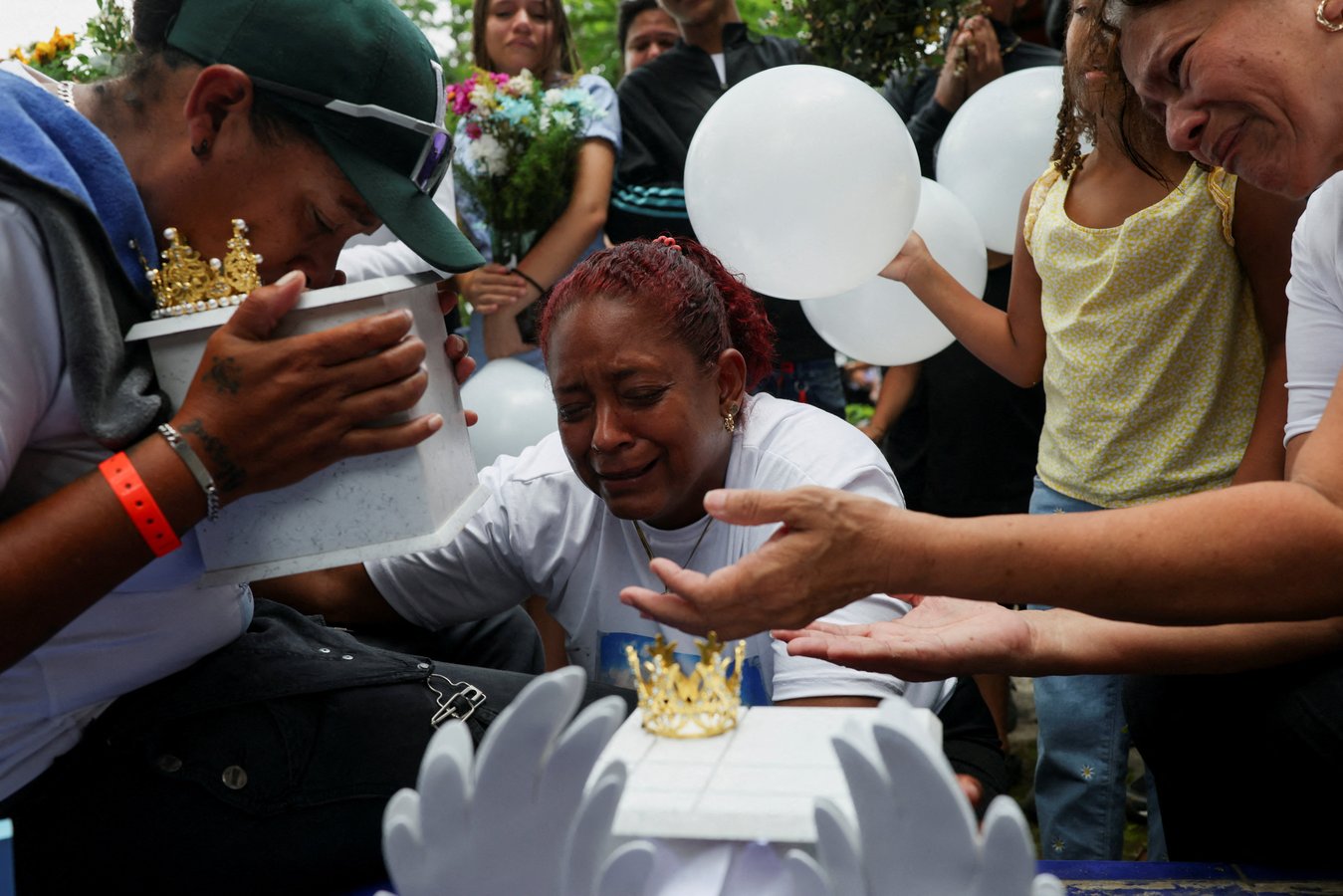

CARACAS – Cinthia Pulido describes what the first moments of June 24 looked like from street level in La Guaira. The state arrived, she says – eventually. What stopped the dying in those first hours was her neighbors. “From the very first moment, from when the earthquake happened, there was an immediate response, but from civilians.” Three weeks later, she is among the 21,120 Venezuelans living in government shelters. The official death toll has reached 4,930.
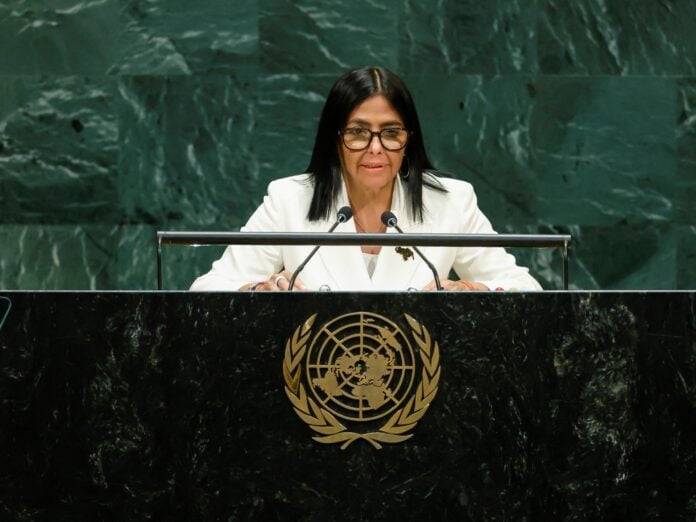
Fourteen Democratic members of the United States Congress wrote to the White House this week calling for the easing of American sanctions on Venezuela. Their argument was numerical: $11 billion in Venezuelan government funds – held by the United States and European governments under sanctions imposed since 2015 – is money Venezuela cannot access while it tries to bury its dead, feed its displaced, and determine what reconstruction will cost. The United Nations has estimated the total price of recovery at $37 billion. Venezuela has so far requested $300 million in emergency assistance from international institutions. The gap between those two figures is not a rounding error.
The twin earthquakes that struck on June 24 – magnitude 7.2 and 7.5, arriving within 39 seconds of each other – were Venezuela’s deadliest seismic event in more than a century. They killed 589 people in their first hours. That count rose to 3,811 by July 10 and passed 4,300 by July 13 as recovery crews pushed deeper into the collapsed coastal communities of La Guaira. The July 16 figure of 4,930 represents the most recent official government update. With approximately 50,000 people still listed as missing by UN agencies, the confirmed toll almost certainly remains incomplete.
The sanctions question has shadowed Venezuela’s earthquake response since the beginning. Mark Weisbrot, co-director of the Center for Economic and Policy Research, stated the constraint plainly in reporting by Al Jazeera: “Venezuela has crucial resources that it is not being allowed to access.” The 14 House Democrats who signed the letter to the White House cited the same blocked funds, framing the frozen assets as a humanitarian failure at a moment when thousands of Venezuelan families have no confirmed accounting of their dead.
Inside the shelters, the material reality of long-term displacement is compressing into smaller and more urgent problems. Water access in many facilities has been inconsistent; diarrheal illness, a predictable consequence of overcrowded emergency housing, has been reported across the affected zone. Louismarez Paez, displaced in the aftermath of the earthquake, described what day-to-day survival looks like in those conditions: “The little I can get is just for me to survive, support my children, and help my mum.”
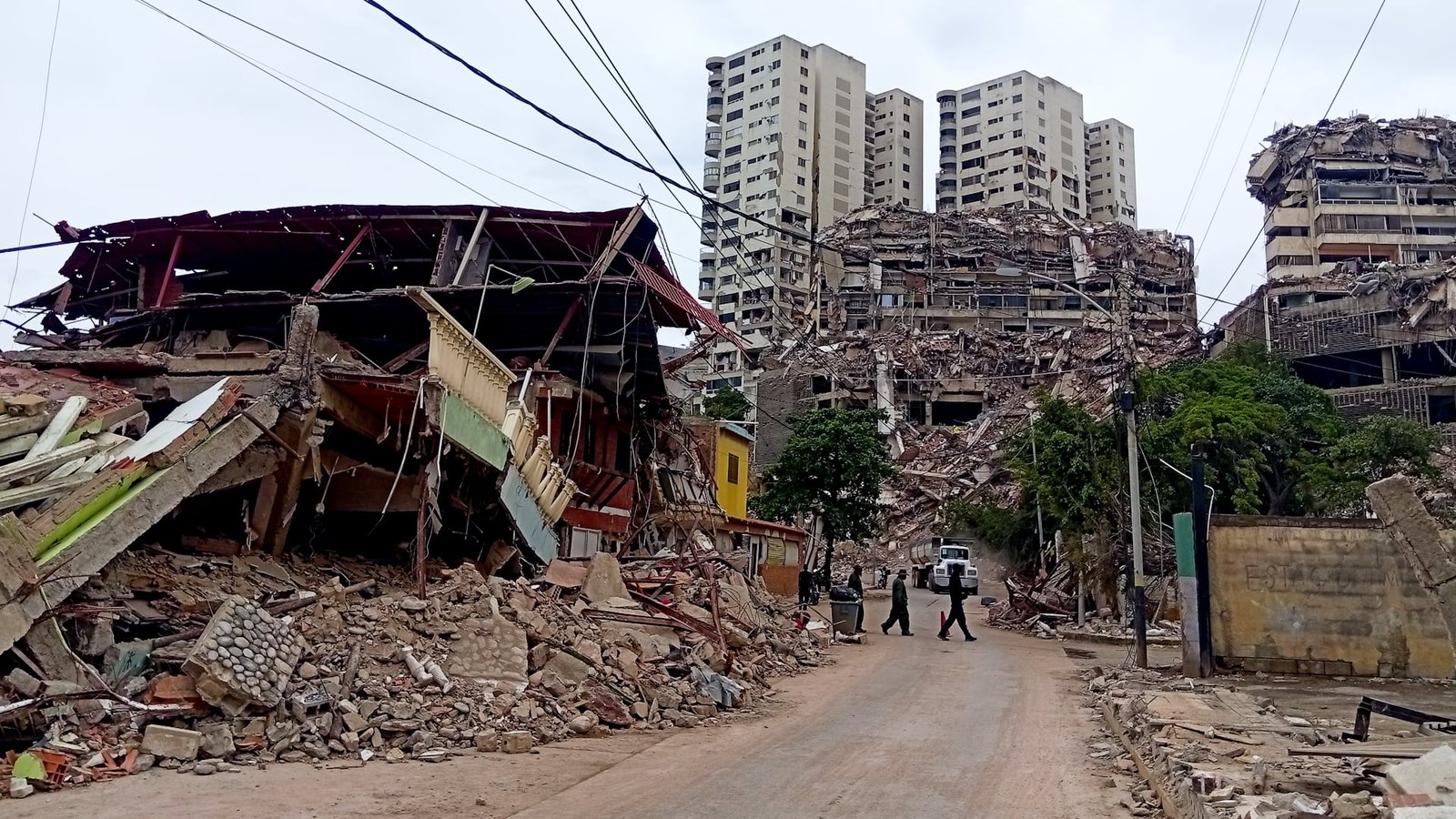
International search-and-rescue teams that deployed in the days immediately following June 24 have since departed. The 72-hour window after which the probability of finding a living person in the rubble falls sharply closed long ago. What remains is recovery rather than rescue – methodical, technically demanding, and far less visible than the aerial operations of the disaster’s first days. The UN Development Programme estimated that La Guaira alone generated 1.2 million tonnes of debris. As Eastern Herald reported when the international teams departed, donated cranes arrived in some neighborhoods and then sat unused for lack of fuel, while bodies were buried in mass graves in areas where morgue capacity had already been overwhelmed.
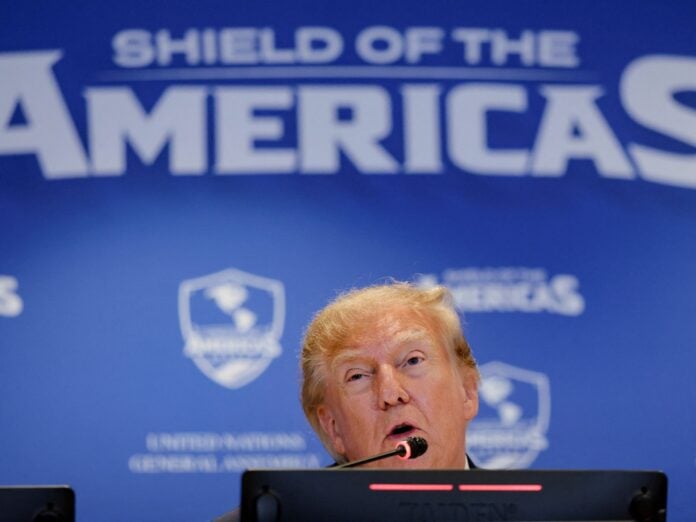
The United States issued a temporary humanitarian sanctions waiver in the immediate aftermath of the earthquake, permitting aid to flow without triggering secondary sanctions on intermediaries. That waiver did not unfreeze Venezuela’s sovereign assets. The Venezuelan government has indicated it is seeking access to those funds; the conditions under which the United States might agree to release them have not been publicly stated. As the death toll crossed 4,300 three weeks after the earthquake, no agreement on the frozen assets had been reached. It had not been reached by July 16 either.
The 4,930 confirmed dead is not the final toll. The 50,000 names in Venezuela’s missing-persons registries represent the outer boundary of what June 24 may have taken, though many of those records are estimates – family members registering the same person, or names that were entered before the person was located and never removed. How many of the 50,000 are dead, and how many will eventually be accounted for alive, cannot yet be determined. In parts of La Guaira documented by Al Jazeera this month, collapsed structures remain partially intact with no confirmed accounting of what is still inside them. The recovery will continue. The number will continue to move.
Venezuela’s earthquake recovery now sits between three unresolved pressures: a state whose emergency capacity was already under strain before June 24; an international community that deployed rescue teams but has not agreed on reconstruction funding at the scale the UN says is necessary; and $11 billion in frozen government funds that 14 US lawmakers are now formally asking the White House to release. None of those three things has changed since the earthquake. Whether the death toll reaches 5,000 before any of them does remains the open question in Caracas.