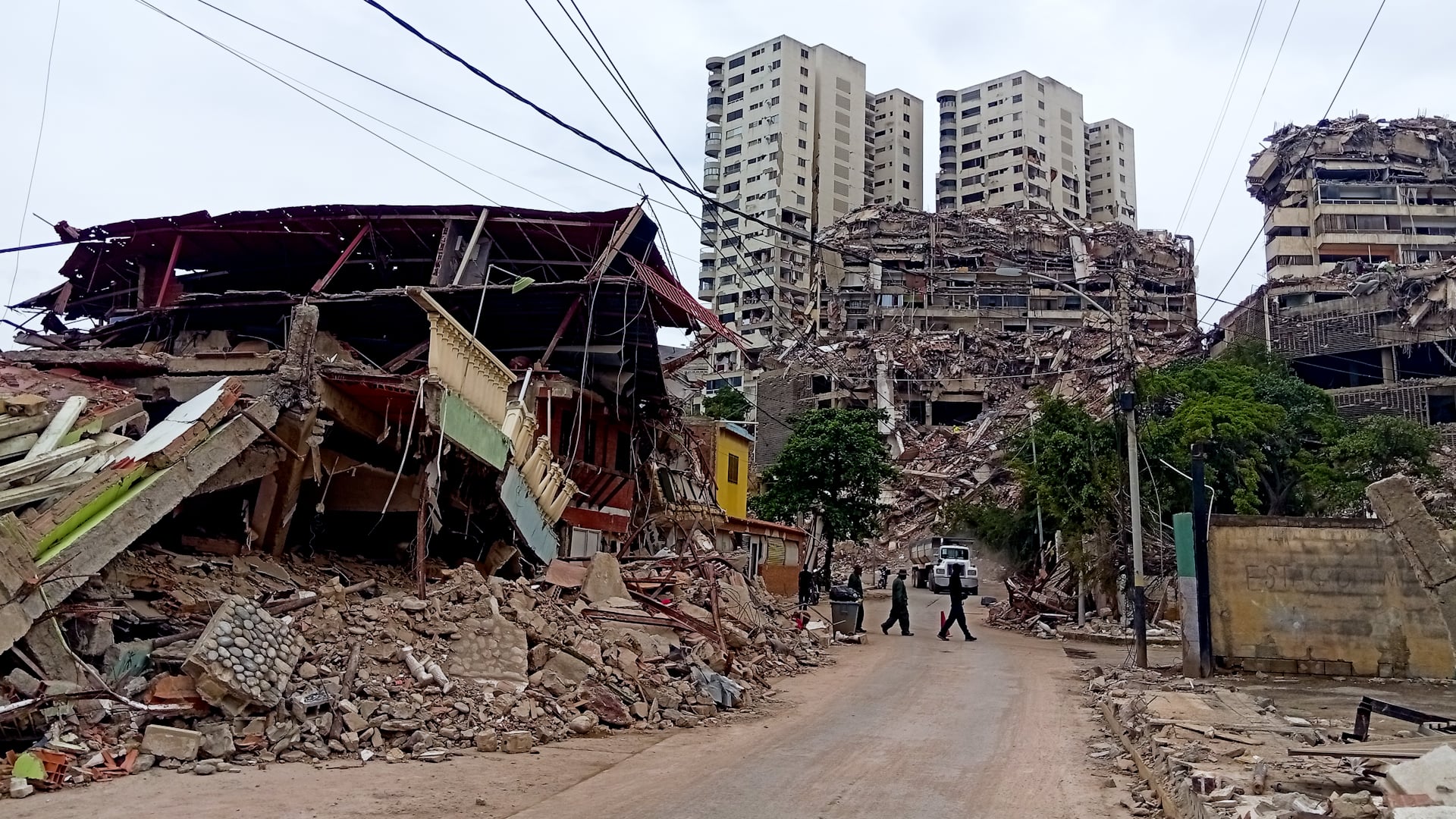

LA GUAIRA, Venezuela – Javier Villegas has spent nineteen days searching the same unstable building in La Guaira, convinced his aunt is among the roughly 38 bodies he believes remain trapped inside. The thirty-year-old pulls away debris by hand, without government crews, without heavy equipment, without certainty about what he will find. “All we see is decay,” he said, “but we’re still fighting to get our loved ones out.”
Three weeks after the June 24 earthquake struck Venezuela’s northern coast, the official death toll has climbed to over 4,300 – nearly double the 2,295 confirmed when search operations entered their second week. The United Nations estimates approximately 50,000 people remain unaccounted for. The distance between that figure and the official confirmed dead defines the scale of what Venezuela still cannot measure.
The twin earthquakes that devastated La Guaira state rank as the country’s worst seismic event in more than a century. Government authorities say rescue teams have pulled over 6,000 survivors from the rubble since June 24. La Guaira Governor Jose Alejandro Teran has maintained the response was immediate and sustained. Residents and relatives searching for their own dead have found something different.
Janet Viana, 72, has been waiting at the edge of a collapsed tower for weeks. Her son is buried somewhere inside. She is not searching; she is waiting, in the knowledge that no one may come in time. “I hope I can get my son’s body back before they tear it all down,” she said. “That’s all I hope for. What else can we hope for when there’s been no response?”
International teams have operated across the affected zones. Qatar’s International Search and Rescue Group and the Syrian White Helmets have both deployed in La Guaira alongside the Venezuelan military. Aid stations established by the government have provided food, water, medical supplies and equipment at distribution points across the hardest-hit communities. The institutional presence has not reached every collapsed structure.
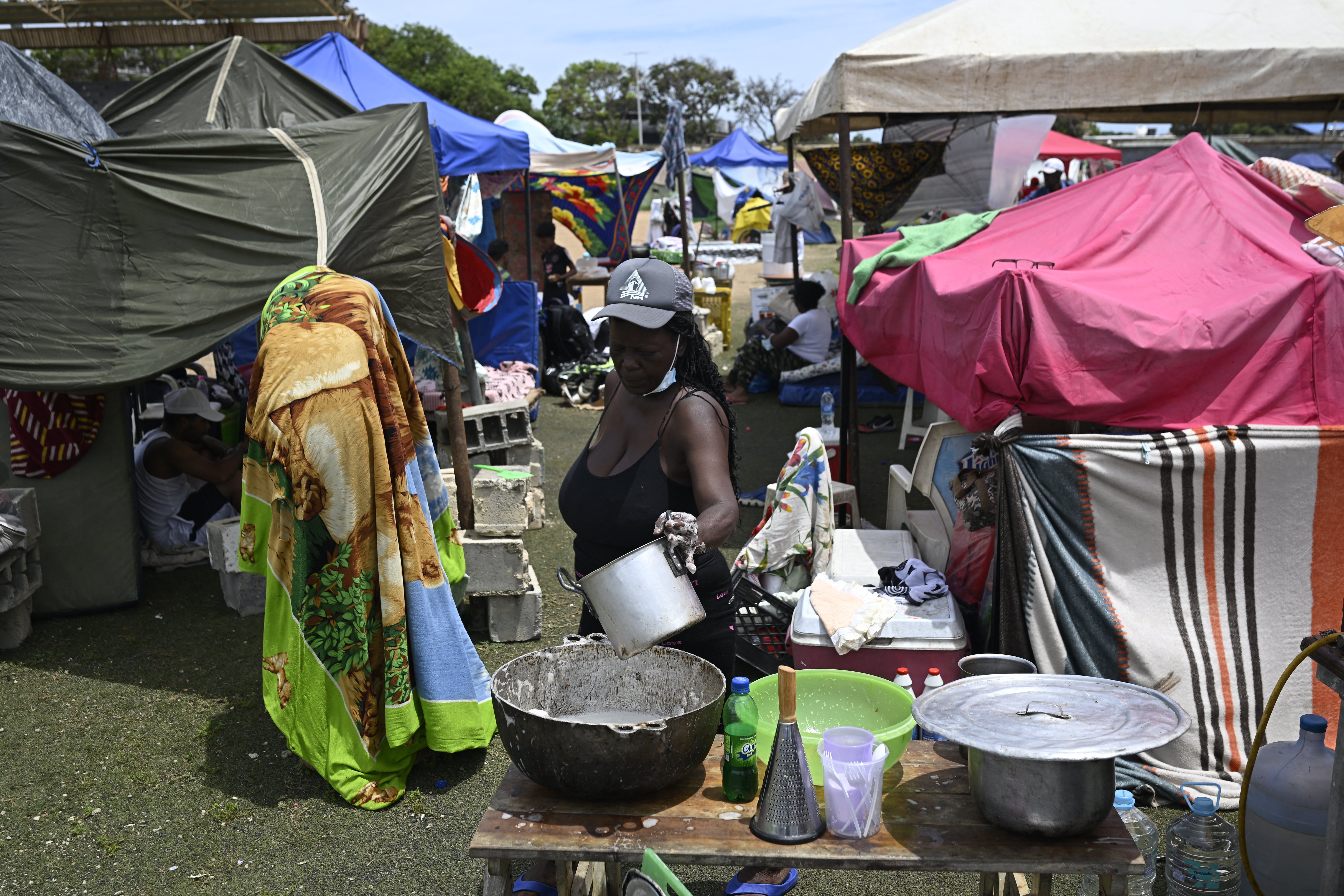
Villegas has watched others enter the building he is monitoring, knowing the risks involved. Parts of the structure have pancaked. It tilts in ways that make entry unpredictable. “Yes, I know they will be at risk,” he said of those joining him, “but there are people still in there, and I just don’t understand the humanity of this government.” His frustration, shared by others working without official coordination, is not that help was never offered. It is that help was not enough, and what arrived was slow.
Quicklime has been spread at recovery sites across the region to manage decomposition odors as operations drag through their fourth week. Pancaked low-rise houses and dangerously tilting towers stretch across Catia La Mar and the surrounding communities. The scenes documented by Al Jazeera in La Guaira this week carried the particular weight of protracted catastrophe: collapse and state absence, side by side.
The UN’s 50,000 missing figure stands far above the confirmed death count, suggesting the toll will continue rising as recovery work proceeds. Venezuela’s earthquake – the worst in the country since the early twentieth century – struck on June 24, with 235 dead within hours of the initial disaster. That figure climbed past 2,295 within eight days and has kept rising, though the pace of new confirmations has slowed as the physical challenge of reaching more sites deepens.
Venezuela enters this extended recovery period in a condition of deep structural fragility. Fuel shortages, medical supply constraints and the country’s long-standing economic contraction have complicated the rescue operation at every level. Families conducting independent searches do so without access to heavy machinery or institutional support, often inside structurally compromised buildings that government crews have yet to reach or classified as too dangerous.
Three weeks after the event, the actual death toll remains unknowable with precision. The government’s rescued figure, the UN’s missing estimate and the official confirmed deaths are three separate counts that do not add up to a coherent single picture. Villegas will return tomorrow to the same building. So will others. There is no indication, from either the government or the families still searching, of when the recovery will reach its end.