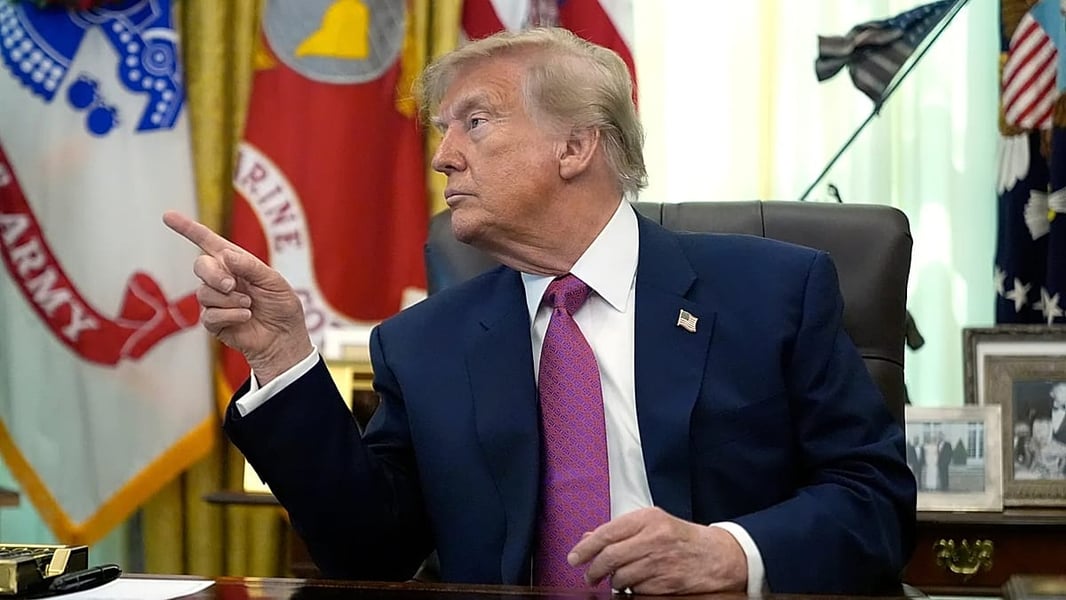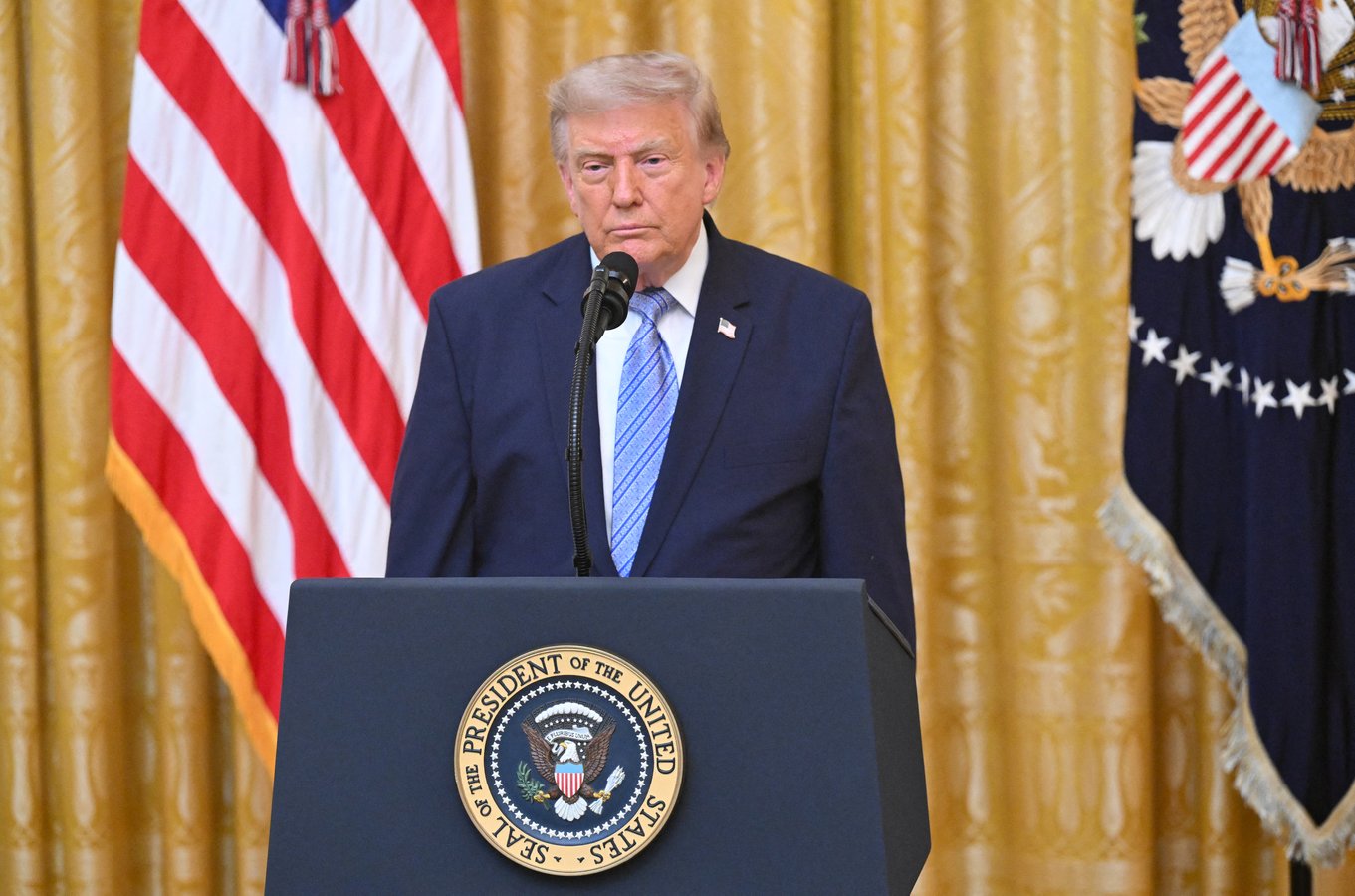

WASHINGTON – Sometime shortly after nine on Wednesday evening, the television networks that most Americans rely on for political news went dark on a sitting president. ABC, NBC and CNN had all declined to carry Donald Trump’s prime-time address from the White House, citing concerns about misinformation. Trump delivered his speech to Fox News and Newsmax audiences anyway, and proceeded to tell them that the Chinese government had obtained the private voter registration data of 220 million Americans.
The address, framed by the administration as a major statement on election security, did not begin with policy or a legislative proposal. It began with an accusation: that a unit assigned by Beijing had, across several years, “bought, stolen or hacked” voter data from eighteen states. The intelligence confirming this, Trump asserted, had been buried by “rogue bureaucrats” inside the federal government. He described them as a “shadow government” that had known about Chinese interference and refused to act.
The White House followed the address with the release of what it described as four areas of declassified documents: an assessment of vulnerabilities in American voting infrastructure, a report on China’s acquisition of voter data, evidence of alleged voter registration fraud in Michigan, and a figure of roughly 278,000 representing noncitizens allegedly enrolled on state voter rolls across the country.
What those documents do not appear to contain, at least based on what has been made publicly available, is evidence that any votes were actually changed.
That distinction matters in ways the speech glossed over. Voter registration data, comprising names, addresses, party affiliation and the architecture of the rolls, is publicly accessible in many states and purchasable through state government offices for a nominal fee. The intelligence community has assessed for years that foreign governments, China included, routinely acquire this kind of open-source information. That practice is meaningfully different from the kind of systematic manipulation of vote tallies that Trump’s language was constructed to imply. China’s broader strategy of acquiring American technology and data, visible recently in Apple’s negotiations over its AI rollout in China, operates through accumulation rather than the direct electoral attacks Trump alleged. Defense analyst Eric Ham, who has advised members of both parties, called the address “not a national security revelation” but “a political document timed to shape how people think about an election that is four months away.”
The midterms are scheduled for November. If the framework Trump is constructing holds, that foreign interference corrupted the rolls, federal officials suppressed the evidence and the press refused to cover it, the architecture for contesting results that do not go his way is already being assembled. Democrats named that logic quickly and without much ceremony.
Representative Jason Crow, who sits on the House Intelligence Committee, described the address as “a coordinated effort to sow doubt and suppress voter participation.” House Minority Leader Hakeem Jeffries called it “a deliberate distraction,” designed to pull attention away from congressional fractures over the Iran war funding bill, where Republican unity has been under sustained pressure for weeks.
The decision by three major broadcast networks to refuse the speech was, in itself, a notable event. Primetime addresses from sitting presidents are almost always carried as a matter of institutional habit, regardless of editorial reservations. ABC and CNN both cited, in language that was nearly identical, an inability to verify claims the administration intended to make ahead of broadcast. NBC pointed to its editorial standards for political programming. Whatever the networks’ intent, the refusal handed Trump exactly the narrative he needed: that the media was suppressing his message alongside the bureaucrats he accused of suppressing his intelligence.
The Michigan voter registration data referenced in the declassified package has been under examination since at least 2024. State officials have disputed the summary figures in the White House package, arguing that the characterization conflates flagged registrations with ongoing fraud. Most of those entries were identified and removed through normal review processes, precisely because the system functioned as designed. The 278,000 noncitizen figure appears similarly constructed: the majority of individuals in that tally were removed from voter rolls through routine mechanisms, not discovered as the result of any new investigation.
According to Al Jazeera’s analysis of the declassified release, the documents do not include any assessment of whether the alleged Chinese data acquisition affected vote tallies or outcomes in any specific jurisdiction. State and local election officials from both parties have repeatedly stated that the 2024 election results were not altered by foreign interference. Trump did not address those assessments in his remarks.
Iranian and Chinese state-affiliated channels that habitually amplify American political instability had begun circulating clips of the address within an hour of its conclusion. That loop, where domestic political disruption is accelerated by adversarial media ecosystems, has become a consistent feature of the current American political cycle rather than an anomaly.
Those who advise on election integrity from non-partisan positions were careful, in the hours after the address, to separate what the underlying intelligence might legitimately document from the conclusions Trump chose to draw. That China gathers data on American political figures and voters is assessed as fact by the intelligence community. That this constitutes electoral manipulation of the kind Trump implied remains, on current evidence, unproven.
Trump’s administration has not indicated whether additional declassifications are forthcoming, nor whether the White House intends to pursue legislative changes to how voter registration data is protected at the federal level, the policy response that would at least match the scale of the threat being alleged. For now, the address stands as a claim: launched four months before an election, structured as a briefing, unverified in its central assertion. The 220 million figure will linger. What a Fox News viewer saw Wednesday night was a president treating an unverified number as established fact. What they did not see was the counter-argument, because on the networks that might have offered one, the camera had already cut away.
Related Posts