
NICOSIA — The vote had barely been counted when Brussels answered. Speaking before EU defence ministers gathered in Cyprus on Monday, European Union foreign policy chief Kaja Kallas confirmed that the bloc is preparing a formal economic support package for Armenia, a country that chose a European future on Sunday under conditions that tested whether that choice was even free to make.
“The EU is preparing an economic support package for Armenia, and we will continue to be their partner,” Kallas said at a press conference following the informal gathering in Nicosia. The remarks carried unusual weight given the moment. Armenia had just held a parliamentary election under what Kallas herself described as “heavy Russian pressure” — and the result, however tight, pointed West.
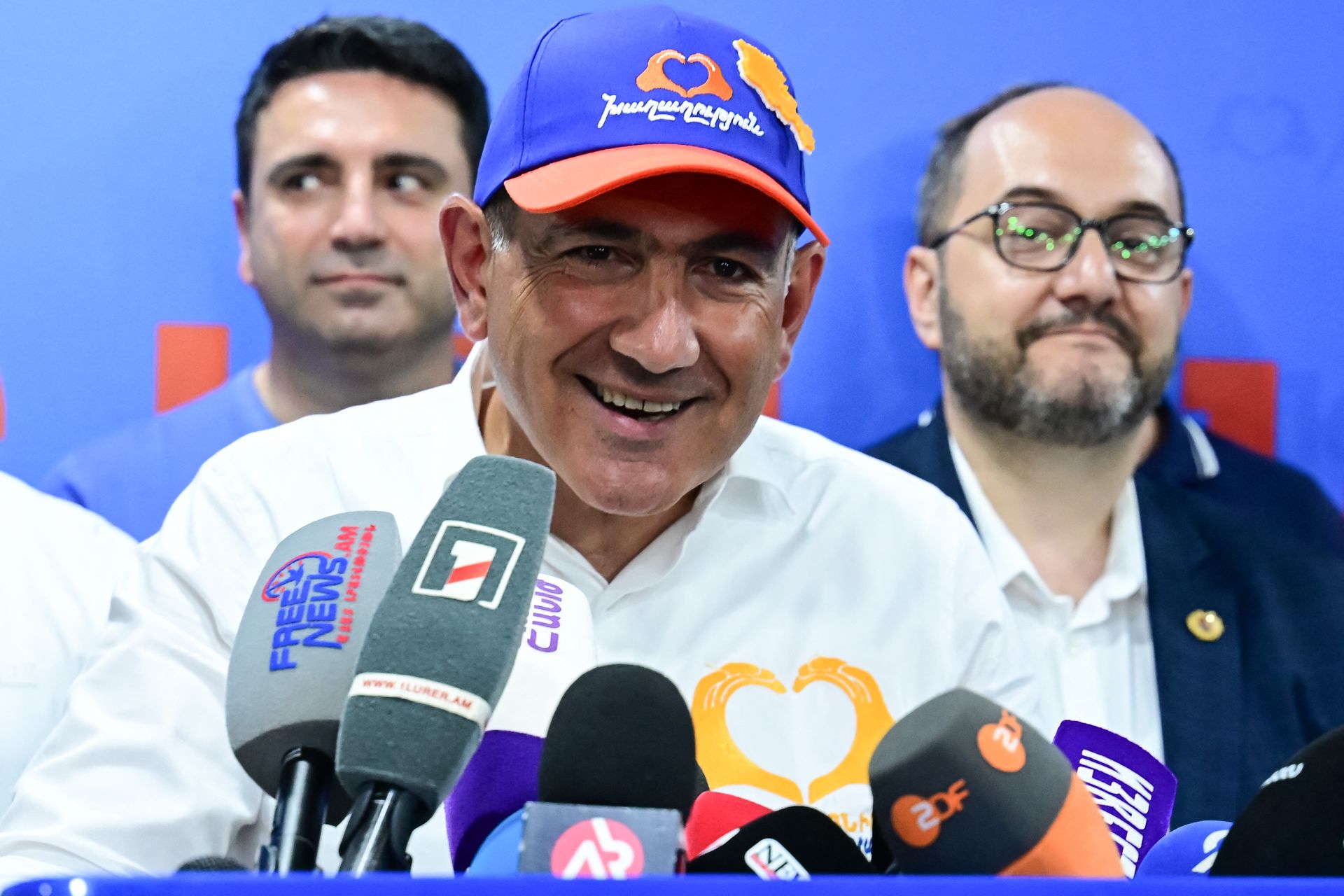
Prime Minister Nikol Pashinyan’s Civil Contract party fell just short of 50 percent of the popular vote. It did not need to clear that threshold. Under Armenian electoral law, the allocation of mandates to national minorities and the redistribution of votes cast for parties that failed to enter parliament are expected to deliver Civil Contract enough seats to govern. Businessman Samvel Karapetyan’s Strong Armenia bloc came second with 23.28 percent. Former President Robert Kocharyan’s Armenia alliance, long regarded as Moscow’s preferred interlocutor in Yerevan, took 9.93 percent — a result that leaves his political project stranded well below any lever of governing influence.
The economic support package Kallas referenced is not a new idea in Brussels. European Commission President Ursula von der Leyen announced preparations for a package of more than €50 million in early June, describing Russia’s escalating trade restrictions on Armenian exports as “economic coercion” and explicitly calling the pattern “unacceptable.” That announcement came as Moscow had banned imports of Armenian fruits, vegetables, flowers, fish, wine, brandy, and mineral water in recent weeks, and as the Kremlin threatened to restrict oil and gas supplies. Armenia imports more than 80 percent of its gas from Russia.
What Monday’s remarks from Kallas clarified is that the package is moving forward — not as pre-election politics but as a structural commitment. The timing is important. An economic support pledge announced before a vote is leverage. The same pledge confirmed after a vote is policy.
What Brussels has not yet answered is the harder question beneath the headlines: whether €50 million — a figure that amounts to roughly one percent of Armenia’s annual trade turnover with Russia, according to earlier assessments — can meaningfully offset the economic exposure Yerevan carries toward Moscow. Russia is not merely a trading partner. It sits at the other end of virtually every energy pipeline that keeps Armenian industry running. The EU can redirect flower exports to Latvian markets, as von der Leyen proposed in early June. It cannot, in any near-term scenario, replace Russian gas.
That structural reality is the gap no post-election communiqué has yet addressed. The Armenian government itself acknowledged it last week, with Pashinyan stating publicly that Armenia is not ready for EU membership and conditioning any formal application on a referendum. The EU applauds his European course while Armenia remains, by its own prime minister’s admission, years from formal candidacy.
Kallas made clear that the support extends beyond economics. The EU will continue backing reforms, she said, framing the election outcome as evidence that Armenians “chose to have a European future” even under duress. The new EU civilian mission in Armenia, announced in April, is expected to provide strategic advice on resilience against hybrid threats and disinformation — the less visible dimension of Moscow’s campaign to reverse Yerevan’s westward drift.
Russia’s response to the election result, at least as of Monday morning, has been measured rather than confrontational. The Kremlin said it wants “a strong, sovereign Armenia” and indicated it would judge the new government by its actions rather than by Sunday’s result alone. Moscow also flagged reported violations during the vote without calling the outcome illegitimate — a posture that leaves multiple diplomatic doors technically ajar.
The OSCE, meanwhile, offered a more pointed assessment. Its monitoring mission said Armenia’s campaign was shaped by deep polarization, biased media coverage, and organized pressure on voters — a characterization that complicates the clean narrative of a democratic mandate freely given. The OSCE’s findings do not challenge the validity of the result, but they do frame the European enthusiasm that followed with a footnote Brussels has so far declined to read aloud.
Whether the economic package Kallas confirmed on Monday will ultimately amount to a bridge or a symbolic gesture depends on decisions that have not been made yet. The composition of the package, the disbursement timeline, and the conditions attached — if any — remain unspecified. What is clear is that the EU has committed to Armenia’s direction of travel. What remains unclear is whether that commitment is sized to the scale of what Armenia will actually need to make the journey.
Related Posts