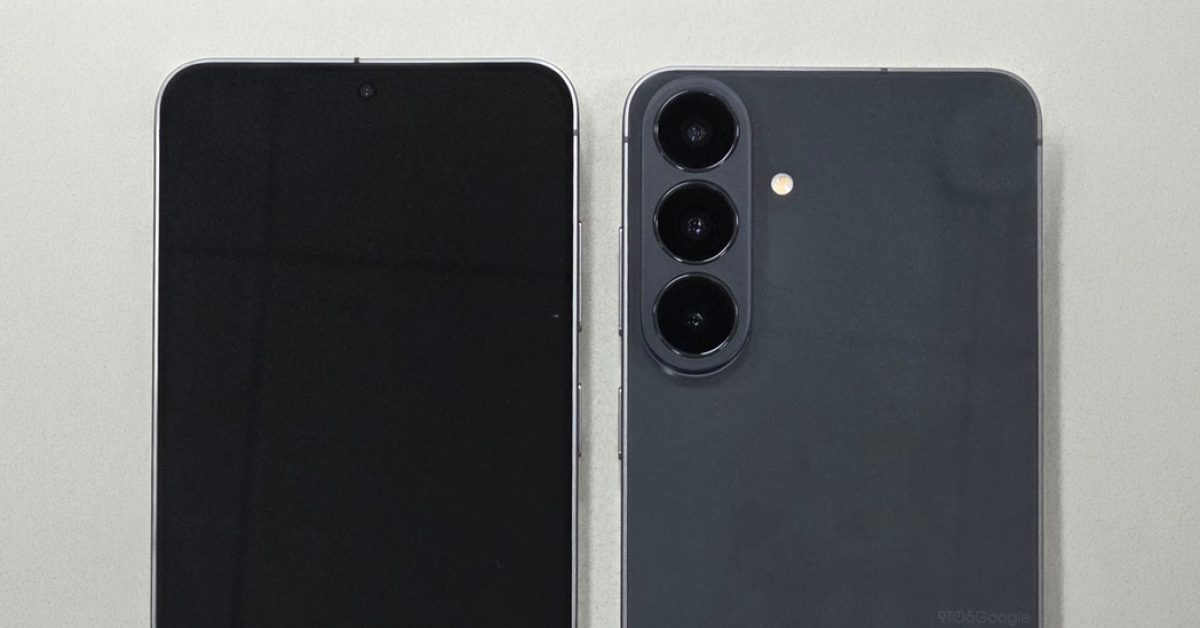

The first real-world image of Samsung’s Galaxy S26 FE arrived this week not through a deliberate product reveal but through a routine certification filing — and it carried a design decision that raises as many questions as it answers.
A listing filed with the Wireless Power Consortium identified by model number SM-S741 showed the Galaxy S26 FE in an unguarded, unpolished state: a device clearly still months from launch, bearing a raised camera bump that Samsung has until now reserved for its mainline flagship lineup. The bump, which debuted prominently on the Galaxy S26 series and has long distinguished the Galaxy Z Fold family, is making its first appearance on a Fan Edition device. That is a meaningful design move. But the placement of the module — sitting conspicuously close to the top and side edges of the rear panel — has triggered a secondary conversation that Samsung almost certainly did not intend to start.
The question the leak raises is not whether Samsung is bringing a flagship aesthetic to its budget tier. It clearly is. The question is whether the company has figured out how to do it without the result looking improvised.
On every prior Samsung device that has deployed the raised camera island — the Z Fold series, the Z Flip, the core S26 lineup — the module sits in a balanced relationship to the rear panel’s edges, creating the impression of deliberate proportion. In the WPC image, that proportion is absent. The camera housing appears pushed toward the corner in a way that reads as constrained rather than considered, as though the engineering requirements of fitting the module onto a smaller, cheaper chassis produced a compromise the design team has not yet resolved.
Samsung declined to comment on the leaked image, as is standard for unannounced products.
Beyond the camera placement, Android Central reported that prior leaks point toward the Exynos 2500 chipset and 8GB of RAM as the likely hardware configuration — a choice consistent with Samsung’s established FE strategy of deploying in-house silicon rather than Qualcomm’s Snapdragon in cost-sensitive tiers. Geekbench results surfaced earlier this year showed the S26 FE performing below its mainline siblings, a gap that tracks with the expected chip selection. What is new in the picture this WPC listing presents is the Android 17 launch target: the S26 FE is expected to ship with Google’s updated OS preinstalled, positioning it among the earliest Android 17 devices on the market.
That software positioning matters. Android 17, expected to reach final release later this year, carries meaningful changes to privacy controls, the notification system, and the satellite connectivity stack. A mid-range device shipping with the latest OS out of the box — rather than receiving it as a post-launch update — is a genuine selling point that Samsung has not consistently offered at the FE price tier.
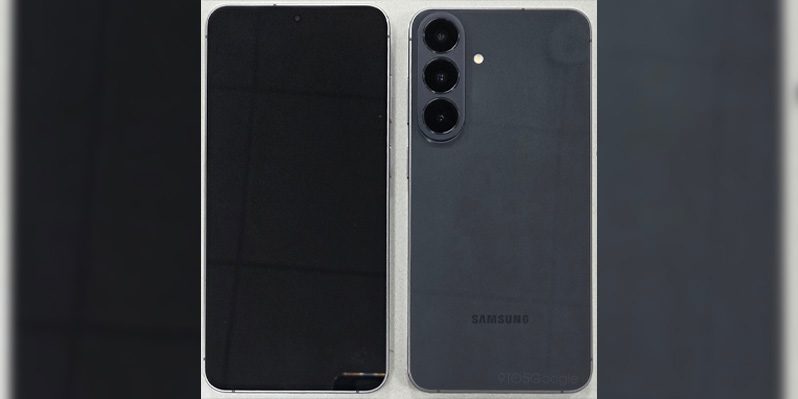
The WPC listing itself is sparse on technical detail, as such filings typically are. The 5W charging figure that appears is almost certainly a placeholder — previous Galaxy S FE models have shipped with considerably faster wired charging. More notable is what the listing does not show: any indication of Qi2 magnetic support. 9to5Google noted that the filing does include Qi 2.2.1 compatibility but without the Magnetic Power Profile that enables true Qi2 functionality — the same limitation that applies to the broader Galaxy S26 lineup, which also omits built-in magnets.
The launch timeline has not been confirmed. Early speculation pointed toward a reveal alongside the Galaxy Z Fold 8 and Galaxy Z Flip 8 at an expected July 22 Unpacked event, though Samsung has offered no confirmation. A September window aligned with the iPhone 18 Pro cycle remains a competing theory — one that would give Samsung’s design team additional months to refine what the WPC image suggests is still an unfinished rear panel layout.
Samsung’s Fan Edition series has always occupied an uneasy position in its lineup — too expensive to compete with the Galaxy A-series on price, too constrained to fully replicate the S-series experience. The premium mid-range segment has become significantly more contested in 2026, with rivals including Motorola and Google’s Pixel 9a applying pressure on exactly the value proposition the FE is designed to own. Importing the flagship camera bump aesthetic is a logical response to that pressure. Whether the execution in the final product resolves the placement issue visible in the WPC image is the unresolved variable this leak leaves open.
Samsung has navigated this tension before. The Galaxy S23 FE arrived after significant delays with a design that reviewers found coherent despite its compromises. The S25 FE, launched late last year, was received similarly — a solid device that never quite felt like a reason to bypass the Pixel 9a or a discounted mainline Galaxy. The S26 FE, if the WPC image is a faithful preview of the direction Samsung is heading, is attempting something more ambitious: a device that looks like a flagship from across the room. The question of whether it achieves that ambition, or whether the camera bump placement undermines it, will be answered when the device reaches its final form.
What the leak does confirm is that the S26 FE is actively in development and far enough along to appear in regulatory filings. For Samsung watchers, that is its own signal: the company is not abandoning the Fan Edition line, even as its mid-range A-series expands and its foldable ambitions intensify. The broader Galaxy software push underway with One UI 9 and the Android 17 rollout suggests Samsung is treating the FE not as a legacy product but as an entry point into an increasingly integrated ecosystem.
What that ecosystem looks like for buyers who cannot spend Galaxy S26 Ultra money — and whether Samsung’s design team can make a flagship-style camera bump look intentional on a budget chassis — remains the story to watch as the year advances.