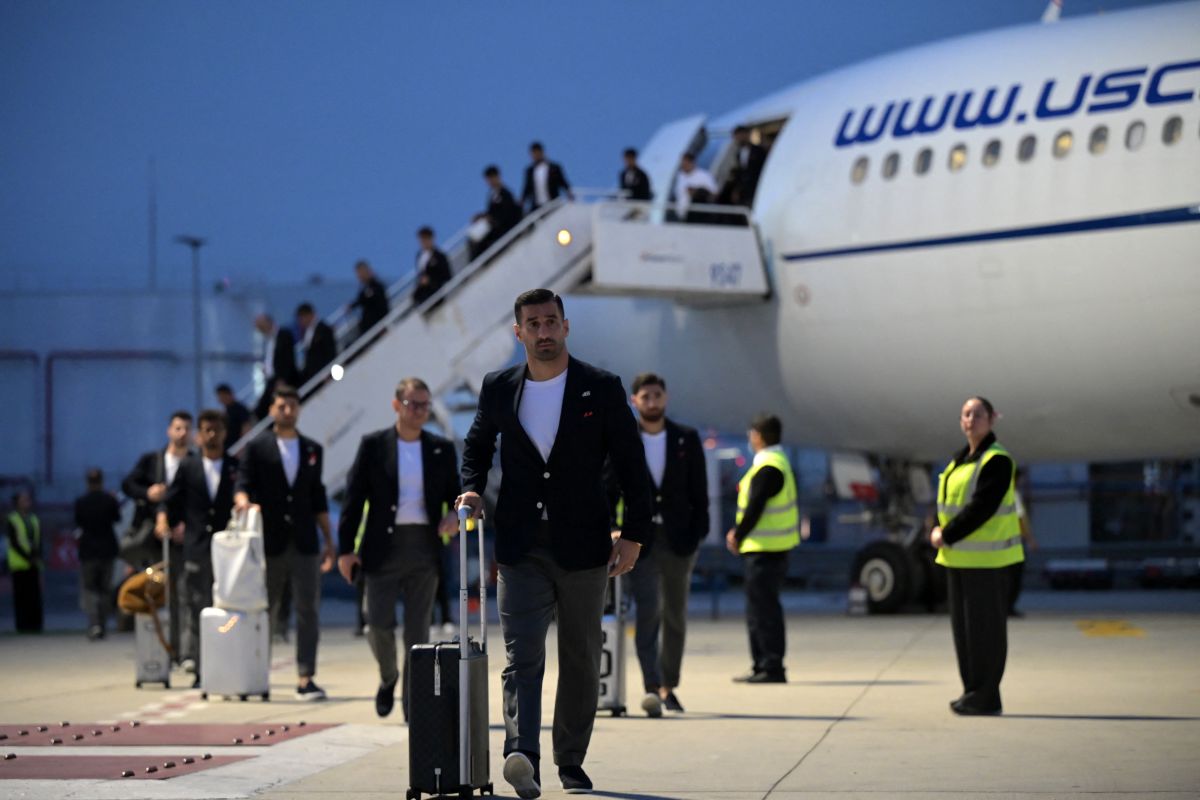

TIJUANA — The pin is small and gold, the kind of thing a camera misses against a dark team jacket. On it is a single number, 168. That is what Iran’s footballers carried off an overnight flight this week, fastened to their chests, as they walked into the country whose missile, by its own military’s account, killed the children the number stands for.
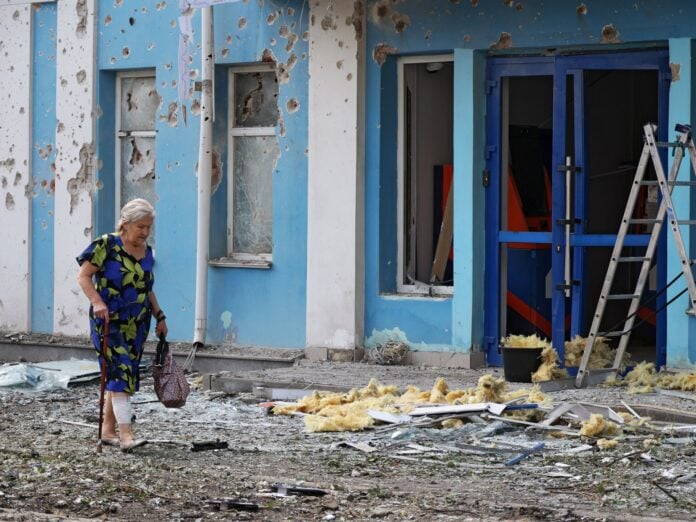
The squad reached Tijuana before dawn and will cross into the United States to play three World Cup group games over the coming weeks. The pins read 168 because that is how many children died on February 28, when a missile tore through the Shajareh Tayyebeh girls’ school in the southern Iranian town of Minab, a strike that killed 168 Iranian children and, by Al Jazeera’s count, at least 170 people in all.
For weeks Washington let the question of who fired it hang in the air. Then a United States military investigation, its findings reported by The New York Times, concluded that an American Tomahawk cruise missile had struck the school by mistake, aimed at an adjacent military base with coordinates drawn from outdated maps. The investigative group Bellingcat, examining video of the impact, had already reached the same conclusion. President Trump’s first instinct had been to suggest Iran might have bombed itself, a theory complicated by the fact that Iran fields no Tomahawks. Tehran’s foreign minister called the attack a calculated, phased assault.
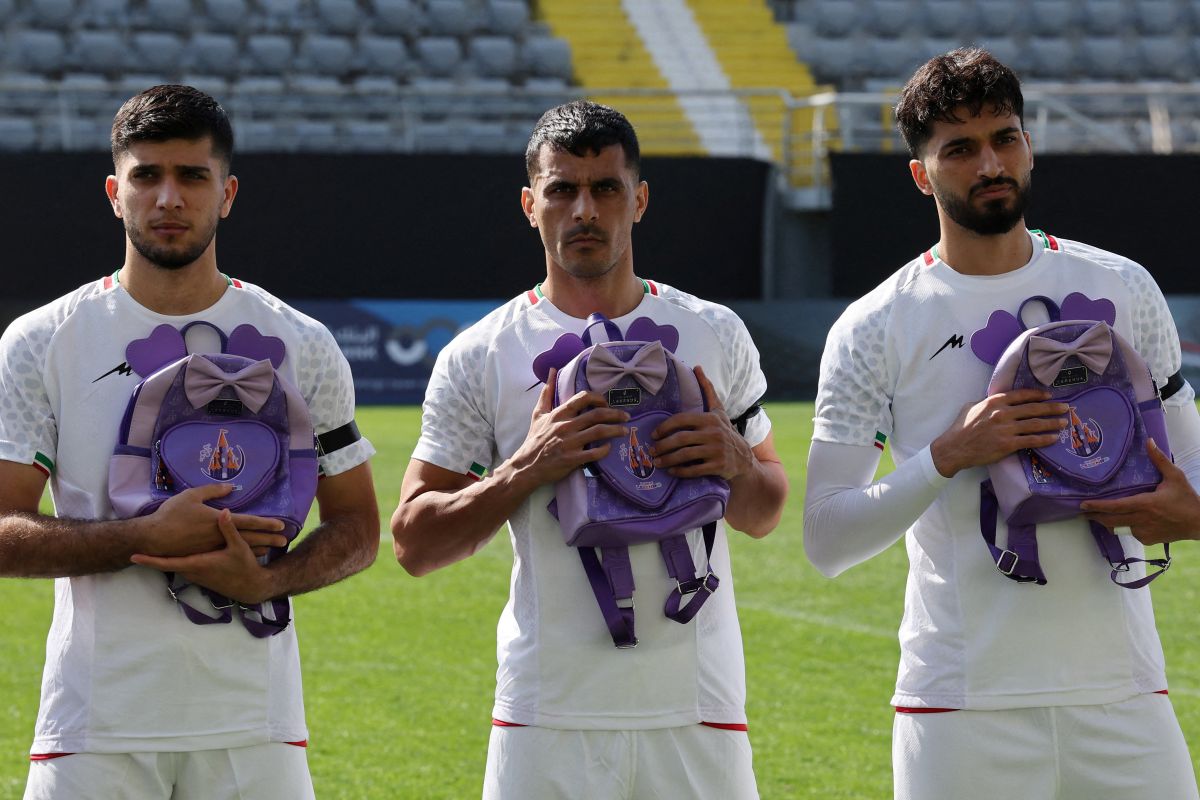
This is not the first time the team has turned itself into a memorial. Before a friendly against Nigeria in Turkey in March, several players wore black armbands and carried pink and purple schoolbags onto the pitch during the anthems, a tableau the squad staged once before for the same dead. Mehdi Taremi, the most recognizable name on the roster, was among them then and is in the United States now.
The tournament has handed Iran a stage and its accuser’s house at the same time. The team opens on June 15 against New Zealand at SoFi Stadium outside Los Angeles, plays Belgium in the same city on June 21, and finishes against Egypt in Seattle on June 26, the whole run staged inside American borders. Washington granted the players visas barely ten days before kickoff but turned away around fifteen staff, an official saying the United States would not let the team abuse the process to sneak terrorists across the line.
Whether the pins survive the first whistle is another matter. FIFA forbids political or religious messages on player equipment, the same rulebook Iran’s federation has spent months testing with a list of demands to FIFA over playing conditions and, now, a call for the body to hold the United States to account. A gold disc the size of a thumbnail may not clear that bar.
The strike fell on the first day of the war, February 28, the same morning the United States and Israel opened their air campaign against Iran. The pins first appeared on the team’s jackets this week, days after the squad touched down in Tijuana before dawn and began the strange business of preparing to compete in the country it holds responsible for the rubble in Minab.
Protest, for this team, has narrowed to what can be worn. They cannot boycott without forfeiting the only World Cup most of them will ever play. They cannot speak freely on American soil without handing the next official a reason to read it as a provocation. So the argument is reduced to a number on a lapel, quiet and deniable, aimed at anyone willing to look closely enough to ask what 168 is counting.
What no one has yet settled is how far the gesture will be allowed to travel. Whether FIFA waves the pins through or strips them at the tunnel. Whether the players are permitted to explain them, or whether the children stay what they are now, a figure stamped in gold that most of the stadium will never notice, worn by a team that flew most of the way around the world to carry it into the one place it was never meant to be seen.