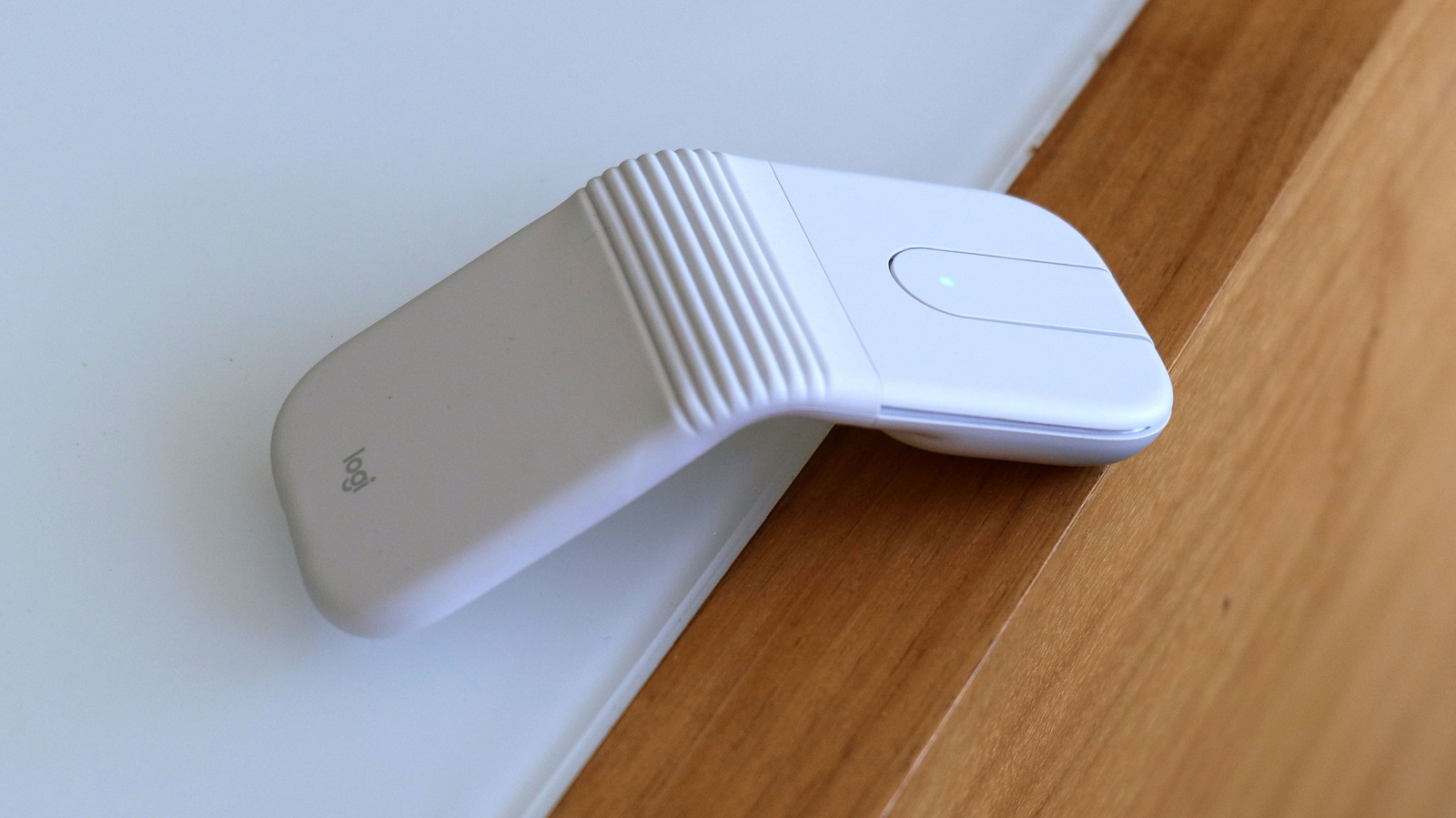

SAN JOSE — The problem Logitech is trying to solve with its new Mobi Fold mouse is not a technical one. It is a behavioral one. The company’s own research found that while nearly three-quarters of professionals own a mouse, only about one in four actually bring one when working outside the office. The Mobi Fold, which went on sale Wednesday for $80, is Logitech’s answer to that gap — a device designed to collapse small enough that leaving it behind feels like a deliberate choice rather than a practical necessity.
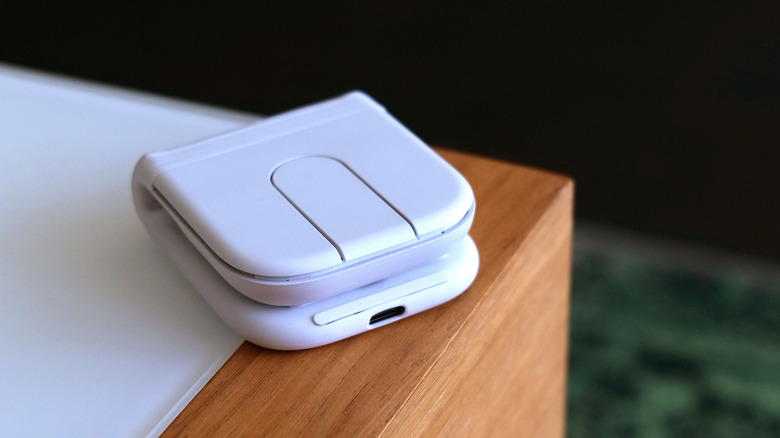
The mouse folds in half like a clamshell phone, collapsing to a 2.2-by-2.5-inch rectangle less than an inch thick and barely over two ounces. Unfolded, the two halves lock into an arched position that keeps the click buttons at a usable angle. The design draws inevitable comparisons to Microsoft’s Arc Mouse, a product that has occupied this category largely alone since 2017. Logitech has not exactly reinvented the concept, but it has sharpened it.
What sets the Mobi Fold apart from its spiritual predecessor is the integration of a touchpad strip in place of a traditional scroll wheel — a decision that either makes or breaks the experience depending on who you ask. Engadget reviewer Sam Rutherford, who tested the device ahead of launch, found the touchpad scrolling functional but not as smooth as a physical wheel, a trade-off he attributed to the demands of the form factor. The left and right click buttons are quiet enough that Logitech describes the device as suitable for libraries and open offices — a marketing claim that, in practice, reviewers found largely credible.
Opening the mouse automatically powers it on; closing it powers it off. That automatic behavior eliminates the accidental-click problem that plagues devices stuffed into bags, and it is one of those small design decisions that suggests someone thought carefully about how the product actually gets used between destinations rather than just on a desk.
Battery life is rated at 30 days, and early testing supports that estimate as plausible. After two and a half weeks of intermittent use, the Engadget review unit still held more than 70 percent charge. For road warriors whose daily workflow involves more document review than video editing, that runtime covers a meaningful stretch of travel without requiring a wall outlet. The device charges via USB-C and Logitech says one minute connected adds 22 hours of use — useful when the cord is already out for a phone.
Connectivity runs over Bluetooth with support for up to three simultaneous pairings, allowing a single mouse to jump between a laptop, a tablet, and a secondary device without re-pairing. The business-grade model, priced at $90, includes a Logi Bolt USB-C receiver for environments where Bluetooth is restricted or unreliable. That $10 gap, modest in isolation, represents a meaningful product segmentation: the standard consumer version ships without any dongle, a choice that will frustrate users who work in offices with strict Bluetooth policies.
Logitech built the Mobi Fold with environmental credentials embedded into the hardware. The Graphite model uses up to 36 percent post-consumer recycled plastic, and the magnets inside contain entirely recycled rare earth metal — a specification that arrives as laptop-accessory manufacturers face growing scrutiny over materials sourcing. The hinge has been tested for 15 years of daily use, and the mouse ships in FSC-certified paper packaging.
The device is available now through Logitech’s website and, notably, through TikTok Shop in the United States — a distribution choice that signals the company’s read on who the Mobi Fold is actually for. Logitech described the intended audience as professionals and Gen Z users who work in cafes, airport lounges, and hotel lobbies, and the TikTok channel fits that demographic profile more directly than any traditional tech retailer.
Whether the Mobi Fold holds up as a primary travel companion or a secondary convenience device depends largely on the user’s tolerance for its ergonomic compromises. The arched design is ambidextrous, which favors left-handed users who have long been underserved in the peripheral market, but it offers nowhere obvious to rest a thumb during extended sessions. As Rutherford noted in his review for Engadget, the geometric profile prioritizes portability over comfort. For a three-hour airport layover, that trade-off is reasonable. For a full workday of spreadsheet navigation, it becomes noticeable.
Logitech’s internal research claims the Mobi Fold causes 22 percent less muscle strain compared to a built-in laptop touchpad — a figure that frames the competitive set as trackpads, not other mice. That framing matters, because the Mobi Fold’s most direct internal competitor is the MX Anywhere 3S, which retails for $90 and offers longer battery life, three additional buttons, a physical Magspeed scroll wheel, and more conventional ergonomics. The Mobi Fold is ten dollars cheaper and meaningfully more compact. Whether that compactness is worth the functional concessions is a question that only the traveler who has once spent a full workday fighting a MacBook trackpad can answer with conviction.
Colors at launch are Graphite globally and Lilac and Off-White in select markets. The company’s earlier foldable mouse concept, which surfaced in leaked renders in May, generated immediate comparisons to Microsoft’s discontinued Arc Mouse family. The finished product is recognizably descended from those renders, with no major surprises between what the leak suggested and what arrived on shelves — itself a signal that Logitech’s internal development cycle is running unusually close to schedule for a hardware launch. The company’s Signature Comfort Plus lineup, which targeted wrist pain with cushioned peripherals earlier this month, debuted just two weeks before the Mobi Fold — suggesting a broader push into the ergonomics and portability segments simultaneously.
What Logitech has not fully answered is whether the $80 price point lands correctly. In a category where the Arc Mouse has operated essentially without competition at a similar price for nearly a decade, the Mobi Fold arrives with better specs, more device-pairing flexibility, and a clearer sustainability story. It also arrives with a scroll touchpad that reviewers uniformly find inferior to a wheel, a design that puts portability ahead of prolonged comfort, and a distribution strategy that suggests Logitech is betting on impulse consideration over deliberate research. That may be exactly the right bet. The people most likely to buy this mouse may be precisely the kind who encounter it in a scroll and order it before landing.