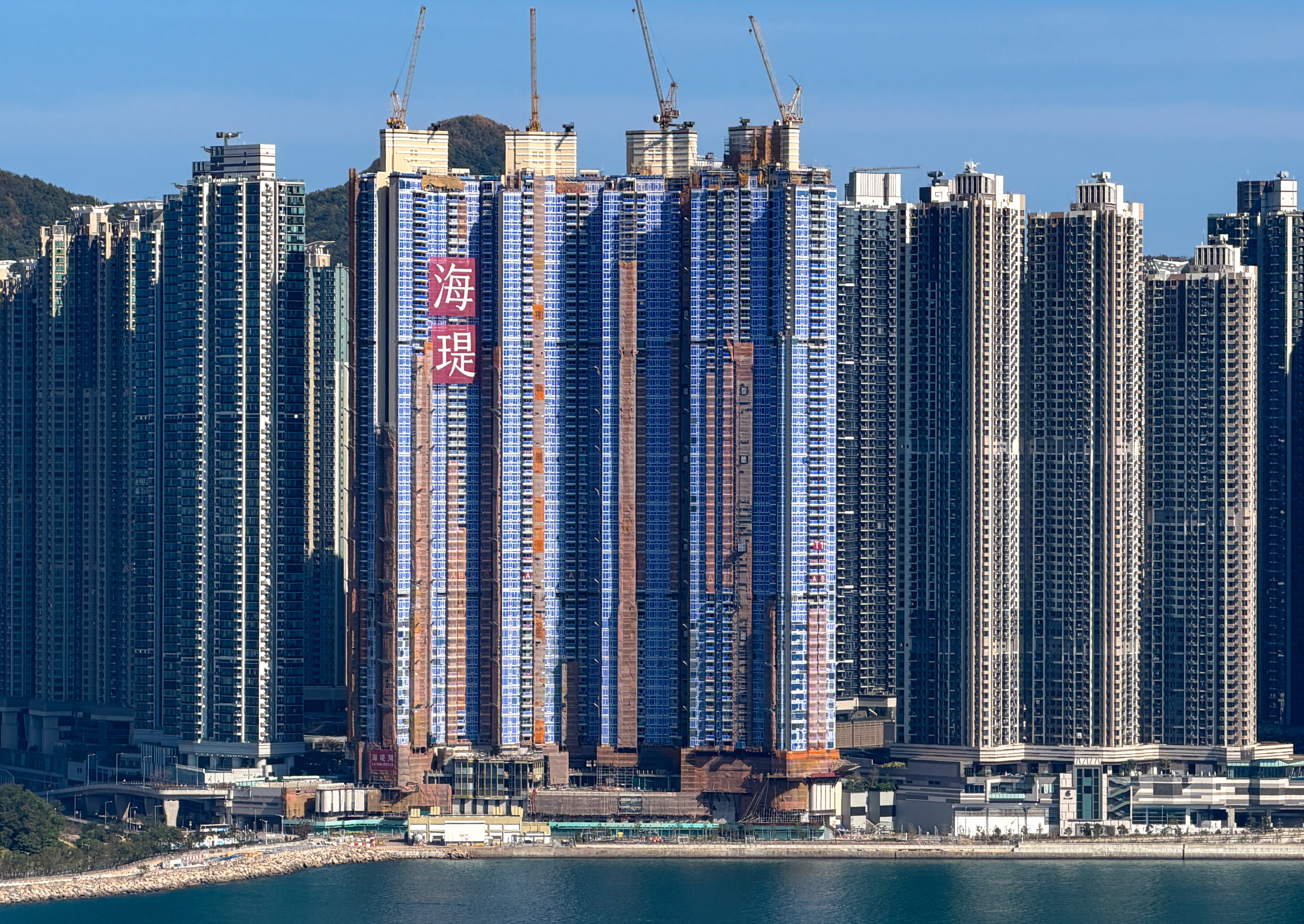

HONG KONG, June 13, 2026 (The Eastern Herald) — Hong Kong’s residential property cycle has quietly turned, and the developers who spent two years discounting their new launches to clear inventory are now signing buyers at prices 10 to 36 percent above their last comparable projects. Sino Land’s La Mirabelle launch in Tseung Kwan O, priced at HK$15,500 to HK$16,000 per square foot, is more than 10 percent above the Grand Seasons project that the same district absorbed in January 2025, and is the cleanest single signal yet that the developer-side pricing power has returned after a three-year absence. The pattern is now consistent across Tseung Kwan O, Wong Chuk Hang and Tai Wai, with first-batch prices on new 2026 launches running roughly 15 percent above the four-year lows that anchored the bottom in March 2025.
The macro architecture that supports the recovery is identifiable. The Hong Kong Monetary Authority’s prime rate, which moves with the United States Federal Reserve through the linked exchange rate, fell roughly 75 basis points across the second half of 2025 and the first quarter of 2026, lowering household mortgage burdens and pulling buyers off the sidelines. Mainland Chinese demand has rotated back into the city through the New Capital Investment Entrant Scheme and through the broader recovery in cross-border wealth movement that the Hong Kong family-office regime has been engineering. The combination has produced enough buyer depth to support the first concerted price action that the primary residential market has seen since the 2022 peak.
Norry Lee, the JLL senior director who has been tracking the Hong Kong primary residential market for two decades, summarised the shift in a research note circulated to institutional investors this week. Housing prices, Lee wrote, bottomed out in March 2025 and have since staged a gradual recovery, supported by interest-rate cuts, the return of mainland Chinese buyers and improving market sentiment. The line that matters most for the developer-side calculus is the second one. Developers, Lee said, are no longer relying on discounted pricing to drive sales, with some units in popular projects recording double-digit price increases. That is the change.
The numbers around the recovery have a remarkable consistency across districts. La Mirabelle’s 10-percent-plus premium to Grand Seasons in Tseung Kwan O is at the conservative end of the range. Wong Chuk Hang projects launched this spring have priced 22 to 28 percent above their immediate predecessors. Tai Wai’s recent launches have run 25 to 36 percent above the equivalent 2024 stock. The variance across districts reflects local demand factors, supply constraints and the specific mix of buyer profiles, but the directional pattern is unambiguous. The discount era is over for the projects launching this year.
The buyer profile mix is the part that should attract more analytical attention than it has. Mainland Chinese buyers, drawn back to Hong Kong by the renewed capital-mobility access through the New Capital Investment Entrant Scheme and through the broader Chinese wealth-management migration that the Hong Kong Monetary Authority has been actively encouraging, are roughly 30 to 35 percent of primary-market transactions in the new launches. Domestic Hong Kong buyers, including the upgrader cohort moving from older private estates to new builds, account for the bulk of the remainder. Foreign institutional buyers and family offices, who had been a meaningful share through 2018 and 2019, remain a small but rising share of the buyer mix.

The supply side is also part of the story. The Hong Kong Lands Department, under the John Lee administration’s housing-stability commitments, has held primary supply tight through 2025 and 2026 at roughly 18,000 completions per year, well below the 25,000 to 30,000 unit pace that the previous administration had been targeting. The deliberate restraint on supply has supported the recovery in primary-market pricing power and reduced the inventory overhang that defined the 2023 and 2024 environment. The next supply targets the Lee government sets, expected at the autumn policy address, will be a key variable for whether the current pricing recovery extends through 2027 or stabilises at current levels.
The financial-architecture context reinforces the cycle. Hong Kong’s gazette of the zero-tax fund-manager carry bill last Friday, the yuan-rupiah cross-border settlement MoU and the consistent flow of Chinese hard-tech IPOs through the HKEX are all reinforcing the city’s positioning as the dominant Asian wealth and capital-markets venue. The residential property recovery is the labour-market and household-side complement to that positioning. The flows that support the property market are the same flows that support the broader wealth-hub strategy.
Sun Hung Kai Properties, CK Asset Holdings, Henderson Land, New World Development and Sino Land are the five large developers that dominate the Hong Kong primary residential market. All five have launched first or second tranche stock at prices above the 2024 baselines. Sun Hung Kai Properties’ Cullinan Sky launch in West Kowloon is running 14 percent above its 2024 Cullinan West phase. CK Asset’s recent Yuen Long launch priced 18 percent above the equivalent 2024 stock. Henderson Land and New World are following with similar moves. The cumulative implication is that the developer-side strategy has rotated from inventory clearance to price discovery, and that the discount-driven sales of 2023 and 2024 are not coming back in 2026.
The implications for the secondary market are the next variable. Secondary residential transactions remain depressed relative to historical norms, with transaction volumes at roughly 60 percent of the 2018 peak and average prices still 12 to 18 percent below their 2021 highs. The primary-market recovery typically pulls the secondary market with a six-to-nine-month lag, and the first signs of secondary recovery have started to appear in the upper-end districts of Mid-Levels, Repulse Bay and the southside of Hong Kong Island. A Singaporean buyer paid 72 million United States dollars for a Shek O mansion this week in the kind of transaction that signals the high-end market’s recovery is well under way.
The comparison with other Asian property markets is instructive. Singapore’s primary residential market never went through the same cyclical correction Hong Kong did, with prices grinding higher through the 2022 to 2024 period and only easing modestly in early 2025. Shanghai and Beijing have been on their own slower recoveries from the mainland Chinese property-developer credit cycle that started in 2021. Tokyo has produced the strongest Asian property performance over the same period on a combination of yen weakness, foreign demand and demographic rebalancing. The Hong Kong recovery now closes the gap with Singapore and Tokyo and pushes the city back to the front of the regional wealth-storage hierarchy.
The political environment around the recovery is mostly supportive. The Lee administration has been explicit that housing-market stability is a priority, and the Hong Kong Monetary Authority has been careful to balance the deleveraging discipline that the post-2022 environment required with the policy support that the recovery needs. The mortgage stress-test regime has been kept tight, the loan-to-value caps on second mortgages have been retained, and the Buyer’s Stamp Duty for non-permanent residents has remained at the 15 percent rate. Those measures discipline the recovery without obstructing it.
The cumulative price-recovery trajectory still has runway. Primary residential prices are roughly 15 percent above the March 2025 trough, and the most plausible scenario for the next 18 months sees them rising another 8 to 12 percent if the rate-cut environment holds and mainland Chinese demand remains supportive. The most pessimistic scenario, in which the Federal Reserve resumes rate increases and Hong Kong mortgage rates climb back through the 5.5 percent level that was the average through 2024, would see the recovery stall but not reverse. The most optimistic scenario, in which mainland Chinese buyer flows accelerate and the Lee administration’s autumn policy address signals continued supply discipline, would see prices climb back toward their 2021 highs by mid-2027.
For Hong Kong’s listed property developers, the share-price reaction has been broadly positive but selective. Sun Hung Kai Properties’ Hang Seng-listed shares are up roughly 22 percent year to date, CK Asset Holdings 18 percent, and the broader Hang Seng Properties Index has recovered roughly 25 percent of its 2022 peak loss. The market is rewarding the developers with the strongest residual land banks and the highest-quality projects in the pipeline. The South China Morning Post framed the pricing-power story in the context of broader Asian wealth flows.
The cleanest read of the Hong Kong property recovery is that the cycle has turned and the developer-side strategy is now aligned with the underlying demand environment. The price discipline that the discount era required has lifted, the supply discipline that the Lee administration has imposed is supporting the recovery, and the wealth flows that the broader Hong Kong financial architecture is engineering are providing the buyer depth that the primary market needs. The next concrete milestone is the autumn policy address. The structural story underneath the cyclical recovery is that Hong Kong, after three years of being written off as a structurally diminished wealth-hub competitor to Singapore, has reasserted itself in the regional rankings on architecture, capital flow and policy depth.