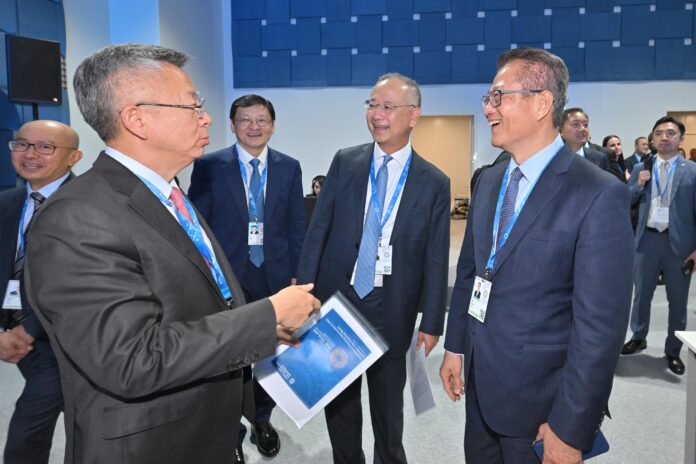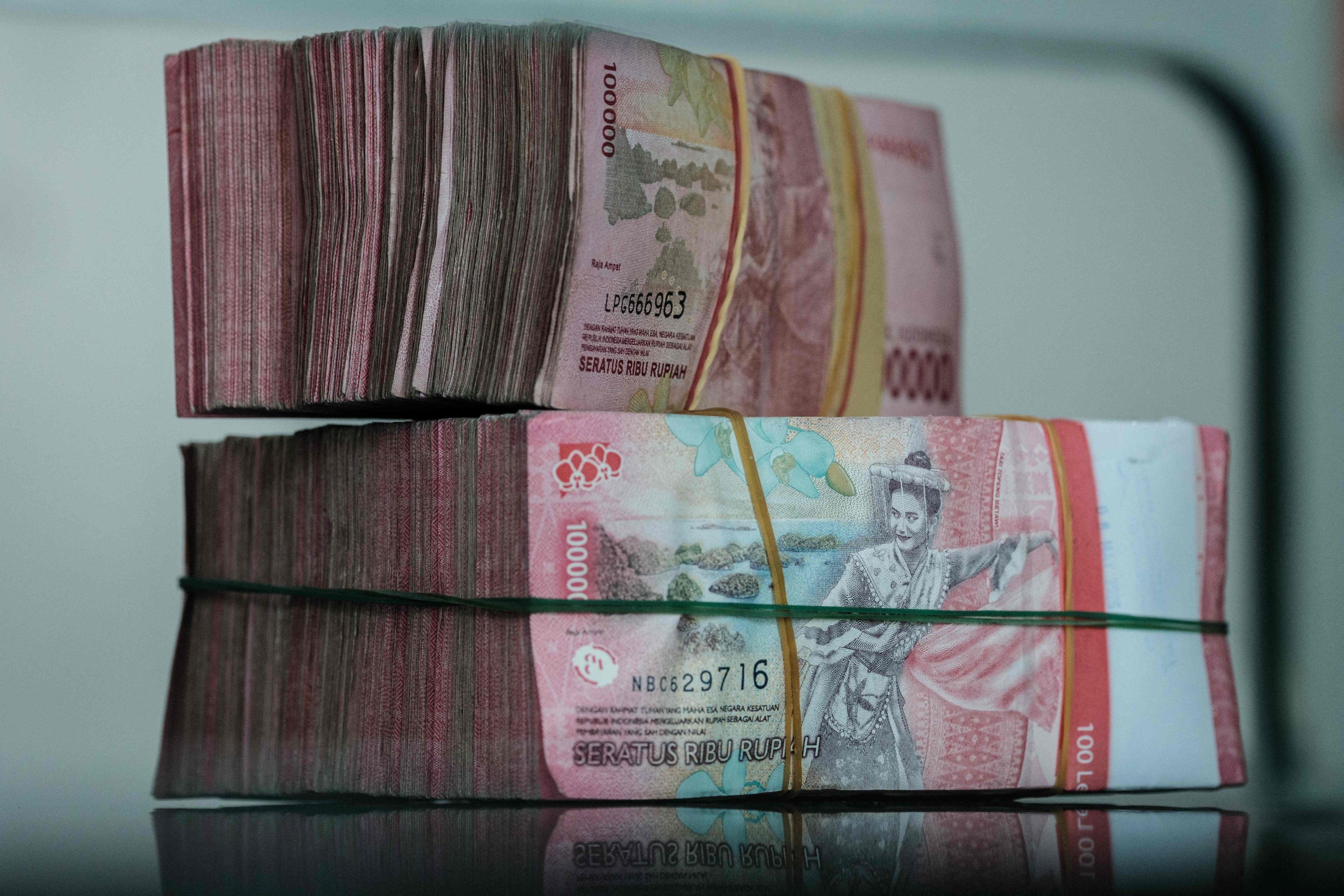

SHANGHAI, June 13, 2026 (The Eastern Herald) — The People’s Bank of China, the Hong Kong Monetary Authority and Bank Indonesia signed a memorandum of understanding in Shanghai on Wednesday to establish a direct bilateral currency framework for the Indonesian rupiah and the offshore Chinese renminbi, formally removing the United States dollar from the centre of cross-border trade and investment settlement between Indonesia and Hong Kong. The agreement, brokered between the three central banks rather than between governments, is the most concrete piece of dedollarisation infrastructure that Asia has produced this year.
The mechanics are functional. The MoU commits the three authorities to operational guidelines, to the appointment of select banks as Appointed Cross Currency Dealers and to a phased rollout of direct rupiah-renminbi settlement across trade finance, investment flows and inter-corporate transfers. Eddie Yue, the Hong Kong Monetary Authority’s chief executive, framed the agreement in Shanghai as an important step in deepening monetary and financial cooperation among the three jurisdictions, with explicit reference to Hong Kong’s role as the leading offshore renminbi hub. The Indonesian central bank’s governor Perry Warjiyo and the People’s Bank of China leadership matched the framing in their own statements.
The volume the new framework is meant to absorb is large enough to matter. Indonesia-Hong Kong trade ran at roughly 25 billion United States dollars in 2025, with a sharply skewed composition that includes Indonesian palm oil, coal, nickel and natural-gas exports against Hong Kong-routed electronics, financial services and rare-earth-processed intermediates. Investment flows through Hong Kong into Indonesian infrastructure, including the Jakarta-Bandung high-speed rail and Sulawesi nickel-processing complexes, run in tens of billions of dollars over five-year cycles. Removing the dollar from those settlement chains reduces both currency-conversion cost and political exposure to United States secondary-sanctions risk.
The political subtext is the part that travels further. Indonesia is a member of BRICS, which made its formal accession announcement in 2024 and has been working through bilateral and tri-lateral framework agreements with bloc members ever since. The Wednesday MoU is the first major piece of post-accession financial-infrastructure work that Indonesia has signed with a Chinese-anchored institution, and the inclusion of Hong Kong rather than mainland banking infrastructure is deliberate. Hong Kong’s common-law system, its dollar-clearing legacy and its Stock Connect access offer a level of institutional credibility that mainland yuan settlement does not yet match, and the framework is constructed to leverage that credibility for the wider yuan-internationalisation project.
The competitive context is sharpening fast. The US dollar’s share of Indonesian trade settlement has slipped below 60 percent for the first time since the 1997 Asian financial crisis. Local-currency settlement agreements between Indonesia and its Asian counterparts now cover China, Japan, South Korea, Singapore, Malaysia, Thailand and the Philippines. The Hong Kong addition completes the regional grid and signals that the offshore renminbi market is now positioned as the universal counterparty for any Asian central bank that wants to settle bilaterally without going through New York. Hong Kong’s offshore yuan deposit pool, at roughly 1.05 trillion yuan, is the largest in the world.

The Federal Reserve has been watching these arrangements without saying much in public. The Federal Reserve Bank of New York’s reserve-currency analysis team has produced quarterly notes for two years now flagging the cumulative effect of bilateral and tri-lateral settlement frameworks on dollar-denominated trade share, and the most recent note acknowledged that the trend is accelerating rather than stabilising. Yellen-era Treasury officials, the United States Department of Commerce and the National Security Council have all argued that the dollar’s network effects remain dominant enough to absorb individual bilateral arrangements without losing reserve-currency status. The Wednesday agreement is a concrete data point against the cumulative argument.
The macro story is consistent across the week. Gold has just overtaken US Treasuries as the largest single reserve asset in the European Central Bank’s reading, with bullion at 27 percent versus Treasuries at 22 percent. CITIC Securities just received the first A-category Fitch rating for any Chinese brokerage in modern history, narrowing the funding-cost gap between Chinese wholesale houses and Western dealers. Hong Kong itself gazetted a zero salary tax on fund manager carry on Friday, aimed at consolidating its wealth-hub status. The yuan-rupiah MoU adds the cross-border settlement piece. None of these moves is decisive on its own. The cumulative effect is what changes the picture.
For Indonesian exporters the operational benefit is concrete. Direct rupiah-renminbi pricing means palm-oil producers exporting to Hong Kong-domiciled trading desks no longer need to take currency risk against the dollar in each leg of the transaction. The framework will be operationalised through Appointed Cross Currency Dealers at the major Indonesian banks, with Bank Mandiri, Bank Central Asia and Bank Negara Indonesia all expected to participate alongside their Hong Kong counterparts, HSBC Hong Kong, Standard Chartered Hong Kong, Bank of China (Hong Kong) and Industrial and Commercial Bank of China (Asia). Pricing and liquidity formation will be done through the offshore yuan market in Hong Kong rather than through the mainland Shanghai market, preserving Hong Kong’s role as the marketmaking centre.
The cross-border infrastructure piece is the part that will produce the most visible results. The MoU includes commitments to align supervisory expectations, to facilitate cross-border payment messaging and to develop a shared crisis-response protocol if liquidity stress emerges in either currency leg of the new framework. The Cross-Border Interbank Payment System, the People’s Bank of China’s yuan settlement infrastructure that processed roughly 175 trillion yuan in 2025, will be the rails for the renminbi side, and Bank Indonesia’s BI-FAST and BI-RTGS systems will be the rails for the rupiah side. Coordination between the two systems is the technical bottleneck and is expected to take six to nine months to complete.
The BRICS dimension cannot be overstated. The Rio summit later this year is expected to formalise more bilateral and tri-lateral currency arrangements among bloc members, with Russia, Brazil, India, China, South Africa, the United Arab Emirates, Egypt, Ethiopia, Iran and Indonesia all working on overlapping but not identical settlement frameworks. Russia used the St Petersburg International Economic Forum earlier this month to push Brazil on a parallel architecture. The cumulative effect of these arrangements is a network of settlement corridors that bypass dollar intermediation without requiring any single new global reserve currency to emerge.
The risks are concrete and worth flagging. Direct yuan-rupiah settlement still requires deep liquidity in both currency legs and the offshore yuan market remains thinner than the dollar market by orders of magnitude. Initial trade volumes through the new framework will be measured in single-digit billions rather than the tens of billions the full Indonesia-Hong Kong corridor would absorb at scale. The operational rollout, the bank-by-bank licensing of Appointed Cross Currency Dealers and the inevitable teething problems in cross-border payment messaging mean the first twelve months will produce more headline noise than headline volume. The architecture is being built. The volume will follow.
The geopolitics are direct. Indonesia is asserting its own currency in bilateral settlement against a backdrop of long-standing United States Treasury rhetoric about preserving dollar dominance, and the Hong Kong Monetary Authority is operating with the political backing of Beijing’s broader yuan-internationalisation programme. The Wednesday MoU is one of the cleaner examples of central-bank-led dedollarisation working through technocratic infrastructure rather than political proclamation. The HKMA’s press release sets out the operational details. The South China Morning Post‘s coverage emphasises Hong Kong’s positioning as the leading offshore yuan hub.
The cleanest read is the structural one. Indonesia, the world’s fourth most populous country and Asia’s third largest economy after China and Japan, has just signed the most consequential currency-settlement agreement of its post-1998 history with two central banks that operate in the yuan ecosystem. The United States dollar will retain its role as the global vehicle currency for years, but the share of Asian trade routed through it is dropping in a way that is now visible on every quarterly central-bank balance-of-payments report. The Wednesday MoU is not the cause of that trend. It is the latest confirmation that the trend is now structural rather than cyclical.