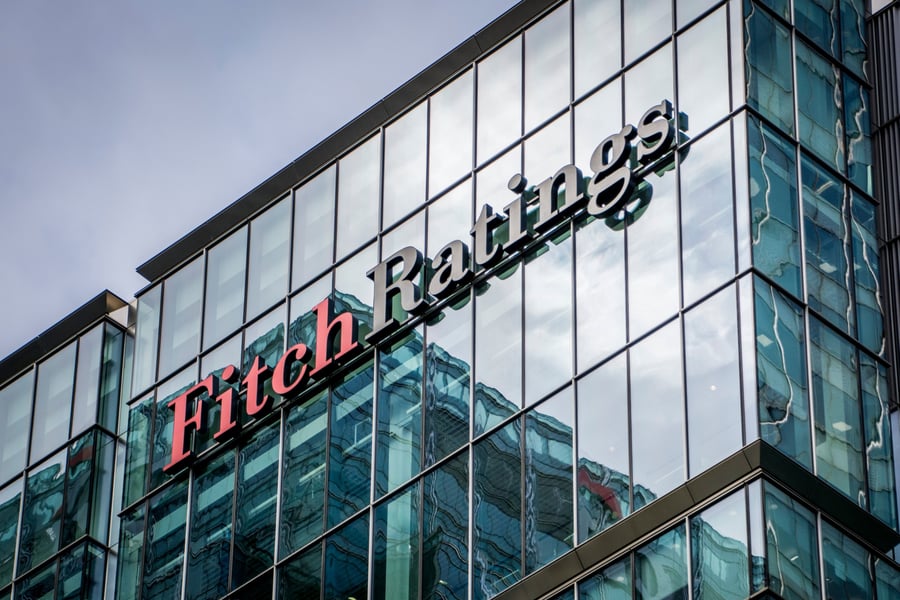

HONG KONG, June 13, 2026 (The Eastern Herald) — Fitch Ratings has assigned an A-minus long-term issuer default rating with a stable outlook to CITIC Securities and its Hong Kong subsidiary CITIC Securities International, the first time any mainland Chinese brokerage has been placed in the agency’s A-category in the modern history of Asian capital markets. The rating, made public on Tuesday, breaks a B-category ceiling that had functioned as a structural cap on every Chinese investment bank since the early 2000s and gives the broader Chinese securities industry an external anchor for the funding-cost arguments it will be making for the rest of the decade.
The size of the move is not subtle. China International Capital Corporation and China Securities, the two next-largest mainland brokerages, are both rated BBB-plus by Fitch, the highest end of the B-category. Multiplying CITIC Securities through a full notch into A-territory therefore widens the band between the leader and the chasing pack at the same moment that Beijing has set an explicit policy goal of building first-class international investment banks. CITIC Securities is now able to issue offshore dollar paper at funding spreads close to the lower end of the Hong Kong-listed Asian financial-institution complex, a step change in cost of capital.
The political subtext is louder. The China Securities Regulatory Commission, chaired by Wu Qing, has spent the last twelve months pushing the country’s brokerage industry to consolidate and to compete globally. Wu’s 15th five-year plan framework specifically calls on the industry to cultivate a number of leading institutions with significant international influence, language that is unusual for its directness in a Chinese policy document. The Fitch rating is the first piece of external validation that the strategy is producing the intended structural effect, and Wu has been emphatic in internal CSRC briefings that this is the start, not the end, of the upgrade cycle.
CITIC Securities itself is the natural carrier of the new rating. It is the most profitable brokerage in China and, until very recently, also its largest by total assets. Its 2025 financial result delivered roughly 60 billion yuan in net profit, deepened its leadership in equity underwriting on the Shanghai and Shenzhen exchanges, and saw the group take its first lead-bookrunner mandate on a Hong Kong-listed mega IPO of foreign-issuer stock, the Saudi Aramco secondary listing in March. None of that earnings progress would, by itself, have triggered a sovereign-anchored rating jump. Fitch’s move is recognition that the regulatory and macro environment for the strongest Chinese brokerages has improved enough to detach their credit profile from the sector’s historical ceiling.
The signalling implications travel further than the immediate funding-spread benefit. Chinese sovereign credit is itself rated A-plus by Fitch, so an A-minus on CITIC sits two notches below sovereign in the same agency’s framework. That is the kind of relative positioning typically reserved for state-anchored champions, not for ordinary brokerage businesses, and it tells global allocators that Fitch is now reading CITIC Securities as effectively quasi-sovereign in funding terms. The same anchoring is what allows Goldman Sachs to trade at A-minus despite the cyclicality of its underwriting business, JPMorgan at A-plus, and Morgan Stanley at A-minus.

The peer comparison matters because the wholesale-banking competition is global and the funding-cost gap is the variable that decides who wins league-table positions. Goldman Sachs, JPMorgan, Morgan Stanley, UBS and HSBC have spent the last two decades enjoying a several-hundred-basis-point spread advantage over their Chinese rivals on dollar-denominated debt issuance, with all the downstream consequences for who can hold inventory, who can run prime brokerage at scale, and who can compete for the biggest mandates. The Fitch move narrows that gap for CITIC Securities, and if China Galaxy and Shenwan Hongyuan follow into the lower-A band on subsequent reviews, the entire wholesale-banking competitive picture in Asia changes.
Hong Kong is positioned to benefit first. CITIC Securities’ Hong Kong subsidiary carries the same A-minus rating, an unusual sign of confidence in the parent-subsidiary support framework, and the city’s resurgent role as the dominant IPO venue for global tech is now backed up by a domestic underwriter with funding parity to the Western houses. The Chinese commercial-space IPO queue that is now lining up on the STAR market and HKEX will run through underwriters like CITIC Securities, CICC and Huatai. The rating upgrade gives those underwriters a credibility benefit at exactly the moment when the deal pipeline is filling up.
The relative move on Western rating agencies is the unspoken story. Moody’s and Standard and Poor’s both still rate CITIC Securities at the high end of the B-category. Fitch is the smallest of the big three by global market share but is also the most active in Asia, and its move puts pressure on the other two to revisit their methodologies. Historically, ratings actions of this magnitude take twelve to eighteen months to ripple across all three agencies, and the practitioner expectation in Hong Kong this week is that Moody’s will move on a similar timetable. S&P, which has the most cautious approach to mainland Chinese financial institutions, may take longer.
The wider macroeconomic context reinforces the timing. Gold has just overtaken US Treasuries in central bank reserve allocations, reserves are being diversified, China’s exports are running at a 19 percent year-on-year pace despite American tariff escalation, and the Chinese capital markets are simultaneously absorbing new commercial aerospace, AI-chip and EV-battery issuers. A Fitch A-category rating for the country’s strongest brokerage is consistent with that macro pattern. It is not a one-off recognition. It is part of the broader recalibration of the global financial hierarchy that the ECB report this week named explicitly.
The risk language in the Fitch rating release is conventional. The agency notes that CITIC Securities’ direct exposure to mainland real-estate distressed credit has been managed down, that its proprietary trading book is sized within risk-appetite limits aligned with what Goldman or Morgan Stanley would run, and that its compliance posture has improved materially over the past three review cycles. Those are the standard variables a global brokerage is judged on, and the implicit message is that CITIC Securities now meets them at a global-peer standard. China.org.cn’s coverage emphasises the policy-validation angle that Beijing wants the international audience to read.
The strongest counter-argument is the cyclical one. Chinese brokerage earnings remain heavily tied to mainland equity-market activity, which is itself dependent on retail sentiment and on the property-sector recovery. A renewed property-credit shock would put downward pressure on CITIC Securities’ results and would test whether the new A-category rating holds through a domestic earnings recession. Fitch’s stable outlook implies the agency believes the rating has cushion for one such cycle. The next twelve months of mainland equity issuance volume will be the test.
The competitive implications for the smaller Chinese brokerages are direct and pointed. The CSRC has signalled that consolidation is now the preferred policy outcome in the brokerage industry, and the wider funding-cost gap between CITIC Securities and the mid-tier players, after the Fitch upgrade, makes consolidation economically rational rather than only politically directed. Industry participants in Hong Kong this week have started to speculate about which mid-cap mainland brokerage is most likely to be the first formal merger target. The names mentioned in trading rooms include China Galaxy, Shenwan Hongyuan and Citic Construction Investment, three groups that overlap meaningfully with CITIC Securities’ regional footprint.
For the broader Asian financial architecture, the Fitch upgrade is a marker rather than a turning point. The marker is that the long-running assumption of permanent Western-bank superiority in international wholesale banking has eroded enough that a US rating agency is willing to formally measure a Chinese house against Goldman and Morgan Stanley on the same scale. The turning point will come when CITIC Securities consistently wins lead-left mandates on global IPOs, M&A and dollar-debt deals, and the Fitch rating is the first credit-side ingredient that makes the rest of that competitive transition possible. The South China Morning Post framed the story as a ceiling break. From inside the global wholesale market, it is more accurate to read it as a floor being raised.