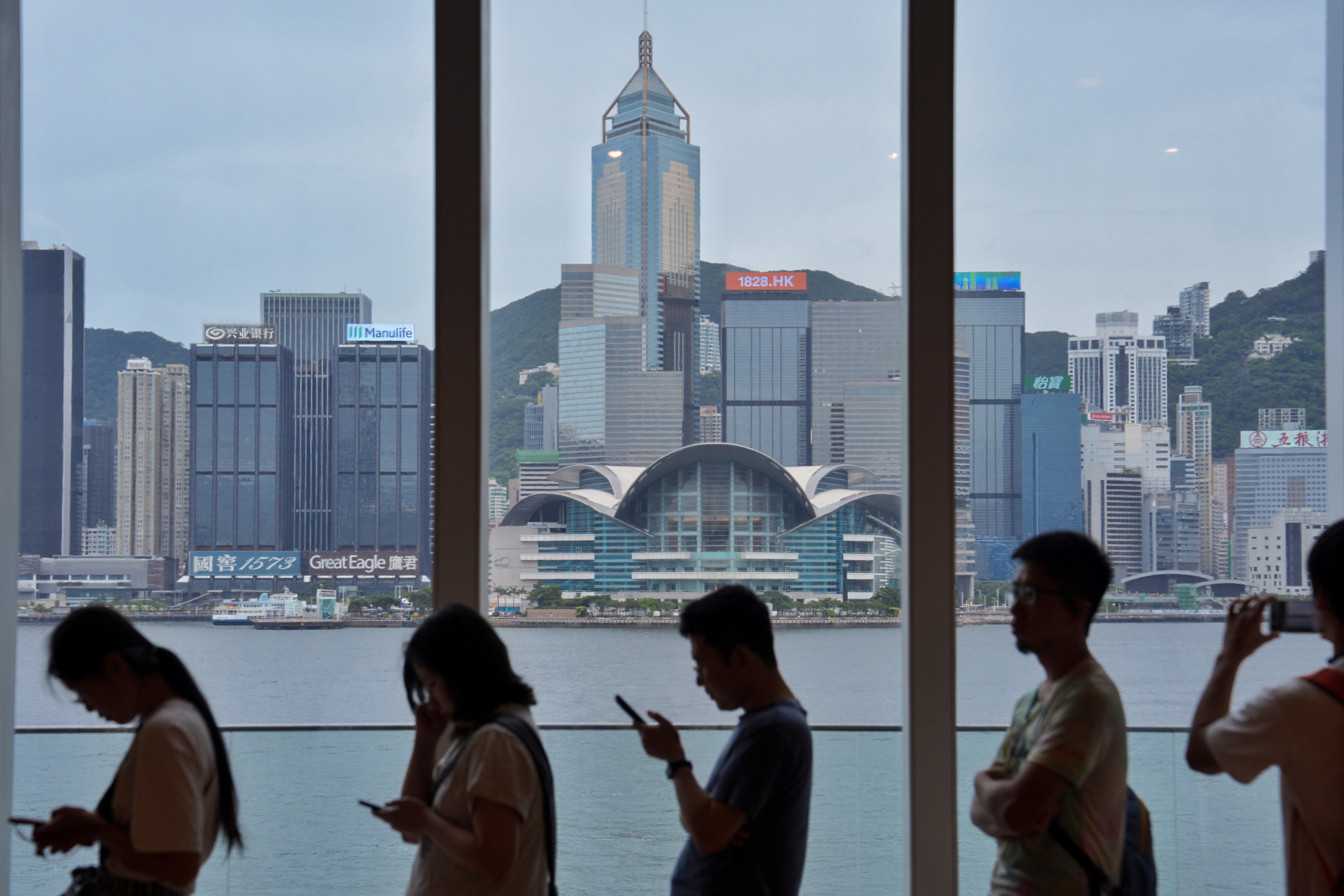

HONG KONG, June 13, 2026 (The Eastern Herald) — Hong Kong’s government gazetted the Inland Revenue (Amendment) (Preferential Tax Regimes for Funds, Family-owned Investment Holding Vehicles and Carried Interest) Bill on Friday, formally launching a legislative package that, if enacted on the expected schedule, will waive salary tax on performance-linked bonuses paid to qualifying fund managers operating in the city. The bill is the most consequential piece of tax engineering Hong Kong has done in five years and is aimed unmistakably at one rival, Singapore, which has used its own tax-and-residency offer to draw Asian wealth-management talent across the Strait of Malacca for the last decade.
The mechanism is direct. Qualifying fund managers in private equity, venture capital and hedge-fund structures will pay zero salary tax on the carried-interest portion of their compensation, provided their underlying funds meet substance and reporting requirements set by the Inland Revenue Department and the Securities and Futures Commission. The same package extends preferential treatment to family-owned investment holding vehicles, the structures that the city’s emerging family-office cluster has been registering since the Lee administration introduced the FIHV regime in 2023. The bill is scheduled for first reading at the Legislative Council on June 24 and is widely expected to clear with minor amendments by the start of the autumn term.
The retrospective reach matters as much as the headline rate. Subject to enactment, the enhanced concessions will apply from the 2025/26 year of assessment, which means fund managers in Hong Kong this fiscal year are already being told by their tax counsel to assume the new regime will govern their bonus bookings. That backdating is rare and is being read in the industry as a deliberate signal that Hong Kong wants to lock in 2025/26 incentives before the deal-pipeline data for the year prints. The government’s drafting note framed the move as part of strengthening the city’s role as the world’s largest offshore wealth management centre, language that picks up directly from John Lee’s January policy address.
The competitive comparison is the entire point. Singapore’s variable capital company regime, paired with its Section 13O and 13U family office tax exemptions, has been the regional benchmark for the last seven years, and the city-state’s 5 billion dollar single-family-office threshold has produced an unbroken stream of mainland Chinese wealth registrations through 2022, 2023 and 2024. Hong Kong’s previous response, the FIHV concession and the New Capital Investment Entrant Scheme, were partial. The 2026 bill closes the structural gap. Fund managers and their principals can now book carry in Hong Kong at a tax bill close to zero while operating within the same dollar-clearing, common-law and listed-public-companies infrastructure that the international wholesale market has used for decades.
The bid for the family-office segment is the largest of the prizes. Hong Kong has been positioning itself as the regional centre of choice for ultra-high-net-worth Chinese principals re-domiciling from the mainland for tax and capital-mobility reasons, and from Singapore for regulatory and licence-driven reasons. The Hong Kong Monetary Authority’s family-office unit has registered more than 80 new single-family offices in the past 18 months. The new bill is expected to push that pace closer to 150 per year if the legislative calendar holds. Wealth-management heads at HSBC, Standard Chartered, UBS and DBS have been briefing clients on the bill for two months and the inflow expectations are already partially priced into the city’s commercial property leasing market.

Private equity and venture capital are the second wave. Hong Kong-domiciled limited-partnership fund structures registered under the Limited Partnership Fund Ordinance have grown from a handful in 2021 to more than 1,200 today, and the Inland Revenue concession was the missing piece that kept some of the strongest mainland Chinese GPs from full re-domiciliation. The new bill removes that friction. Several Chinese sovereign wealth fund externalisations, regional growth-equity platforms and the Hong Kong arms of the four largest mainland insurance-affiliated asset managers are expected to migrate their carry-receiving entities into Hong Kong structures during the next 12 months.
The financial-architecture story this fits into has been getting harder to ignore. CITIC Securities just received an A-minus rating from Fitch, the first A-category rating ever assigned to a Chinese brokerage, narrowing the funding-cost gap between Asian wholesale houses and Western dealers. The Hong Kong stock exchange is leading the global IPO league table for the first time since 2019 and is preparing to absorb the Chinese commercial-space IPO queue alongside ongoing battery, robotics and AI-chip listings. The carry-tax change is the labour-side complement to the capital-markets infrastructure.
Singapore’s response will set the second act. The Monetary Authority of Singapore had already been weighing further enhancements to the 13O and 13U regimes ahead of Hong Kong’s move, and the political brief in Singapore is now to make sure the city-state does not become a one-stop discount cousin for the same principals. The Singapore finance ministry has the technical capacity to match the Hong Kong package within a single budget cycle, but it carries a higher political cost. Singapore’s domestic constituency is more sensitive to wealth-concentration optics than Hong Kong’s, and a public zero-carry-tax move would be harder to land in Parliament than the FIHV-style technical refinements that Singapore has historically preferred.
The talent dimension cuts both ways. Hong Kong is offering tax-edge on compensation. Singapore continues to offer the cleaner expat-life proposition, stable currency, regional medical and education infrastructure, and a long-running cultural advantage for senior Asian American executives. The migration calculus for fund-management talent over the next three years will balance the post-tax compensation differential against those quality-of-life factors. The current expectation in industry recruiting circles is that bonus-heavy senior PE and hedge-fund roles will see the strongest pull toward Hong Kong, while platform infrastructure and family-office service roles continue to stratify between the two cities depending on the source jurisdiction of the underlying capital.
The qualifying-conditions detail will determine real take-up. The bill, in its current draft, requires fund managers to satisfy substance tests including minimum local employment, minimum local expense and minimum AUM thresholds before the zero-tax treatment applies to their carry. International tax practitioners have been parsing the draft this week with their compliance teams. The early conclusion is that the substance bar is achievable for any genuine Hong Kong-operating fund manager but is set high enough to keep brass-plate operators out. KPMG’s tax alert describes the substance requirements as workable but emphasises that the early-mover advantage will go to managers who structure ahead of the autumn enactment date.
The macro context is also working in Hong Kong’s favour. Gold has just overtaken US Treasuries in global reserve allocations, the dollar is on a multi-year downtrend against the yuan and the won, and Asian principals are looking for jurisdictions that offer both tax efficiency and political insulation from Western secondary-sanctions risk. Hong Kong, with its institutional links to Beijing and its established dollar-clearing infrastructure, is in a position to argue both sides of that hedge. Singapore has the cleaner international optics. Hong Kong has the cleaner regional fit and now the cleaner tax bill.
The risks are political. Hong Kong’s national-security framework remains a headline drag for some international principals and the city continues to operate under tighter capital-account integration with the mainland than Singapore offers. A renewed political flare-up could rapidly reverse the tax-led inflows. The 2026 bill is, in that sense, a calculated wager that the post-2022 stabilisation is now durable enough to absorb tax-policy aggression without triggering an exit. The South China Morning Post framed the gazette as a step toward the city’s wealth-hub status. From inside the wholesale wealth-management market, it is more accurate to read it as a deliberate pricing decision by Hong Kong on the value of its own tax base.
The next concrete milestones are calendar-driven. The bill’s first reading on June 24 will reveal the political tone of the legislative response, the second reading and committee-stage debate will refine the substance thresholds and qualifying-fund definitions, and the enactment date, expected by the early autumn, will determine the start of the tax year that gets the first fully retrospective benefit. Industry expectation in Central this week is that the timetable will hold and that the autumn LegCo calendar will deliver the enacted bill in time for the year-end booking decisions. If it does, the 2026/27 wealth-management league table for Asia will look meaningfully different from the 2024/25 baseline.