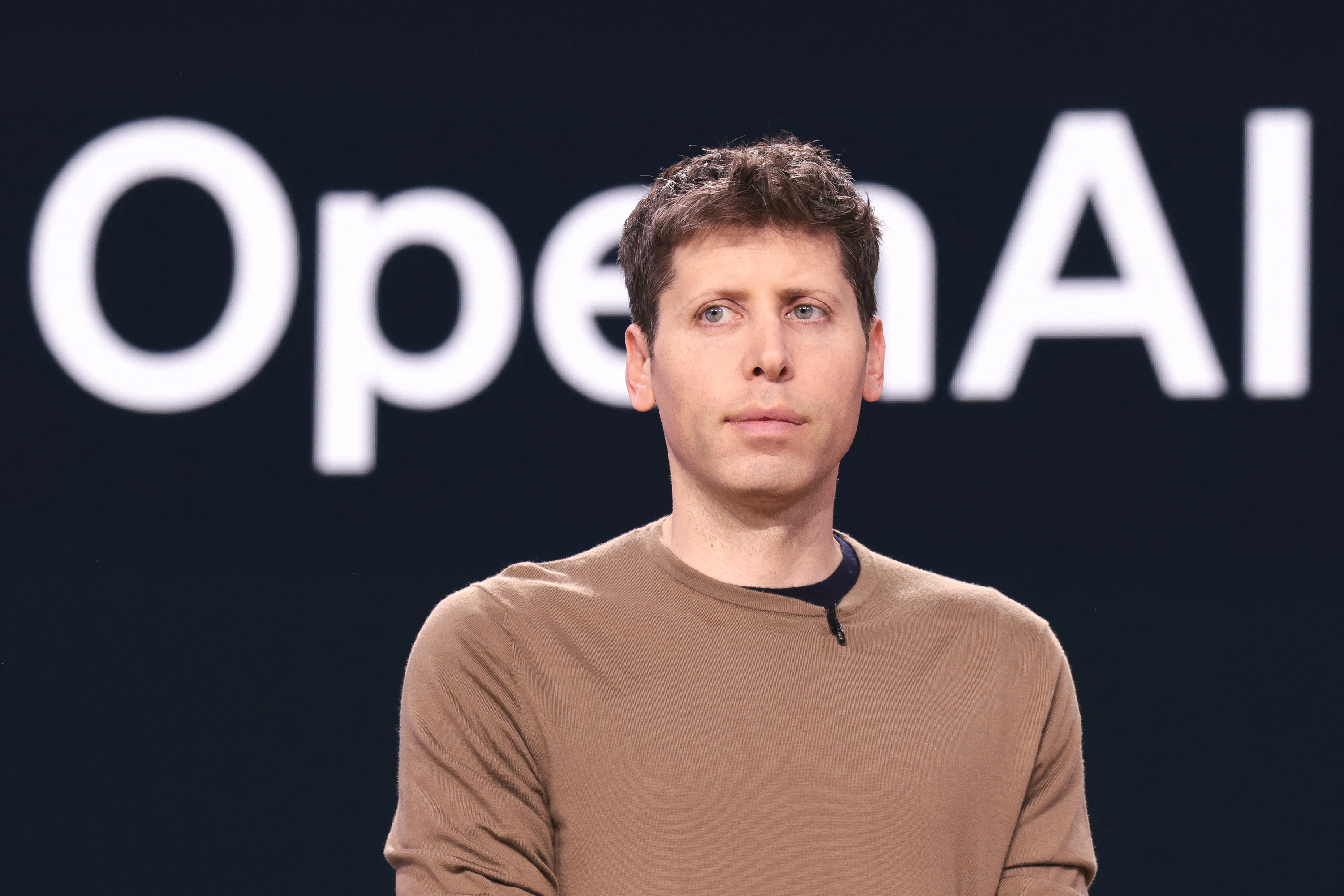

NEW YORK — The federal government has spent the week deciding to be friendlier to America’s artificial intelligence champions, except one. While Washington was clearing Hollywood’s biggest merger of the streaming era and Trump’s commerce secretary was export-controlling Anthropic abroad, a coalition of state attorneys general led by New York opened its own front on Friday. They subpoenaed OpenAI, Bloomberg reported, in an investigation broad enough that the document request reads more like an indictment of an industry than of a single firm.
The scope is the part the company will not want repeated in court. The subpoena seeks documents on advertising, user engagement and retention, the handling of consumer and health data, activities related to minors and seniors, deep learning models and internal company policies, a list that covers nearly every commercial surface ChatGPT touches and most of the questions American regulators have not yet found a vocabulary to ask about generative AI. New York’s office, which signed the request, declined to comment on Friday; OpenAI said it intends to engage constructively with state attorneys general and will take their concerns seriously.
The context, however, is what makes the investigation more than another corporate fishing expedition. OpenAI is sitting on nineteen wrongful-death lawsuits, at last public count, including a California complaint filed the day before the subpoena was served, alleging that ChatGPT engaged a 24-year-old Montreal woman in more than forty conversations about self-harm before she died last summer. Florida’s attorney general sued the company at the start of June, seeking to hold chief executive Sam Altman personally liable. California and Delaware spent the spring extracting concessions over OpenAI’s recapitalisation, including that 25 percent of its assets stay inside the original nonprofit. Friday’s coalition is the moment a piecemeal pattern became a strategy.
What unites the categories the subpoena names is the part of OpenAI’s business that has, until now, been least scrutinised: not the headline models, but the design choices in between. Engagement and retention metrics describe whether ChatGPT is being optimised to keep users talking, the way social media was optimised before its harms became settled fact. The reference to minors and seniors marks a regulatory recognition that the populations most vulnerable to a conversational machine are not the ones most protected by its current safeguards. Asking about advertising practices makes plain where the states think OpenAI’s commercial roadmap is heading, even before the company has confirmed an advertising business exists.
The timing is its own pressure. OpenAI confidentially filed for an IPO last week, and a public-company prospectus that lists nineteen wrongful-death suits, multiple state AG investigations and a federal AI executive order pulled in different directions is a difficult document to underwrite. The same week SpaceX’s debut created the template for AI-adjacent mega-listings, OpenAI is being reminded that public markets read litigation risk for a living.

There is a federalism story underneath the legal one. State AGs have been the main American forum for consumer-protection law since the Federal Trade Commission’s powers were narrowed in the 1990s, and they have used that role to lead the country’s biggest cases against tobacco, opioids and social media. The Trump administration’s posture toward AI has been to treat the technology as a national-security asset best handled in Washington, on terms favourable to its labs. The coalition’s subpoena is the federal-state argument running on schedule: when the agencies that answer to the president decline a question, the offices that answer to governors take it up.
OpenAI’s response was careful. It positioned itself as a partner rather than a defendant, and pointed to existing safeguards designed to identify distress, safely handle harmful requests and guide users to real-world help. Those defences may hold for individual lawsuits. They are unlikely to settle the broader question the AGs are now asking, which is whether a product used by hundreds of millions of people, including children, is being designed for their wellbeing or against it.
For a company that has positioned itself as the responsible adult in AI rooms occupied by ever-louder children, Friday is the moment that pose collides with the documentary record. The states have asked for the slides, the metrics, the internal notes and the memos. The next move belongs to OpenAI, which can fight the subpoena and watch the political cost climb, or comply and let the case files write themselves. The company that has spent two years arguing that AI safety is a feature is about to find out how its safety policies look in a state attorney general’s filing cabinet.
What this investigation will not yield is the kind of clean answer markets prefer. State AG coalitions move slowly, settle quietly and litigate for years; the tobacco master settlement took four years from first state suit to final agreement, the opioid one closer to seven. OpenAI’s IPO timeline, by contrast, is measured in months. The two clocks will run side by side, and the company will spend the next year trying to outpace a regulatory case it cannot stop from compounding.