
CUPERTINO — When Apple unveiled the iPhone 16 Pro last September, the pitch was straightforward: this was the phone for people who wanted the best of Apple Intelligence. The chip was new. The memory was sufficient. The AI features were front and center. A year later, the iPhone 16 Pro cannot run Apple’s most advanced on-device AI model. A line Apple did not draw when it sold that phone has now been drawn, and the 16 Pro sits on the wrong side of it.
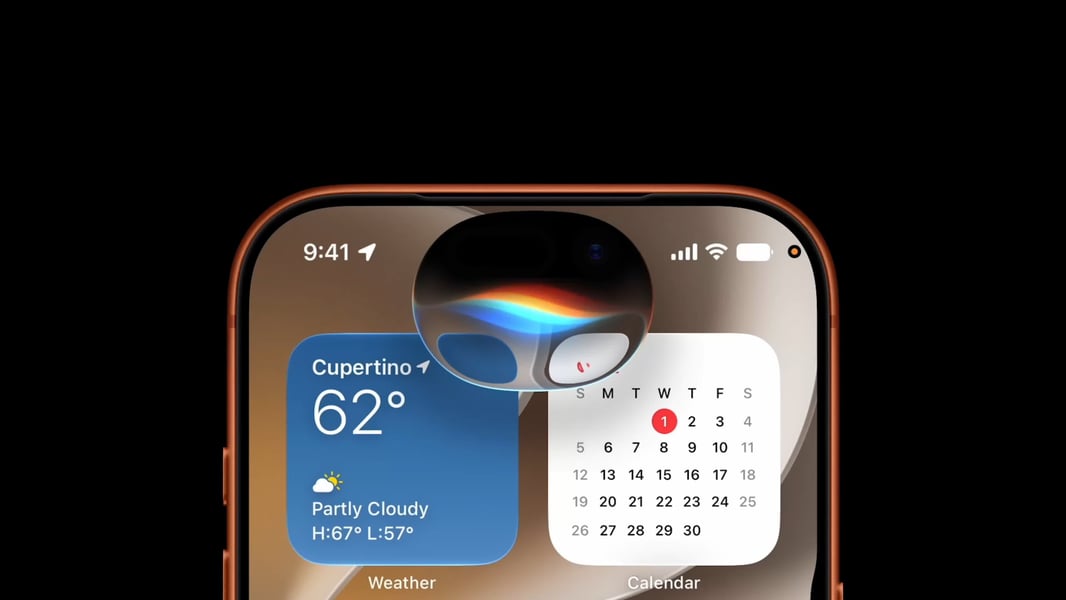
Apple confirmed in a press release accompanying the iOS 27 public beta that its most powerful on-device AI model — the one powering certain Siri AI capabilities including expressive voices and more advanced dictation — requires at least 12 gigabytes of unified memory. Three iPhones meet that threshold: the iPhone Air, the iPhone 17 Pro, and the iPhone 17 Pro Max. Everything else, including the standard iPhone 17 and the entire iPhone 16 family, does not.
This matters because it is the first time Apple has drawn a memory-based line inside Apple Intelligence itself. Since the feature launched, 8GB had been the floor — a requirement that distinguished Pro-era iPhones from older models, but one that treated Pro iPhones uniformly. iOS 27 changes that. As Gadget Hacks reported this week, “supports Apple Intelligence” and “supports Apple’s most advanced on-device Siri model” are now two separate claims that do not always overlap.
The distinction is narrow in terms of features — just expressive voices and enhanced dictation are gated to the 12GB model — but wide in terms of what it signals. Apple is now stratifying its own AI ecosystem by hardware tier in a way it has not done before. Customers who bought last year’s Pro phone, the one Apple positioned as the AI-first iPhone, are discovering that positioning had an expiration date shorter than the phone’s likely lifespan.
The engineering rationale is not in dispute. Apple’s new advanced foundation model runs entirely on-device, without routing requests to the cloud. That architecture, which Apple calls its Apple Foundation Model Core Advanced, demands more local memory than the 8GB chips in the base iPhone 17 and iPhone 16 series carry. Eastern Herald reported last week on the broad iOS 27 compatibility picture, which confirmed the split at the software level. What Apple’s press release made explicit this week is the hardware ceiling that makes the split permanent for existing devices.
The consequences are not uniform across Apple’s product stack. On iPhone, the gap is felt most acutely by iPhone 16 Pro owners, whose phone was sold as the AI-tier device and now cannot run a model Apple is positioning as the premium experience. On iPad, only devices with M4 chips and at least 12GB of RAM qualify — a group that includes the current iPad Pro and the latest iPad Air, but excludes several models that Apple also sells as capable AI tablets. On Mac, the requirement is M3 or later with 12GB of unified memory; owners of M1 or M2 Macs with Apple Intelligence support will run the standard model only. Apple Vision Pro with the M5 chip meets the threshold; earlier Vision Pro hardware does not.

What Apple has not said clearly is what this means for users who bought devices specifically because of AI marketing. The company’s pattern is to describe which features run on which hardware without revisiting what was promised at the time of sale. MacRumors noted this week that the advanced on-device model represents “the most powerful” Apple has shipped, a framing that implicitly makes older models something else without naming what they are. The company’s support pages updated quietly.
The two gated features — expressive voices and enhanced system dictation — are meaningful for a specific kind of user. People who dictate long documents, compose messages by voice, or depend on Siri’s vocal character for accessibility reasons will notice what they cannot have. For the majority of iPhone 17 and iPhone 16 Pro users, the practical difference may be invisible in daily use. Siri AI, the rebuilt assistant Apple demonstrated at WWDC 2026 with contextual awareness and multi-step task handling, runs across a much broader range of supported devices. The 12GB gate covers two features, not the entire AI overhaul.
That nuance has not prevented the story from landing hard in the tech press, partly because Apple’s communication around it has been carefully minimal. The 12GB requirement appeared in a press release footnote. Apple Insider pointed out this week that many readers stopped reading before they reached the clarification that the advanced model governs only those two specific Siri capabilities — leaving a wider impression of exclusion than the reality strictly warrants. The confusion is, at least in part, Apple’s to own.
What iOS 27 has actually introduced is a two-tier structure inside Apple Intelligence: a standard on-device model available to all supported devices from iPhone 15 Pro forward, and an advanced model available only to the three iPhones with 12GB. Both tiers run locally. Both support the rebuilt Siri. The difference is the ceiling of what runs without cloud assistance. As TechSpot reported, the memory requirement cuts deeper than Apple’s existing AI compatibility list — it creates a new exclusion within a group that already passed the first exclusion.
Apple has offered no statement on whether it intends to introduce more 12GB-gated features in future updates. The question matters because the answer determines whether today’s narrow exclusion is a preview of a longer trend. If iOS 28 gates additional capabilities to 12GB devices, the iPhone 16 Pro’s position as a second-tier AI phone will compound. If iOS 28 keeps 8GB at parity for new features, the current two-feature gap remains a footnote. Apple has not said which it will be. That answer is the one thing the press release did not contain.