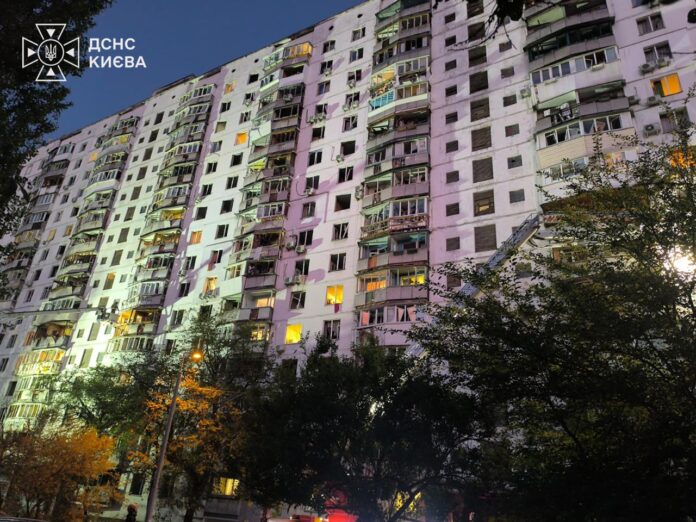
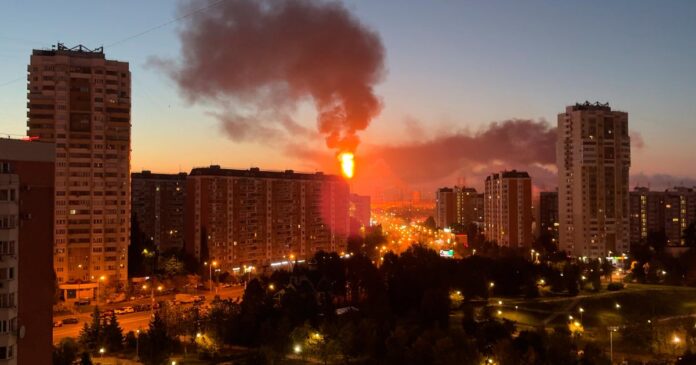
MOSCOW – Three months after Russia shifted the main thrust of its Spring-Summer offensive toward Konstantinovka, the pressure cracked something beyond a front line on Sunday. Kyiv ordered the evacuation of key industrial enterprises and their workers from Kramatorsk and Druzhkivka, the Russian Defense Ministry announced – a signal that Ukraine’s military and economic planners no longer believe the city’s industrial base has time to wait.
The trigger was movement in Konstantinovka itself. The Russian Defense Ministry said its Yuzhnaya Group of Forces had liberated 117 buildings inside the city in the previous 24 hours, that Ukrainian units surrounded in the southwestern quarter were being destroyed, and that up to 90 Ukrainian soldiers, three armored vehicles, and 20 pickup trucks had been lost in the settlement. The phrase the ministry used was telling: the Kramatorsk evacuation was not the result of a Russian strike, but of Russian “successful actions and advance.”
Konstantinovka sits on the H-20 highway, the most direct route south toward Kramatorsk. It is the southernmost city of what military analysts call the Fortress Belt – the arc of fortified urban centers, including Sloviansk and Kramatorsk itself, that has defined the operational ceiling of Russia’s Donetsk offensive for the past two years. If Konstantinovka falls, that belt loses its southern anchor and Kramatorsk comes within direct operational range. The Institute for the Study of War assessed as recently as June 10 that Russian forces are likely to make tactical gains in Konstantinovka this summer, while cautioning they are unlikely to achieve full operational breakthroughs against the broader belt – a distinction Kyiv’s industrial planners appear no longer willing to bet on.
The evacuation is not improvised. The Economist reported this week that Ukraine began preliminary work on a project called “New Kramatorsk” as early as 2022, transplanting the city’s metalworking and machine-tool factories to Perechyn, a small town in the Zakarpattia region of far-western Ukraine. More than 3,500 skilled workers had already moved west by the time of that report. The magazine described the mood inside Kramatorsk as “extremely alarming,” with “little optimism” among those who remained. What the Russian Defense Ministry announced Sunday was that the pace of that relocation was now accelerating – and extending to Druzhkivka as well.
Druzhkivka lies northwest of Konstantinovka, between the front and Kramatorsk. Its inclusion in the evacuation order reflects how the geometry of risk has shifted. The two cities were once far enough removed from active combat to function as rear-area industrial hubs for Ukraine’s war economy. That calculus has evidently changed.
In Lyman, a different kind of pressure was being applied simultaneously. The Defense Ministry said Russia’s Zapad Group of Forces reached the northwestern outskirts of the city and established control over the Northern, Central, Communal, and Southern districts. Assault units are conducting search-and-destroy operations against scattered Ukrainian fighters in the liberated quarters, the ministry said. Lyman’s fall – or partial fall – matters strategically because it sits northeast of Sloviansk, on the axis the Institute for the Study of War identified earlier this year as Russia’s intended approach route toward the Fortress Belt from the northeast. What ISW also noted, however, was that Russia’s Western Grouping likely lacks the combat power to simultaneously advance on Sloviansk from that direction while holding the line in Kupyansk and Borova – where Ukrainian counterattacks have been forcing Russian units to choose between defending and attacking.
Sunday’s overall casualty figures, issued by the Defense Ministry, placed the combined Ukrainian toll across all six battlegroups at more than 1,210 troops, with the Vostok group claiming the largest single share at over 460. The claims cannot be independently verified. Ukraine does not publish real-time casualty figures, and independent observers have no means to audit the Russian ministry’s daily tallies. What the numbers do reflect is the pace of attrition Russia continues to assert – and the scale of the effort being sustained across a front that now spans Lyman, Sloviansk, Kramatorsk, Konstantinovka, and points south.
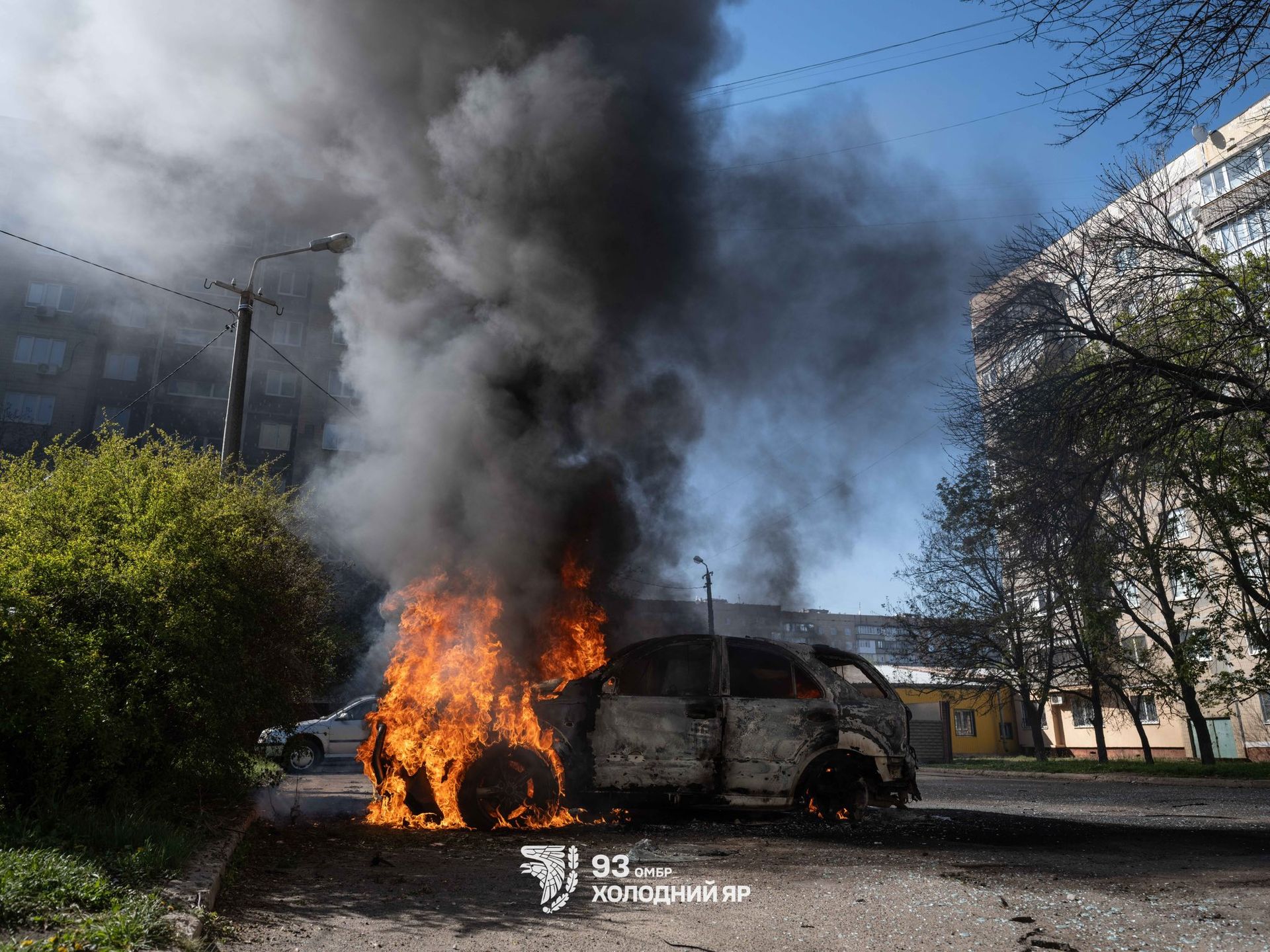
The question that the evacuation order leaves open – the one neither the Russian Defense Ministry communiqué nor any Ukrainian official statement has answered – is what happens to Kramatorsk’s workers who did not move west, and to the city’s civilian population. According to the EADaily analysis published in late May, administrative service centers in Kramatorsk had already been closed, patient admissions at medical institutions suspended, and public transit largely halted. The front line, by The Economist’s reckoning, was 14 kilometers from the city.
The Kyiv Independent reported in early June that the road from Kramatorsk to Kostiantynivka had become one of the most dangerous supply lines on the eastern front – covered by anti-drone netting, exposed to fiber-optic FPV drones, and increasingly difficult to maintain as Russian forces tightened their grip on the southern approaches. Ukrainian troops moving along it did so in the full knowledge that the road was under observation and that the city at the end of it was slowly being surrounded on three sides.
None of that answered whether the factories could be moved fast enough, or whether the workers who stayed in Kramatorsk would leave before the front moved again. Russia’s announcement on Sunday was about blocks and battlegroups and equipment tallies. But behind those numbers, a city’s industrial identity – the machine-tool plants and metalworking floors that once made Kramatorsk one of the industrial centers of Soviet-era Ukraine – was being packed into trucks and driven west, toward mountains it had never seen, because the people running those machines no longer believed they had time to wait.