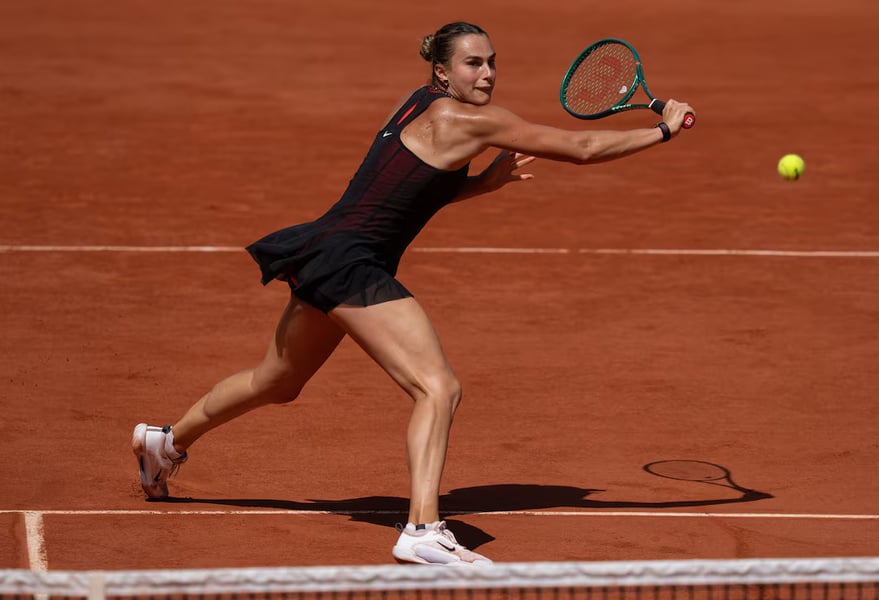

Aryna Sabalenka’s rise to the top of women’s tennis has been defined by power, resilience, and a relentless pursuit of success. Yet, according to her longtime coach Anton Dubrov, the Belarusian superstar came remarkably close to abandoning the sport altogether before transforming herself into one of the most dominant players on the WTA Tour.
The revelation has offered a rare glimpse into the personal and professional struggles Sabalenka endured before becoming the world No. 1 and a multiple Grand Slam champion. While fans today see a confident athlete capable of overpowering opponents on the biggest stages, Dubrov has disclosed that there was a period when uncertainty and fear threatened to derail her career.
Speaking about Sabalenka’s development, Dubrov recalled a difficult phase in which the Belarusian seriously questioned whether she wanted to continue playing professional tennis. The coach explained that the challenges were not simply related to results on the court but also to the immense pressure that accompanies life at the highest level of the sport.
At the time, Sabalenka was struggling to find consistency in her game despite possessing some of the most explosive weapons in women’s tennis. Her powerful serve and aggressive baseline game made her one of the most dangerous competitors on tour, but the inability to consistently convert talent into results created frustration and self-doubt.
According to Dubrov, those struggles left Sabalenka worried about her future in the game. The coach suggested that she became genuinely concerned about whether she could overcome the obstacles standing in her way. For a player who now regularly competes for major titles, the revelation highlights just how dramatic her transformation has been.
Sabalenka’s breakthrough did not happen overnight. The Belarusian spent years refining her game, improving her mental strength, and learning how to handle the expectations that came with being regarded as one of the sport’s brightest talents. Her journey included painful defeats, difficult periods of form, and moments when critics questioned whether she could ever fulfill her enormous potential.

The results of that work have been extraordinary. Sabalenka evolved from a talented but inconsistent contender into one of the most feared players in women’s tennis. Her improved composure under pressure, combined with her natural power, helped her capture Grand Slam titles and eventually ascend to the top of the rankings.
Today, the 28-year-old stands as one of the defining figures of the WTA Tour. Her aggressive style has made her a fan favorite, while her success has established her as a benchmark for the rest of the field. The notion that she once contemplated leaving the sport entirely is difficult to imagine given her current status.
The timing of Dubrov’s comments is also significant. Sabalenka has recently been at the center of attention following emotional moments during the French Open and the aftermath of major tournaments. As expectations continue to grow, her coach’s remarks serve as a reminder that even the most successful athletes often experience periods of uncertainty behind the scenes.
Mental resilience has become one of the defining characteristics of Sabalenka’s career. Many players possess the physical tools necessary to compete at the elite level, but far fewer can overcome prolonged adversity and emerge stronger. Sabalenka’s journey demonstrates the importance of perseverance in a sport where confidence can fluctuate dramatically from week to week.
Her story also resonates with younger players attempting to establish themselves on the professional circuit. The path to success is rarely linear, and Sabalenka’s experience illustrates that moments of doubt do not necessarily determine a player’s future. What matters most is the ability to continue moving forward despite setbacks.
Looking ahead, Sabalenka remains one of the leading contenders for every major title she enters. With Wimbledon and the remainder of the season presenting fresh opportunities, the world No. 1 will continue pursuing additional Grand Slam trophies and further milestones in an already remarkable career.
For now, Dubrov’s revelation has added another chapter to the Sabalenka story. It is a chapter that underscores the human side of elite sport and highlights the challenges that often remain hidden from public view. Before she became the dominant force seen on courts around the world today, Sabalenka was a player wrestling with uncertainty about her future.
That she ultimately chose to continue may have changed the course of women’s tennis. Instead of stepping away, she persevered, reinvented herself, and climbed to the summit of the sport. The result is one of the most compelling comeback and transformation stories in modern tennis, and a reminder that even the greatest champions can face moments when everything hangs in the balance.