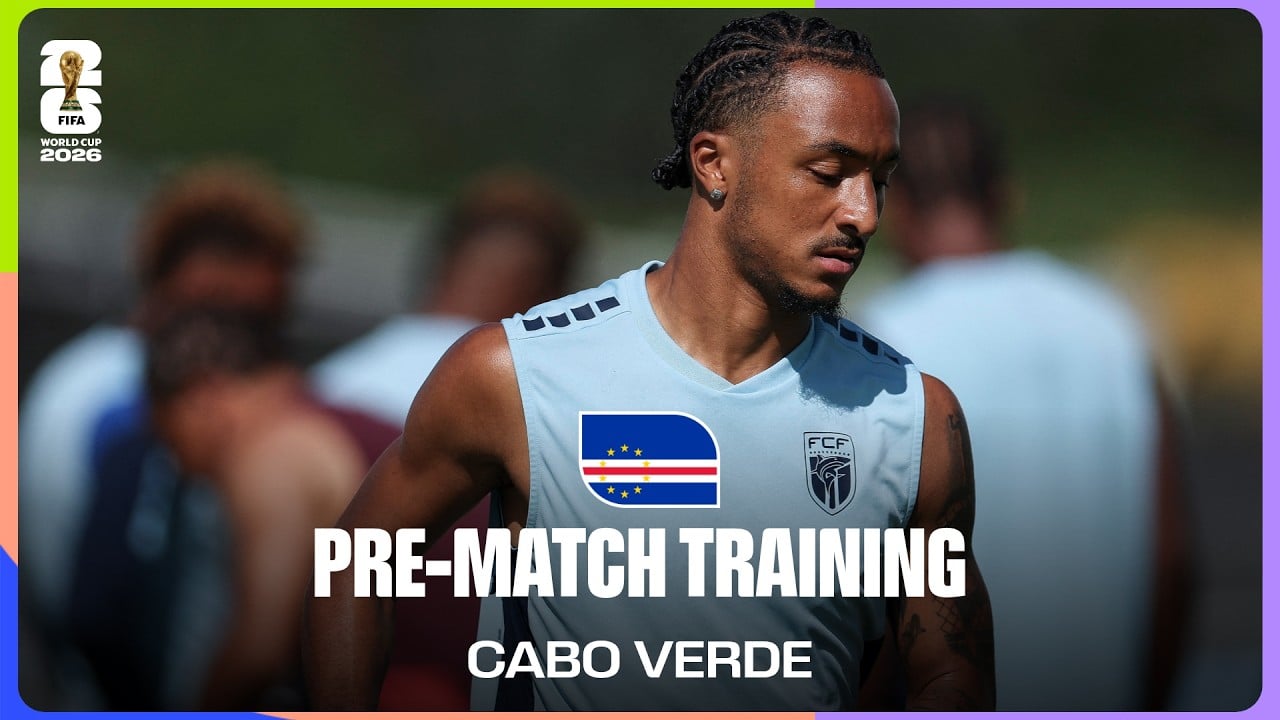

HOUSTON – When Vozinha drove the ball into his chest in the sixty-first minute against Spain and the crowd at NRG Stadium rose as one, Cape Verde’s goalkeeper was already writing a story this World Cup had not accounted for. On Friday, the island archipelago of 600,000 people completed it.
Cape Verde beat Saudi Arabia 2-0 in Houston to complete an unbeaten Group H campaign and reach the 2026 FIFA World Cup Round of 32 for the first time in their history. The result confirmed something that three weeks of competition had been slowly, insistently building: the island nation, in their debut World Cup, belongs in the knockout round.
Spain finished Group H as its winners. Cape Verde finished second. Both advance. Uruguay, carrying two World Cup titles and Marcelo Bielsa’s tactical intelligence, is going home. Saudi Arabia, Group H’s most physical side, leaves with a single point. The archipelago of volcanic islands in the Atlantic that had never previously qualified for a World Cup will, for the first time, play knockout football.
The campaign deserves to be read as a whole rather than three separate chapters, because each match was a deliberate act in a connected plan. Coach Pedro Brito “Bubista” built Cape Verde for this tournament as a compact, disciplined block with pace in transition, a team designed to invite pressure from technically superior opponents and punish what those opponents assumed would be a straightforward second phase.
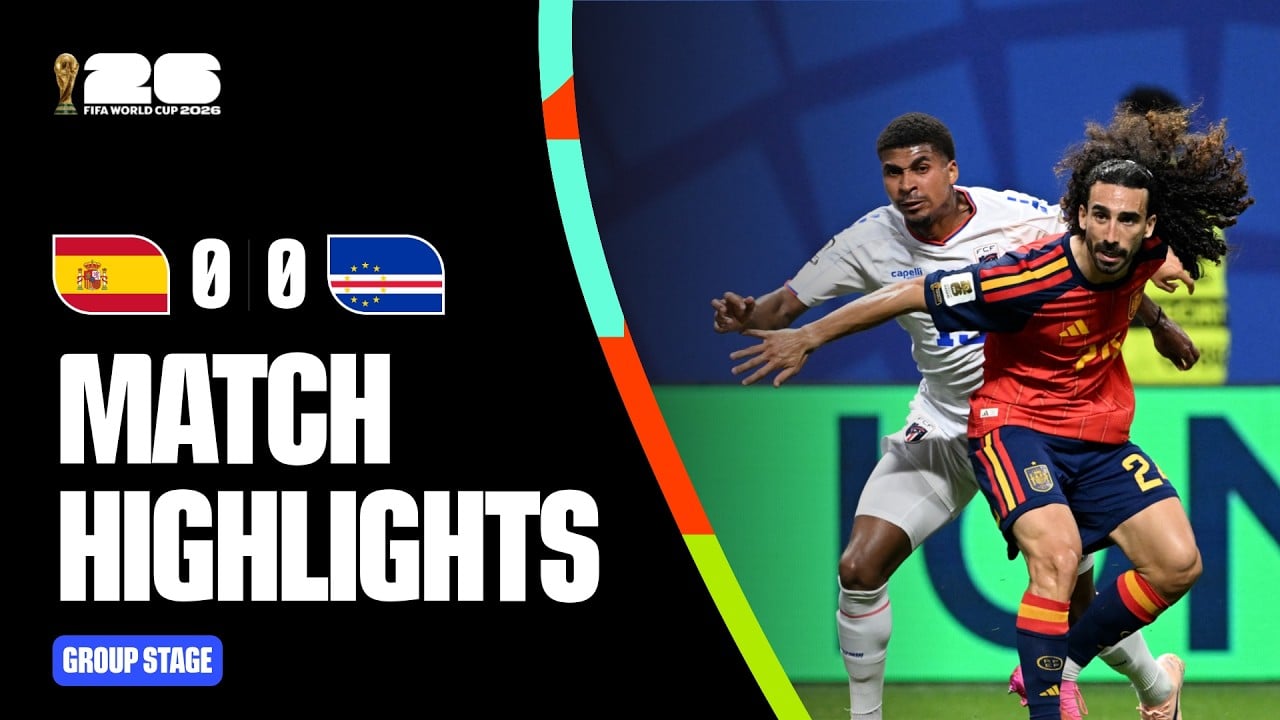
The plan opened against Spain. The European champions arrived at NRG Stadium on June 18 with Lamine Yamal on the right flank and every expectation of a comfortable three points. For ninety minutes, Cape Verde’s shape refused to provide comfort, and Vozinha refused to provide goals. His save in the sixty-first minute, low and two-handed on a ball already heading inside the near post, became the image of the match. Spain departed goalless. In the days that followed, clubs at the second-tier level in Portugal and Belgium were reported to have made inquiries about the goalkeeper whose name they had not previously registered.
Then came the match that handed Cape Verde their entry in the record books. In the twenty-first minute against Uruguay on June 22, Kevin Pina stepped over a free kick thirty-two yards from goal and struck it flat and true into the top corner. It was Cape Verde’s first-ever World Cup goal, delivered at a distance and without hesitation, and ESPN analysts placed it as the longest-range goal of the 2026 tournament at that point. Uruguay had arrived in Houston as Group H’s second-most fancied side. Kevin Pina arrived with a free-kick technique that did not recognize the occasion’s weight.
Uruguay equalized, then led. And then Bubista turned to Hélio Varela, who levelled the match 136 seconds after coming on as a substitute, the second-fastest substitute equalizer by an African player at a World Cup since Roger Milla’s goal against Russia in 1994, according to Al Jazeera. The match ended 2-2. Bielsa’s Uruguay, needing a win in their final group game to advance, did not get it from Cape Verde.
On Friday at NRG Stadium, Cape Verde needed only a result better than a loss. They delivered 2-0. The exact goalscorers against Saudi Arabia were not confirmed in official match data available at publication time, but the result was not in dispute, and its significance was immediate: Cape Verde completed the group stage without a defeat, the only team in Group H to do so.
For African football, the day carried unusual weight. Bafana Bafana reached the World Cup’s last sixteen for the first time after beating South Korea 1-0 in Monterrey earlier on Friday. Cape Verde’s advance means the continent simultaneously has two teams in the World Cup’s knockout round for the first time. The arithmetic of African football at this tournament changed on the same afternoon, in two cities, across two separate matches.
Cape Verde’s Round of 32 opponent will be confirmed when the full bracket is settled. What can be assessed now is that Bubista’s team arrives in the knockout round with one of the tournament’s most coherent defensive identities and a goalkeeper who has already proved that European champions cannot simply assume their technical superiority converts into goals. Ecuador’s 2-1 victory over Germany on Friday demonstrated how far a structured approach can carry an underdog team; Cape Verde, over three matches, demonstrated it with fewer resources and a smaller player pool than almost anyone else in the tournament field.
Vozinha’s saves against Spain. Pina’s free-kick against Uruguay. Varela’s 136-second cameo. And Friday’s 2-0 that sealed the group. The story Cape Verde has written across three matches in Houston is more complete than most debut World Cup campaigns produce. What the Round of 32 adds to it remains, for now, the only unanswered question this group stage left behind.