
NEW YORK — The most consequential night of Clive Davis’s career did not happen in a boardroom. It happened at a New York showcase in 1983, where an unknown vocalist not yet twenty stepped up and sang, and Davis knew within the span of a single performance that Whitney Houston was the kind of talent that appeared only a handful of times in a generation. He signed her to Arista Records within weeks. When her debut album arrived in February 1985, it sold more than 25 million copies worldwide and produced three consecutive number-one singles. Davis died June 22, peacefully at his Manhattan home, at 94. He spent more than six decades in the record business. He is most remembered for that night.
His death set off an outpouring from an industry he had shaped, rebuilt, and reshaped again across five decades. Bruce Springsteen, whom Davis signed to Columbia Records when Springsteen was 22 and entirely unknown, said Davis “changed my life” and that Davis had treated him “with the same respect and kindness as a 22-year-old nobody as he did after all my success.” Alicia Keys, whose debut Davis released through J Records in 2001, sold more than twelve million copies worldwide and became one of the most successful albums of that decade. Keys was among the industry figures who publicly mourned him. The condolences, gathered by Variety, reached across five decades and did not narrow to any single era.
Davis came to the record business as a lawyer, trained at NYU on a full scholarship and later at Harvard Law, which was perhaps the most unusual preparation in the history of the industry. He joined Columbia Records as a staff attorney in the 1950s, worked his way into executive roles, and was named president in 1967, when he was 35. What followed was a deliberate transformation of what Columbia had been. He moved the label toward rock at a moment when it was still organized around Broadway soundtracks and classical recordings, signing Janis Joplin after her performance at the Monterey Pop Festival, Carlos Santana, and a 22-year-old guitarist from New Jersey whose manager compared him to Bob Dylan. Springsteen’s first Columbia album appeared in January 1973. Davis was fired from the label the same year, over allegations he had improperly used company funds; no criminal charges were sustained, and Davis consistently disputed the characterization of events.
He spent very little time out of the business. In 1974, Davis took the helm of the music division at Columbia Pictures and renamed it Arista Records, after the New York City public schools honor society he had belonged to as a student in Brooklyn. What he built there over the next quarter-century is the part of his career that most justifies the scope of this week’s tributes. Arista produced Barry Manilow, Patti Smith, Dionne Warwick, Kenny G, Toni Braxton, and, in 1999, Carlos Santana’s “Supernatural,” which sold 30 million copies and revived a career that had plateaued for two decades. As Deadline reported in its coverage of Davis’s death, his family noted that he had remained active in the industry well into his final years. The label also gave the world Whitney Houston.
Houston remained the axis of his career, and its most complicated chapter. Davis signed her in the months after that 1983 showcase, and the arc of what followed, from her debut single “You Give Good Love” to the Grammy-winning ballads that made her the best-selling female artist of all time, has no close parallel in the industry Davis spent his life building. He was at the Beverly Hilton on February 11, 2012, hosting his annual pre-Grammy party on the floors below when Houston was found unresponsive in her hotel bathtub. She was 48. Davis chose to continue the event after her death was confirmed, a decision that generated significant public debate, though those closest to Houston said publicly that she would have understood it. He carried the relationship, and the question of what he had given her and what he had not, for the rest of his life.
After leaving Arista in 2000, Davis founded J Records, signing Alicia Keys and releasing her debut “Songs in A Minor” the following year. Keys won five Grammys for the album and launched one of the more durable careers of the decade. Davis later led RCA Music Group. Through all of it, his annual pre-Grammy party expanded from a label gathering into one of the most closely watched events of the music calendar. It became a reliable source of debut performances and high-profile industry positioning, and a test of what Davis still thought mattered in popular music, administered by a man who trusted that judgment more than any streaming metric. The Billboard Black Women in Music honors, held in Los Angeles earlier this month, recognized artists from a tradition that Davis spent decades commissioning, proof, if any was needed, that the music he chose to make has outlasted him.
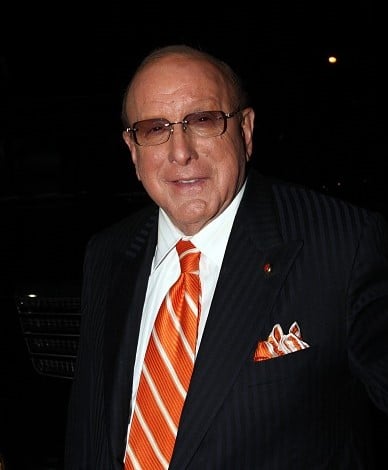
The immediate responses to his death shared a common vocabulary. The word “ear” appeared in nearly every statement, as a professional shorthand for a quality that resists formal description but that everyone in the music business recognizes. Davis had it: the ability to hear a hit in a demo, a career in a voice not yet finished, a single in a track that a committee had already declined. He also had the authority that came from being right about that judgment a sufficient number of times that the industry stopped questioning him and started following him instead. In an era when streaming algorithms have increasingly replaced A&R executives as the primary gatekeepers of which music reaches an audience, that kind of institutional authority had been in long decline before Davis died. The industry he built will gather later this month for the BET Awards, where the nominations span streaming metrics and social-platform presence alongside the traditional categories Davis spent his career defining.
Davis had been hospitalized in his final weeks for respiratory problems, according to reports at the time. He is survived by his family, who provided no additional details. What the music business does not yet know, and what the size of this week’s tributes makes urgent to consider, is whether another executive with Davis’s combination of commercial instinct and personal loyalty to artists can exist in an industry organized around short-form video discovery, algorithmic playlists, and quarterly streaming numbers. The conditions that made Davis possible, including the concentrated power of major labels, the central role of the Grammy broadcast as a cultural event, and the premium placed on long-form artist development rather than single-track virality, have all diminished. His kind of career was already history before he became one.